Join us Dec. 1-3 in Nashville for the Digiday Programmatic Marketing Summit

Before there was Don Draper, there was David Ogilvy. “The father of advertising,” as he is sometimes referred to, was all about valuing the consumer’s intelligence, testing and “the big idea.” He helped forge a new, creative path for advertising in the ’60s that we now all look back on as the Golden Age of the advertising industry.
Unsurprisingly, a lot of what Ogilvy had to say back then still applies to the industry today — and it is perhaps even more important to remember some of his soundbites now with technology and the pace of the digital world forcing advertisers to be faster, more agile and more creative in real time.
Here are five David Ogilvyisms — shown as Don Draper macros, because why not? — that are still relevant today.
1. “In the modern world of business, it is useless to be a creative, original thinker unless you can also sell what you create.”
2. “Never stop testing, and your advertising will never stop improving.”
3. “Big ideas are usually simple ideas.”
4. “The best ideas come as jokes. Make your thinking as funny as possible.”
5. “Our business is infested with idiots who try to impress by using pretentious jargon.”
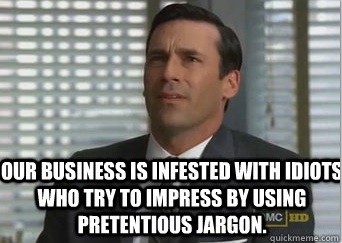
Photo of David Ogilvy via Wikimedia Commons


More in Marketing
AI boosts discovery but reviews still seal the deal, new research shows
ChatGPT is where 16% of shoppers start looking for products. However, only 9% go there to actually buy something.

Future of Marketing Briefing: Advertisers have more ways than ever to choose a holdco, and free holdcos to choose from
Fewer holdcos, more ways to pick one: inside the changing agency pitch.

Walmart Connect pitches brands directly as it pushes lift studies ahead of holiday ad deals
Walmart Connect is using lift studies to prove ad performance directly to brands ahead of the holidays, signaling a tighter race with Amazon.