2025 was rough for Target. It could also be the year when its turnaround began
This story was first published by Digiday sibling ModernRetail
Some may call this Target’s terrible, horrible, no good, very bad year. Others, sitting in Minneapolis, hope this year was when the retailer started to get back on track.
Much of the front half of the year for Target was defined by the company’s decision in January to pull back on some diversity, equity and inclusion initiatives as the Trump administration took power. That led Black-owned brands and employees to question Target’s commitment to the progressive values that once defined its brand. In May, Target’s CEO finally addressed the topic, somewhat, saying its values of inclusivity, connection and drive “are not up for debate.” Still, communications and retail experts told Modern Retail that the letter didn’t directly address the concerns of employees and vendors.
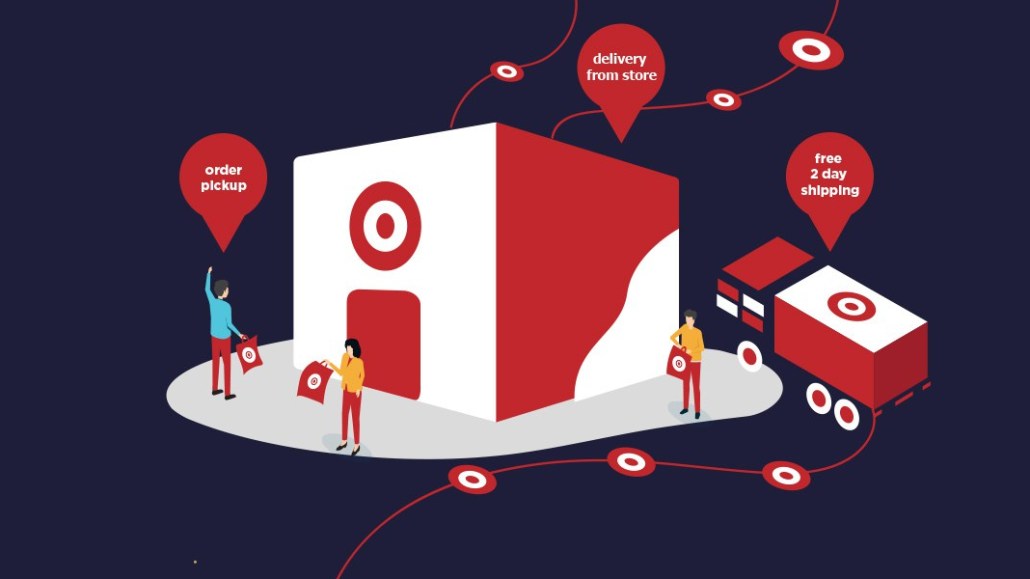
As the company continued to report poor sales performance throughout the back half of the year, it finally began to make changes and started new initiatives. That included naming its chief operating officer, Michael Fiddelke, CEO, discontinuing online fulfillment in some stores, launching an app in ChatGPT and opening a fashion-forward store in New York City. In October, Target cut 1,800 jobs throughout the company, consolidating its corporate workforce. The company has yet to turn its financial slump around, and industry observers — fearing more of the same — argue the company should have brought in an outsider rather than promoting a longtime executive.
This year will likely be remembered as when Target betrayed the trust of many shoppers and employees. It also could be the year the company planted the seeds for a successful turnaround, but it remains to be seen whether it will be successful in doing so.
“The question is, with the leadership change, will there be a gaining back of altitude not?” said Scott Benedict of Benedict Enterprises, a retail consultant and former director at Walmart, using the metaphor of an airplane going up or down. “If we’re having the same conversation next December, they may get past the point at which they can turn things around, because others in their space are continuing to accelerate and create more space between themselves and the general retail population.”
Benedict said this year was Target’s opportunity to change its trajectory, “to admit where parts of the business were doing well, and lay out a plan for customers, for shareholders and for employees, of how they were going to make things better, and I just don’t see it. I felt that way when the year started, and as the year comes to a close, I’m still feeling that way.”
Mohamed Amer, founder and principal of Strategy Doctor and an adjunct strategic management professor at Pepperdine University, said the DEI controversy became a proxy for a deeper identity crisis at Target. He said that the company is built on cultural relevance, but that when it ignored its values, it lost the connection to customers it once had.
“When you’re not clear about what you stand for, then every external pressure — whether it’s from the right or the left — becomes an existential problem,” Amer said.
However, Amer said Target’s new store in New York City’s SoHo neighborhood offers a glimpse into what it can be, with a curated offering, celebrity partnerships, influencers, color, newness and freshness. The store, which opened in December, has curated zones with seasonal themes and new product drops, as well as a red, circular area at the front featuring themed collections of apparel and accessories.
“They have the DNA still within the company to do the things they need to do,” Amer said, adding that replicating that experience throughout the chain would be difficult to fund without making cuts elsewhere in the business. “I don’t know that they can scale a store like that, but at least they can demonstrate that they still have magic.”
Benedict said that while the SoHo store and tweaks to in-store fulfillment are compelling because they point to innovation, he believes the company also needs to keep up with the basics: avoiding out-of-stocks, effectively using end-cap displays and sufficiently staffing.
“Innovative things … are great, but you have to also be rooted in the execution of the basics of having enough inventory and having it displayed properly, and having enough staff in stores to serve customers. If you do not do that, all the other things won’t have a chance to take hold.”


More in Marketing

In graphic detail: The long road to accountability for social media platforms
Last week’s social media addiction rulings signal a fundamental shift: the platforms can now judged, not just on their content, but on how they are built and designed.
What AI disruption means for experimental ad budgets
The 2026 ad budget is now a lab experiment as marketers boost experimental budgets for AI and emerging channels.

AI influencer discovery tools are changing how agencies cast creators
As creator spending grows among brand advertisers, agencies are using AI to automate much of the influencer marketing workflow. Now, that includes casting.