Join us Oct. 26-28 in Newport Beach for the Digiday Media Buying Summit
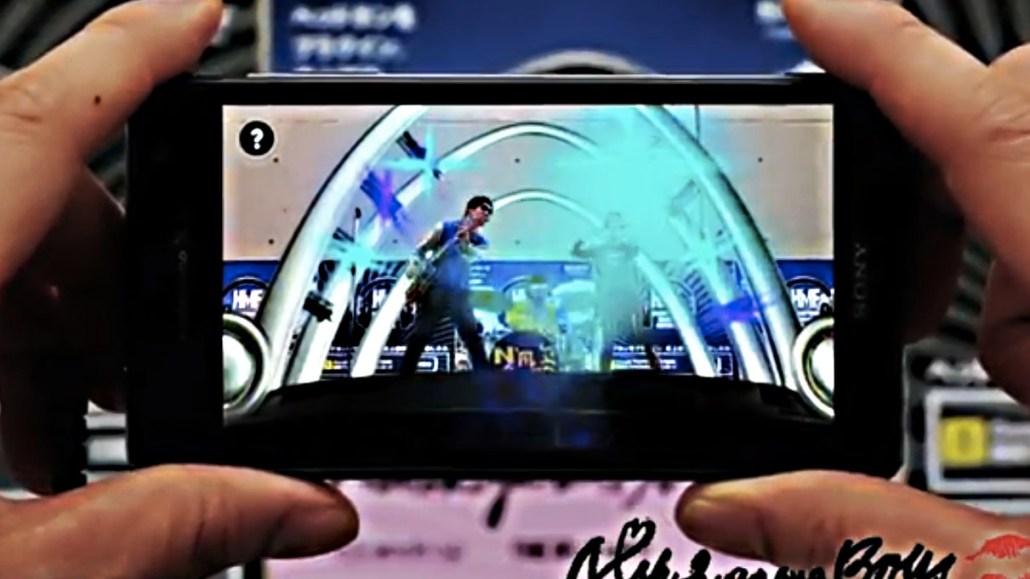
Augmented reality is the new tech everyone loves to hate. Sure, there have been some disastrous and gratuitous uses of the tech, but that doesn’t mean all hope is lost.
Sony put on a rock show in Japan — where else? — that didn’t involve a stage or a crowded venue. It just took some smartphones, an app, headphones and some augmented reality magic.
With the help of agency Naked Communications, Sony put on a “Headphone Music Festival” to promote its headphones, which are specifically designed for smartphones. To bring the concert to life, Sony created an app using its SmartAR technology. To watch the concert, all people had to do was download the app, put on their headphones and then scan a “Headphone Music Festival” poster to see virtual performances on their smartphones by four popular local bands.
This was the first augmented reality concert. This is definitely a cool way to showcase new technology and give people a cool experience. There have been some others. Last year, Maybelline created an augmented reality app that let people see what different nail polishes would like like on their nails before purchasing the color. To save shelf space, U.K. supermarket chain Tesco experimented with AR to showcase certain products without having to have them physically on store shelves. There are definitely useful and interesting ways that brands can use augmented reality.


More in Marketing

Ikea’s CMO sees LLMs as the newest place a brand has to hold its line
LLMs have widened the brand. Ikea’s CMO thinks the basics still hold.
How many people does it take to run an agency? According to Bad Mktg, just two if you’re using AI
BaD Mktg is just two employees and a lot of AI to run the business and ideate. The secret to its success? The experience of the people leading the ideation.

‘Mission and capital can coexist’: Golden State Valkyries’ Jess Smith on pitch to sponsors
The WNBA’s newest team must navigate measurement demands and marketers wanting to share in the ‘mission’ if it’s to establish a commercial foothold.