Join us Sept. 14-16 in Miami to connect with top publishing leaders

The Beyhive might be doing permanent damage to Rachel Roy’s brand.
The fashion designer, who owns an eponymously named clothing line largely sold at Macy’s, found herself pulled into the eye of the Internet’s outrage hurricane on Sunday — all over a new Beyoncé lyric that could put a dent in Roy’s business.
For those not following the drama, turn your attention to Beyoncé’s song “Sorry,” where a line references an alleged extramarital dalliance between her husband, Jay Z, and Roy. “He better call Becky with the good hair,” she sings at the end. “Becky” was assumed to be Roy, who started an infamous elevator fight between Jay Z and Beyoncé’s sister Solange in 2014.
Roy didn’t do herself any favors late Saturday with a now-deleted Instagram post. The caption read: “Good hair don’t care, but we take good lighting, for selfies, or self truths, always. Live in the light #nodramaqueens.”
The highly dramatic “no drama” post was blood in the water for Beyoncé’s rabid fanbase. The “Beyhive” has in the past gone after Lululemon and Red Lobster with a frightening vengeance for much less.
Roy’s Instagram page was bombarded with thousands of hateful comments attacking her and her business (A few missed their mark and confused her with mom-next-door chef Rachel Ray). In a defensive move, Roy took her Instagram account private, but the comments carried over to her brand’s Facebook page:
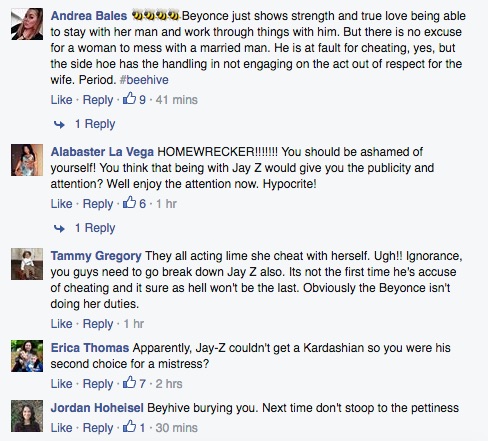
Before ducking into hiding — she cancelled an appearance scheduled for Monday night because of a “personal emergency” — Roy spoke out on Twitter:
I respect love, marriages, families and strength. What shouldn’t be tolerated by anyone, no matter what, is bullying, of any kind.
— Rachel Roy (@Rachel_Roy) April 24, 2016
The imbroglio has certainly gotten Roy some exposure: The number of mentions of her brand increased 34,300 percent from a measly 360 times the three days before Saturday to 126,000 mentions from Saturday to now. But not all exposure is good exposure: The sentiment in those tweets is 63 percent negative according to Brandwatch.
The anger is directed at Roy herself and not for anything her brand has done. However, since her name and business are tied closely together and sharing the same name, the Beyhive’s anger could cause long-term damage, Toni Box, the senior director of social media and content at marketing agency PM Digital, told Digiday.
“While Beyoncé’s young-adult social following wouldn’t necessarily be Roy’s target customer, and therefore their intent to buy her products is somewhat irrelevant, the level of negativity currently surrounding Roy could be enough to create a wider reaction to her clothing line,” she said. “The long-term effects, however, may depend on Beyoncé’s reaction or lack thereof, to Roy’s distasteful commentary.”
Your move, Beyoncé.


More in Marketing

Future of Marketing Briefing: One more helping, for gluttons still hungry for Publicis and PepsiCo takes
Yes, more thoughts on what it means, or doesn’t, that Publicis walked away from competing for Coca-Cola’s media dollars to grab PepsiCo’s instead.
Instacart launches custom AI assistants for retailers
Retail giants like Walmart, Kroger and Amazon have launched AI assistants allowing consumers to ask for recommendations or curated shopping lists. Now, Instacart has made it easier for other retailers such as regional grocers to follow in their footsteps.
AI reshapes agency economics, but their contracts are still scrambling to catch up
AI is changing agency work. Agencies are adding provisions to existing contracts instead of rewriting their MSAs.