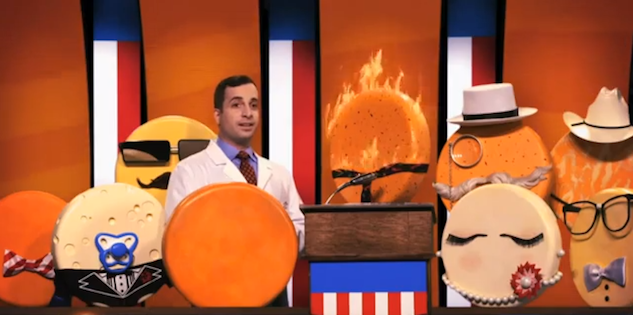
Presidential elections are pretty much giant marketing campaigns. They’re also an opportunity for regular brands to draft off them.
That was the opportunity Kellogg’s saw with its Cheez It cracker line. While many know the brand, fewer are aware of its less popular flavors, such as pepper jack and mozzarella. So at the height of the crowded presidential-nomination battle, from January to April, Kellogg’s set up a “Top Cheese” election campaign that pitted the eight flavors against each other. The target audience for the effort was everyday folks who want humor to escape daily pressures.
The brand created a flood of content to drive votes on the Cheez It Facebook page, including a series of hysterical videos. The video content was distributed through paid and owned media. Kellogg had messaging on-pack and on in-store displays. It also had messaging on TV, online and mobile. It also linked up with Sony Playstation, where people would play the game and see various Cheez It messaging throughout the virtual world. Facebook was the main hub for the effort.
There were 620,000 unique voters, resulting in 67 million votes total. Cheez It generated 600,000 new Facebook fans during the run of this campaign. And the average time spent on the Cheez It Facebook page was 2.5 minutes. Most importantly, Kellogg saw double-digit sales growth for each flavor during the life of the campaign.
“We drew a map of the Cheez It consumer and tried to touch them at every point possible,” Kellogg’s associate director of global digital strategy, Bob Arnold, said at the Digiday Brand Summit in Park City, Utah. “That’s really what drove all the engagement.”


More in Marketing
Mobile ad giants AppLovin and Unity locked in legal dispute over data collection
AppLovin seeks court order against Unity claiming improper collection of data generated through its business.

The Rundown: Average CMO tenure has shrunk by over a third in 16 years
Client-side turnover is increasing, according to a survey of 13,000 U.S. marketing professionals, and marketers are spending less time in post.
Behind Hoka’s bid to own the NYC marathon’s run-up period
Hoka’s been targeting runners training for the New York City marathon with the aim of creating more shoe evangelists.