Connect with execs from Axios, The New York Times, Paramount and more.
More people visited the Washington Post’s website than The New York Times’ in October, marking a significant milestone in the battle for old guard supremacy in online media.
Last month, the Washington Post raked in 66.9 million multi-platform unique visitors narrowly edging out the New York Times, which recorded 65.8 million uniques, according to comScore. It’s the Post’s highest trafficked month since at least Oct. 2014, representing a 59 percent increase in less than a year.
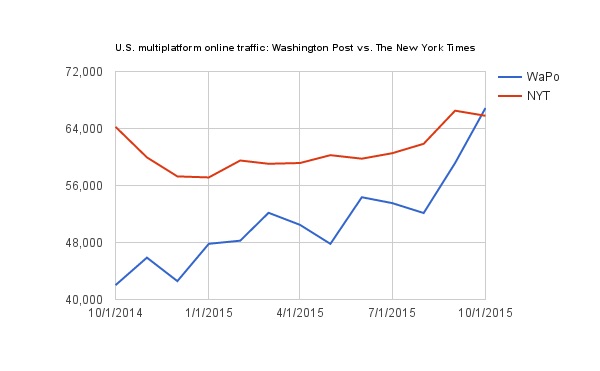
For the Times, traffic dipped slightly from September (66.5 million) with traffic largely stagnating over the past two years. Still, it was the Times’ second-highest month buoyed by viral pieces Miranda July’s interview with Rihanna and the lengthy, moving feature “The Lonely Death of George Bell.”
The New York Times, according to a Politico New York piece from August, has been worried about the Post’s growing digital dominance, propelled by its ever growing selection of viral-focused blogs and a faster loading website. In response, the Times is building out its own “digital rewrite team” called the Express in an effort to capture some viral traffic.
Just two months ago, Politico asked “could the Post top the Times in unique visitors by this time next year?” The answer is yes (and much sooner!), but now the question is, will it last?


More in Media

WTF is SPUR’s publisher-run Content Telemetry Framework?
SPUR is publisher‑run and fixated on one thing: turning AI’s use of their content from opaque scraping into a transparent, usage‑based licensing system they control.

How streaming creators built a new broadcast blueprint at the World Cup
Livestreaming creators offer new ways to broadcast sports to diverse audiences; this 2026 FIFA World Cup may be the new blueprint for leagues

Media Briefing: Declared ‘good bots,’ mixed-use crawlers, gray scrapers – how AI accesses publisher content
The Cloudflare’s latest AI settings reshape how compliant crawlers behave, yet the biggest leakage for publisher content remains a gray scraping economy that doesn’t bother to play by those rules.