Join us Dec. 1-3 in Nashville for the Digiday Programmatic Marketing Summit
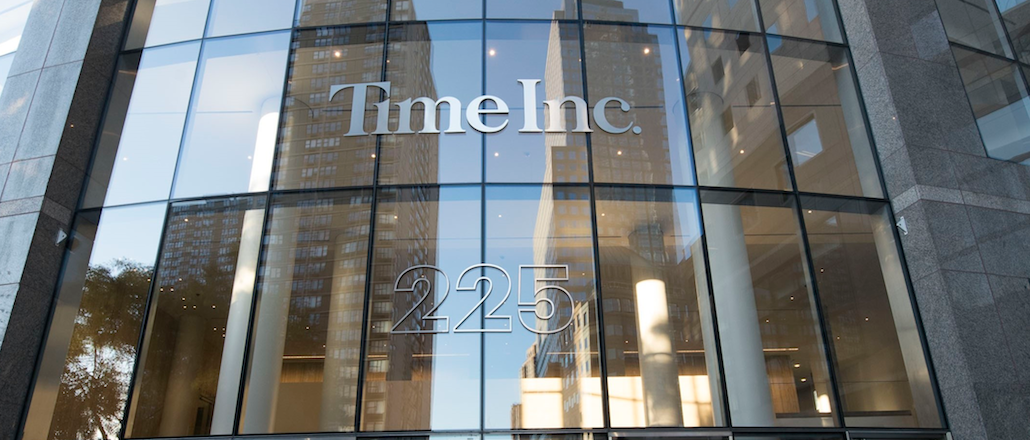
Alan Murray was named editor of Fortune today, succeeding Andy Serwer, making him the 17th editor of the Time Inc. business title since its founding in 1930.
He’s got his work cut out for him: One of Time Inc.’s biggest titles, Fortune is in a busy digital market these days, squeezed by bigger sites like Yahoo Finance and Forbes, while fending off smaller upstarts like Business Insider and Quartz. It’s late to the game, too, having just launched its own website after its joint online venture with CNNMoney ended.
But Murray, who was executive editor for online at The Wall Street Journal before becoming president of the Pew Research Center in 2012, said that, as he proved with the Journal, it’s never too late to catch up.
Time Inc. CEO Joe Ripp has been putting a big emphasis on growth through brand extensions. What’s the next step for Fortune?
Conferences is a great area. I built much of the conference business at The Wall Street Journal, and competed with Fortune. Their ability to get great speakers is a testament to the brand.
The company has talked about buying LinkedIn and building contributor networks at its titles. Can you see Fortune adopting the platform approach?
Oh sure. More user-generated content, more outsiders providing content. And I also think you’ll see Fortune do more in video. Education might be an area Fortune has a role to play. There are a lot of possibilities. I think that’s the challenge — you have to be very clear and transparent. Readers don’t really care who produces great content, but they want someone to make sure it’s great.
People looked askance at Forbes when it opened its site to outside contributors a few years ago. It’s interesting how much things have changed.
Journalism organizations have to stop thinking of what they do as manufacturing content and think about the service they’re providing and focus on the service and readers. if there’s good content that’s coming from others, we have to provide it to them. In the case of Forbes, in my tweet stream it was confusing. You couldn’t tell if it was coming from Forbes or someone from the outside. I think the number one thing is, you have to be transparent to readers.
What lessons can you apply from your time at Pew?
The lessons from Pew and my last six years at The Wall Street Journal are pretty much the same — if you have a great brand, you can not only survive but thrive in the digital world.
But online sites like BuzzFeed have shown you can built an audience seemingly out of nowhere by exploiting social and SEO.
Social and mobile are where people are consuming content, but people are reading more today than in the past because they have these supercomputers they carry around in their pockets. The Journal was late to the game in many digital areas, but if your brand was strong enough, you can play the game well. I’m betting they can do the same thing at Fortune. They are late to the game, but if we can just define the unique value Fortune can provide its readers, we’ll be able to make this work.
What are some of those unique values?
The Fortune 500 brand. Those corporate lists have incredibly large followings. They’ve done a great job in corporate management. In technology.
While at Pew, you wrote that you were optimistic about the future of the news business with all the investment from tech players and audience growth. Yet the business model hasn’t materialized.
It’s still an issue. We have to develop business models that work, and I don’t think we’re there yet. But people are consuming more news. They’re more engaged with news in part because it’s being presented in different ways: Digital video, the things you can do with data. And as far as the fact that smart people that have been investing in other things are now getting excited about journalism, that has to be a good sign.


More in Media

Reach CEO touts Google AI deal as a template, steps up pressure on OpenAI over scraping
Digiday spoke with Reach CEO Piers North about his plans to make its Google AI content deal a blueprint framework for other LLM deals, and its recent cease-and-desist letter to OpenAI.

Social commerce edges past SEO at The Independent for the first time
The Independent’s social-commerce revenue edged past its SEO-based commerce revenue for the first time in September, CEO Christian Broughton said at Digiday’s Media Strategies event in London this week.

Ownership, control, margins: the brand playbook for microseries is still taking shape
Creator-led microseries are hot, and brands want in, but everyone’s still figuring out the structure of the deals and the content itself