Join us Oct. 26-28 in Newport Beach for the Digiday Media Buying Summit
The Trump tariffs are forcing creators to overhaul their side businesses
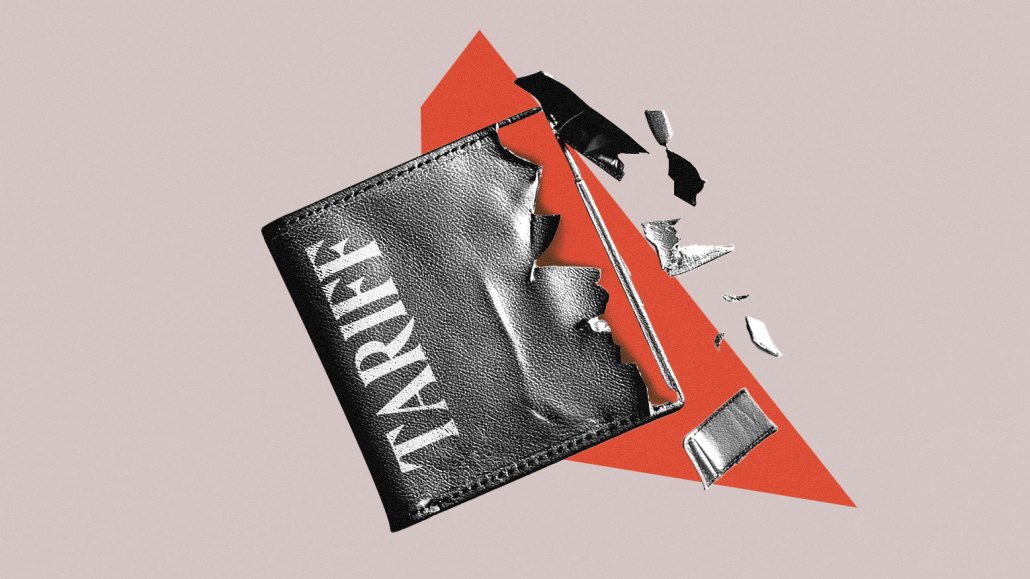
Content creators’ side businesses are feeling the heat of the Trump tariffs.
Many creators bolster their advertising and brand partnership income by selling goods and products that are relevant to their niche or audience. These businesses often rely on foreign materials or manufacturing to stay afloat — and thus the Donald Trump administration’s tariffs, which impose an additional 10 percent duty on Chinese imports, have led to an increase in creators’ business costs.
Last month, video creator Matt Steffanina pushed back the launch of his apparel brand MadChill due to uncertainty over the future of TikTok Shop. Following the institution of Trump’s tariffs, Steffanina had to delay the launch further in order to find a new — and more expensive — manufacturer that operated entirely outside of China.
“The provider that I use is 50 percent in America and 50 percent in China,” he said. “So, yeah, we’re trying to get everything that we do made in the U.S. so that it’s just easier across the board, especially on delivery times and everything like that.”
YouTuber Tyler “Antenna Man” Kleinle, whose content focuses on the installation of television antennas, is gearing up to launch his own signal meter product in 2025. His supplier is located in China, so he plans to price the product more aggressively than initially anticipated due to the tariff.
“With my signal meter, there are additional costs beyond the price of the product, including consulting fees, commission, shipping, defective units, returns, et cetera,” Kleinle said. “While 10 percent might not sound like much, it really does impact things to the point I have no choice but to pass off the price increase to my viewers, which I really hate to do.”
LordDraconical, a YouTube creator whose company Aethernaut Incorporated designs and 3D prints toy products such as foam dart blasters, manufactures most of his company’s goods domestically. However, he said that his production fees would rise due to the increased costs of raw materials and hardware from China.
“We have a pretty large backlog of that stuff — the holding cost of springs and screws is zero — but we do have a pretty large order going up, and I imagine that the tariffs on it are going to be significant,” he said.
The Trump administration’s tariffs are putting the squeeze on creators and influencers from multiple sides. In addition to raising the upfront costs of creators’ side businesses, the tariffs have also reportedly convinced some foreign brands to halt their spending on influencer marketing campaigns.
Potential upsides
Although content creators believe the Trump administration’s tariffs could hurt their side businesses, they anticipate some potential advantages as well.
“Companies tend to pass the cost of tariffs on to consumers through a price increase, which ironically would mean I’d make more in affiliate commission through products I recommend,” Kleinle said.
LordDraconical, who asked to keep his real name private to protect his personal information, said that many of his company’s competitors are toy manufacturers located in China, giving a potential competitive edge to his domestically manufactured products as a result of the tariffs.
“In the toy industry, there’s clearly no getting away from Xinzheng [a city in China known for its industrial output] manufacturing,” he said.


More in Media
Media Briefing: Overheard from publishers at Digiday London Media Strategies Town Hall
At Digiday’s Media Strategies London event on Tuesday, executives weighed new ways to measure audience value, the risks of blocking AI crawlers, the uncertain economics of licensing content to LLMs, and whether agentic media trading is ready for the real world.

Inside Wirecutter’s push to diversify beyond affiliate revenue as AI reshapes discovery
Wirecutter is expanding beyond affiliate commerce with new categories, franchises and advertising opportunities as AI reshapes search.

Amazon News, Politico and Warner Bros. Discovery are finalists for the 2026 Digiday Awards finalists
This year’s Digiday Awards finalists demonstrated how innovation, audience insights and multiplatform storytelling can work together to create more engaging and accessible experiences. Their work reflected a focus on understanding audiences, reaching them across channels and turning creative investments into measurable results. These nominees represent a media landscape where effective storytelling must balance experimentation with […]