The Huffington Post hacks a Snapchat button to drive followers from its website
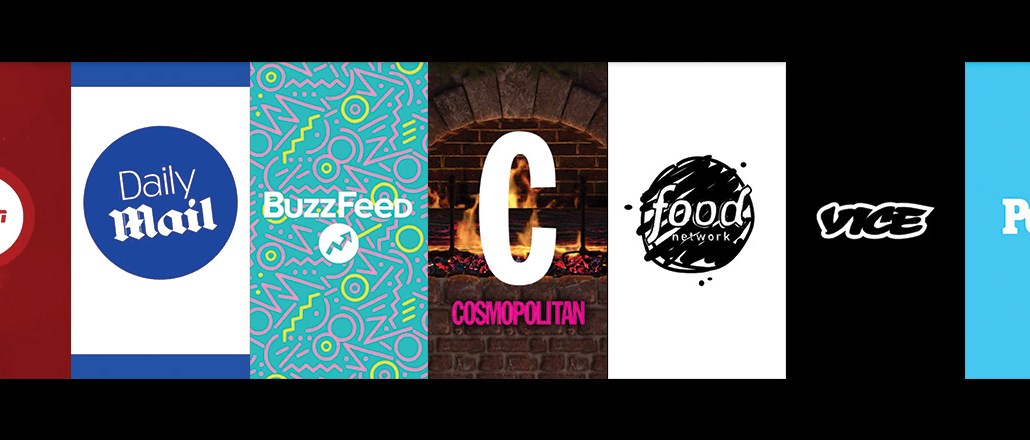
The Huffington Post has a new Snapchat button on its website, something of an oddity that gives online visitors semi-easy access to content on the messaging app.
What’s unique about the button is that there is a “follow us on” widget for almost every platform, except Snapchat. Every major publisher has quick links on their sites that promote the major social media platforms: Facebook, Twitter, Instagram, WhatsApp, Pinterest and the rest. However, The Huffington Post had to build its own for Snapchat because the app is almost intentionally difficult to follow.
“Snapchat is not the easiest platform to surface content on,” said Kiki Von Glinow, director of growth at Huffington Post. “We have to tell the user coming to us on desktop that they can experience HuffPo in a completely different way on Snapchat.”
When clicked, the button opens a “snapcode,” a picture of HuffPo’s Snapchat code that users scan with their phone to follow the publisher on Snapchat.
Since adding the button, HuffPo has seen a 140 percent increase in daily average signups, Von Glinow said. The publisher would not say how many followers it gains daily or how many it has in total.
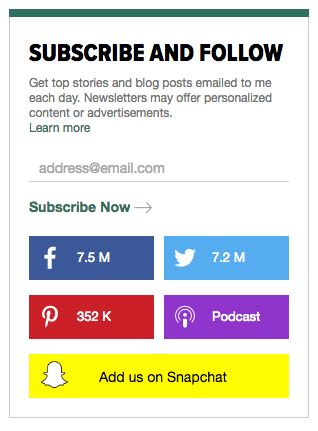
It’s unclear if any other publishers have built a similar button, but publishers like Cosmopolitan promote their Snapchat content heavily on their websites and social media channels.
Snapchat makes it hard for publishers to post links to their video stories or add new followers. Unlike on Facebook and Twitter, which are all about connecting more closely with the broader online world, Snapchat is decidedly insular.
Snapchat also is stingy with metrics, which makes it hard for publishers to know exactly how well their content is performing. HuffPo measures how many times users view all its videos and how often followers take screenshots, which typically indicates a user is sharing it with friends on Snapchat.
HuffPo claims that 60 percent of viewers of its stories read them to the end. “It’s an interactive platform for us,” Von Glinow said.
Still, Snapchat’s standing as the hottest messaging property for youth and its position at No. 1 in the app store means that publishers will do what they can to build an audience there. In addition to the “follow us” button, the HuffPo was one of the first publishers to use Snapchat’s account code in its Twitter profile, a practice that’s been adopted by others looking to drive followers from outside Snapchat, although Twitter, Instagram and Facebook have discouraged that sort of promotion.
“It’s a very different ROI than the other platforms, but it’s a demographic we think is very important. We want to convert them to loyal HuffPo users,” Von Glinow said.


More in Media
From sidelines to spotlight: Esports events are putting creators center stage
Esports events’ embrace of content creators reflects advertisers’ changing priorities across both gaming and the wider culture. In the past, marketers viewed esports as one of the best ways to reach gamers. In 2025, brands are instead prioritizing creators in their outreach to audiences across demographics and interest areas, including gaming.

Condé Nast and Hearst strike Amazon AI licensing deals for Rufus
Condé Nast and Hearst have joined the New York Times in signing a licensing deal with Amazon for its AI-powered shopping assistant Rufus.
Media Briefing: AI payouts may be entering a new era
AI compensation is evolving — and new models, not just publisher demands, are driving the shift beyond flat-fee licensing.