Join us Dec. 1-3 in Nashville for the Digiday Programmatic Marketing Summit
Digiday Research: Advertisers are more worried about the end of third-party cookies than publishers
This research is based on unique data collected from our proprietary audience of publisher, agency, brand and tech insiders. It’s available to Digiday+ members. More from the series →
The end of the cookie is nigh, and advertisers are worried.
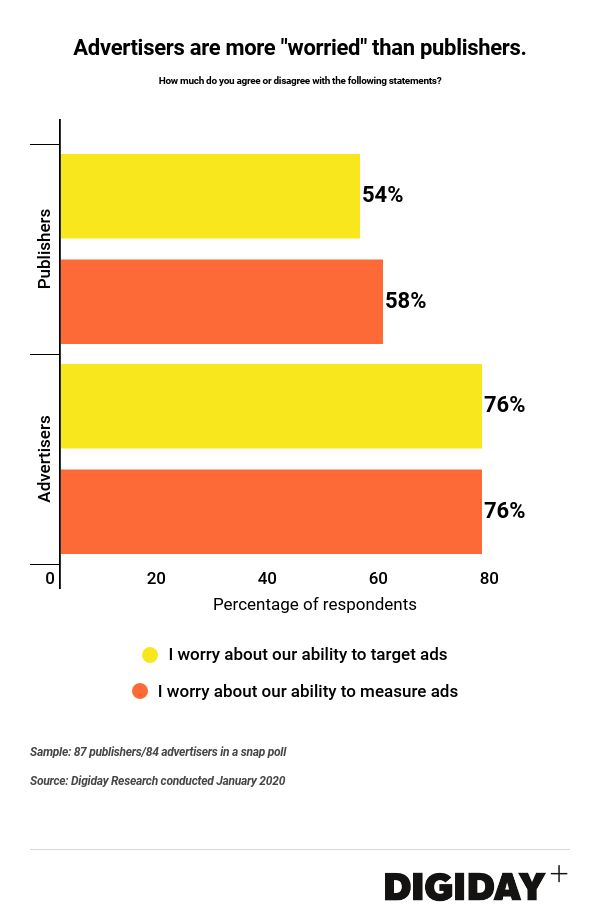
A new poll by Digiday Research found that ad buyers inside brands and agencies are more concerned about the effects of the end of third-party cookies than publishers are. About 76% of the 84 buy-side advertising executives polled said in the wake of Google’s decision to phase out third-party cookies by 2022, they worry about their ability to target as well as measure ads.
About 54% of the 87 publishing executives surveyed said they worry about ad targeting in the cookieless future. About 58% of the publishers group also said they are concerned about their ability to measure if their ads are working.
Publishers and advertising players alike have voiced confusion over Google’s intention behind its decision.
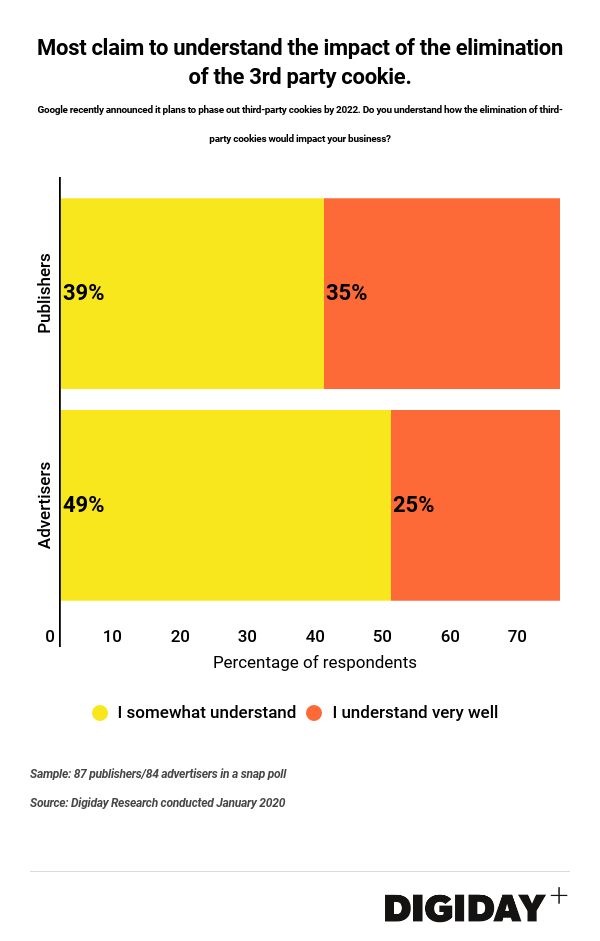
Nonetheless, a solid majority of the publishers and buy-side executives recently surveyed by Digiday said they have a firm understanding of how Google’s plans to phase out third-party cookies will affect their businesses: About 74% of the buy-side executives and 74% of the publishers polled said they understand the potential impact. About 25% of both sets of respondents said they did not understand (to varying degrees) how the elimination of third-party cookies would affect their businesses.
Google claimed that its plans to eventually end support for third-party tracking cookies in its Chrome browser is a move that is likely to make browsing more secure. Yet the change will resonate across an entire advertising ecosystem that has long relied on third-party cookies.
For publishers, the end of the use of third-party cookies could mean declines in programmatic ad revenue. That’s a possibility, in view of what happened following Apple’s anti-tracking updates in Safari as well as Mozilla’s moves to make a tracking prevention feature the standard option for Firefox users. For both publishers and advertisers, first-party data is likely to become more important.


More in Media

Why CNN International is building for agentic ad market that barely exists yet
CNN International is still chasing its first agent-sold dollar by Q1.

Media Briefing: The transatlantic push to rein in stealth bots is gathering pace
U.S. and U.K. publishers are pushing for laws to crack down on stealth AI crawlers as bot scraping surges and demands for transparency grow.

Creator mentors Colin and Samir want to turn their followers’ ideas into productions
Creator mentors Colin and Samir teamed up with Adobe to fund a creator’s project; the first step towards the duo’s new production era.