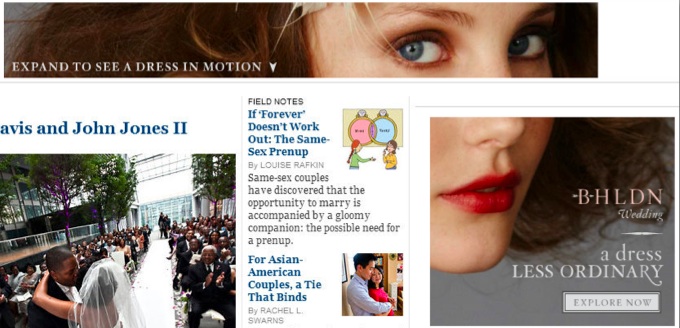
When Urban Outfitters launched its bridal line BHLDN in February 2011, the company turned to online display ads to promote it, instead of the usual, more traditional, suspects: print and TV.
The brand ran rich-media display ads over eight weeks in the bridal section of The New York Times website. BHLDN reported the ads garnered a 70 percent return on media spend. (BHLDN declined to say what it spent on the campaign.) BHLDN also measured awareness through time spent with the ads (in seconds) and interaction with the ads, with some campaign placements achieving as much as four times the retail benchmark for interaction rate.
“Our main objective was to drive brand awareness during the key engagement and wedding-planning season,” said Jennifer D’Aponte, marketing manager at BHLDN. “We looked to create a dynamic and emotional experience using interactive multimedia units.”
BHLDN only has two physical stores, so the majority of its sales come through its e-commerce destination. Beyond just driving awareness, the brand sought to drive response while building buzz around the new wedding brand. The display ads connected consumers to the BHLDN website.
The brand opted for synched rich-media units, which were two rich-media ads on one publisher page that communicated and combined to form the impact of one large, cohesive unit. The interactive ads featured modeled bridal dresses and hair accessories with the ability to zoom in on details as well as a contest that would provide winners an opportunity to win a trip to Chicago, receive a tailor-fitted gown and accessories. BHLDN was able to more easily tie sales back to users who were exposed to the rich-media placements.
The brands metrics for success were simple. It tracked the actual activity within the rich-media units as well as activity on their site that was driven by consumers who had viewed or interacted with the rich-media campaign. BHLDN captured the product description of each item that was purchased, the quantity of items purchased and the total value of items purchased stemming from users exposed to the rich-media display placements.
“This was BHLDN’s first online ad campaign and we were extremely pleased with the results and glad to partner with PointRoll on the execution,” D’Aponte said. “We look forward to building on our relationship as we gear up for our fall launch.”


More in Marketing
Indie agencies want The Trade Desk and Amazon DSP to acknowledge their buying power with negotiating leverage
Indie agencies say DSP giants block direct seats and fee relief despite spend commitments.
Nearly 30% of holiday budgets expected to be spent by the end of October
Per a new report from Deloitte, 28% of shoppers’ budgets are expected to be exhausted by the end of October.
Apple finally explains its Safari block, and identity companies are in its sights
As Apple spells out its case for blocking identity companies in Safari, its job board shows an ads business with big plans.