For all their talk of integration and simplicity, many brands are ridiculously complicated. Try figuring out what exactly Microsoft means by Windows 8.
That’s too bad because simplicity is something people want, according to strategic branding firm Siegel+Gale. Its “Global Brand Simplicity Index” survey of more than 6,000 people in seven countries across three continents reveals that simplicity matters when it comes to a brand’s perception, its success and its ability to be innovative.
For the simplicity rankings, brands were evaluated based on questions related to the simplicity/complexity of their products, services and communications in relation to industry peers.
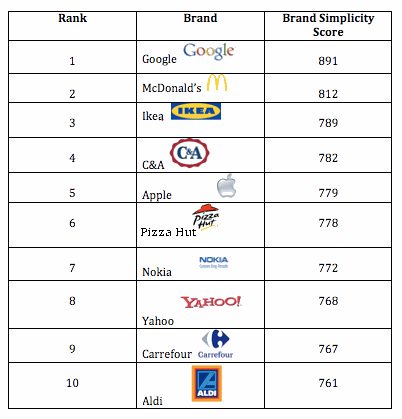
According to the survey findings, 80 percent of consumers are more likely to recommend a brand because it provides simpler experiences and communications. The top simplest global brand, according to the findings, was Google, while, ironically but unsurprisingly, Google Plus ranked among the least simple. Groupon, Ryanair, Allianz and Europcar also ranked among the bottom 10. See the tables below for the top 10 simplest global brands. For the full list of rankings see the entire report here.


More in Marketing

Marketers shift growing shares of search spending to GEO
Generative AI is pushing brands to shift SEO budgets toward visibility in AI-generated answers over clicks.

Philadelphia Cream Cheese pulls dollars from search – people aren’t Googling ‘cream cheese’
Philadelphia Cream Cheese has stopped paying for search ads, at least to prospective shoppers on Google. Over the past year, the Kraft Heinz-owned CPG brand has phased out its traditional search ad spend, opting to put those dollars instead into retail media and broader channels, according to Maddy Zingle, vp of marketing for Philadelphia Cream […]

TikTok courts CMOs with first-ever Collective, as it targets bigger budgets
In its first CMO-focused event in the U.K. TikTok showcased how easy it is for brands to create content. The event is only part of the platform’s sharper 2026 commercial strategy: targeting larger, long-term ad budgets, courting independent agencies, and positioning itself as a serious competitor to Meta in 2026.