Join us Dec. 1-3 in Nashville for the Digiday Programmatic Marketing Summit
Target’s ‘OCD: Obsessive Christmas Disorder’ sweater draws criticism online
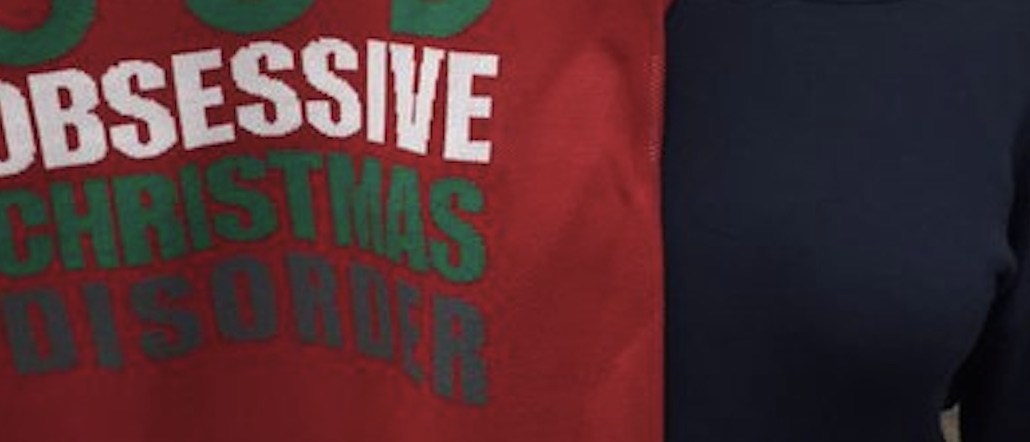
Target is facing backlash for a fashionable faux-pas over a sweater that some on social media are saying makes fun of a serious mental illness condition.
Here’s the sweater (and tweet) in question that launched the firestorm:
Can’t wait for the rest of @Target disease themed fashion line. Next up: PTSD (People That Shop Disorder) pic.twitter.com/kf0ZBxnnOm
— Allison Raskin (@AllisonRaskin) November 9, 2015
Uh oh! That’s not putting people into the cherry Christmas spirit because it’s trivializing people who suffer from obsessive compulsive disorder, which affects more than 3.3 million people in the U.S. The sweater prompted an outcry of people who said they were disgusted or joked that they were surprised that Target doesn’t sell a “North-Polar Depression” sweater, among other comments:
@AllisonRaskin @gillistrill @Target another example of society making fun of mental illness, definitely gets me in a Christmas mood — #2DaysUntilMITAM (@WehTukAhChonce) November 9, 2015
@AllisonRaskin @Target don’t forget ADHD all day holiday disorder
— mana (@ManaSmith86) November 9, 2015
Today at Target I saw a sweater that said “OCD Obsessive Christmas Disorder”…why is trivializing a mental disorder so widely accepted? — reverse harlot (@basicposibitch) November 8, 2015
Still, there’s a vocal group from the opposite side that’s telling them to lighten up and it’s only a joke:
Let’s not get super offended by the target #OCD sweater. I have actual OCD. OCD is not a joke, but it’s just a sweater. Calm down ppl.
— Maya McNeal (@mayamaya_papaya) November 11, 2015
As someone with OCD @Target‘s #OCD sweater doesn’t offend me the least bit. — KimB18 (@JustKimB) November 10, 2015
Hey @Target, tell the people who are obsessing about your OCD sweater to take their Zoloft! I have #OCD, and I like the sweater.
— Not Not Austin Mayse (@AustinMayse) November 10, 2015
Target is holding firm, saying in a statement that it “apologizes for any discomfort” it causes but will continue to sell the sweater. Even on Twitter, Target’s guest services account is telling angry shoppers that it will pass along their concerns to the retailer’s merchandising team:
@KarenEborall We never want to offend you with the items we carry. We’ve let the Merchandising team know of your concerns. Have a good day. — AskTarget (@AskTarget) November 11, 2015
Even if Target does pull the sweater, the basic phrase is available on Zazzle and Amazon.
‘Tis the season for outrage, fa la la.


More in Marketing

AI boosts discovery but reviews still seal the deal, new research shows
ChatGPT is where 16% of shoppers start looking for products. However, only 9% go there to actually buy something.

Future of Marketing Briefing: Advertisers have more ways than ever to choose a holdco, and free holdcos to choose from
Fewer holdcos, more ways to pick one: inside the changing agency pitch.

Walmart Connect pitches brands directly as it pushes lift studies ahead of holiday ad deals
Walmart Connect is using lift studies to prove ad performance directly to brands ahead of the holidays, signaling a tighter race with Amazon.