Join us Oct. 26-28 in Newport Beach for the Digiday Media Buying Summit
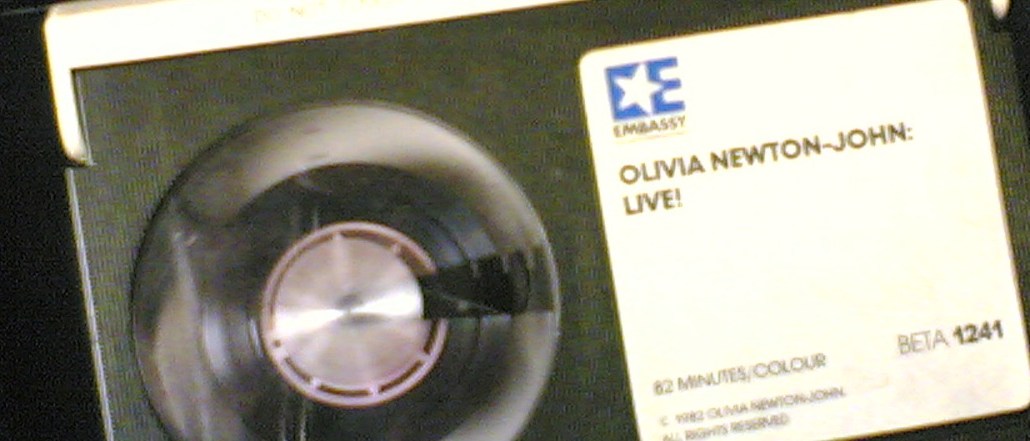
Straight from the “That still exists?” file comes this: Sony is killing the Betamax.
Collectors will have until March 2016, when Sony said it will stop manufacturing and selling the video cassettes.That’s 14 years after Sony last sold a compatible player making today’s news a surprise that Sony even sold the product.
Before there was the HD-DVD versus Blu-Ray war, there was the Betamax versus VHS battle. Sony introduced the Betamax in 1975 to much fanfare. Its fortunes quickly dwindled a year later when its Japanese rival JVC rolled out the VHS and delivered a blow because it was cheaper, lighter and contained more storage. Those two simple facts have widely been cited (though reasonable people disagree) as the reason the porn industry went with VHS technology. And where porn goes, so go the rest of us.
Betamax video, however, was superior in quality, a fact that led many broadcasters to use the medium for years after VHS had gained prominence. The BBC, for example, reports that it “still has Betamax tapes in some of its archives but most broadcasters had stopped using them by the year 2000.”
Another advantage that JVC had over Sony was that VHS cassettes could be played on any machine, while the Betamax had to be used on a specific player. The two companies battled it out until 1988 when Sony conceded and built its own VHS machine.
Sony’s failure has long been lauded as one of the worst product launches in history, something that Sony knows a thing or several about. Betamax had a nice, long life. Sony said it has sold 18 million Betamax machines with the players now costing as much as $400 on eBay.
But since everything old becomes new again, Sony should bet on a Betamax comeback in 20 years.
Images via Flickr.


More in Marketing

Ikea’s CMO sees LLMs as the newest place a brand has to hold its line
LLMs have widened the brand. Ikea’s CMO thinks the basics still hold.
How many people does it take to run an agency? According to Bad Mktg, just two if you’re using AI
BaD Mktg is just two employees and a lot of AI to run the business and ideate. The secret to its success? The experience of the people leading the ideation.
‘Mission and capital can coexist’: Golden State Valkyries’ Jess Smith on pitch to sponsors
The WNBA’s newest team must navigate measurement demands and marketers wanting to share in the ‘mission’ if it’s to establish a commercial foothold.