Join us Dec. 1-3 in Nashville for the Digiday Programmatic Marketing Summit
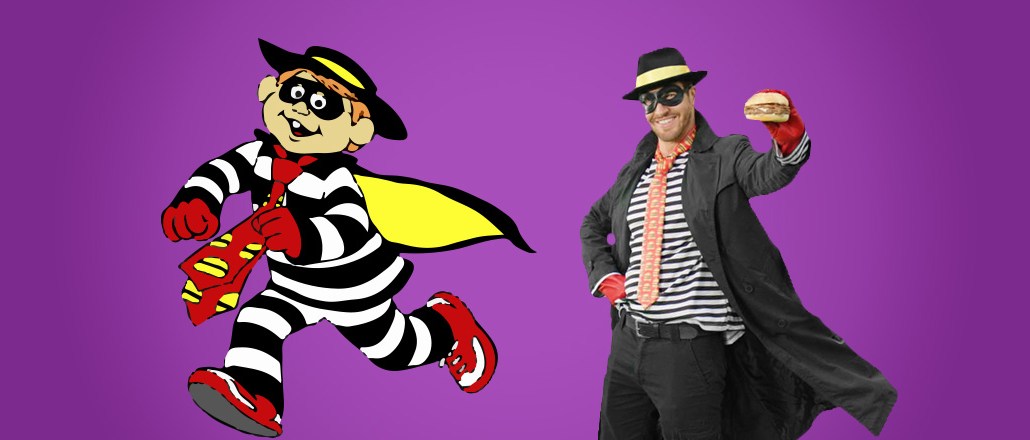
Yesterday, McDonald’s launched its latest attempt to salvage its relevance among millennials by revamping its classic character, the Hamburglar, transforming him from the rosy-cheeked cartoon ’90s kids knew into a real, live man.
McDonald’s has had a rough start to 2015. CEO Don Thompson announced his resignation in late January. Domestic same-store sales are down 4 percent. Multiple reshuffles and layoffs across marketing and other departments have left a company with a significant image problem struggling to communicate their value to a generation that regards their burgers as unhealthy.
So, a few hours in, has McDonald’s relaunch been all sizzle, no steak?
Opinion is divided — not everyone is lovin’ it — but at least the jokes are coming on strong:
What idiot called this guy The Hamburglar and not Mumford and Buns pic.twitter.com/51sNKyHbRl
— Eliza Bayne (@ElizaBayne) May 6, 2015
The new #Hamburglar: The return of a beloved children’s fast food icon or worst stripper costume ever? pic.twitter.com/MuWVxLq6OU — Bethany Miller (@bethanynmiller) May 6, 2015
This new hamburglar looks like he only steals from whole foods. #Hamburglar #McDonalds
— ¯\_(ツ)_/¯ (@OmahaHostage) May 6, 2015
for a second i thought that the new hamburglar was rocking the yeezy red octobers pic.twitter.com/3D17u8PeXl
— Gary He (@garyhe) May 6, 2015
THE NEW HAMBURGLAR SHOULD NOT LOOK LIKE HE IRONICALLY ENJOYS HAMBURGERS pic.twitter.com/okkLbvHBZy
— Brian Gaar (@briangaar) May 6, 2015
All in all, it’s not an egregious backfire — if you believe there’s no such thing as a bad tweet.
However, the clash of tones — is Hamburglar 2.0 a hot dad or playground creeper? — leaves the brand message unclear: In the TV spot, the Hamburglar is a suburb-dwelling father with a wife, tween son and secret identity. In the promotional images, the Hamburglar wears stylish kicks, slouchy pants and sports facial scruff — more urban-living single dude than burger-grilling dad.
If the social impact is anything to go by, this could be a win for the company in spite of itself. In the longterm though, it could have been an excellent opportunity to resurrect the Hamburglar as millennials actually knew him: one-toothed, cheeky, fun, and above all, an ageless cartoon.


More in Marketing
AI boosts discovery but reviews still seal the deal, new research shows
ChatGPT is where 16% of shoppers start looking for products. However, only 9% go there to actually buy something.

Future of Marketing Briefing: Advertisers have more ways than ever to choose a holdco, and free holdcos to choose from
Fewer holdcos, more ways to pick one: inside the changing agency pitch.
Walmart Connect pitches brands directly as it pushes lift studies ahead of holiday ad deals
Walmart Connect is using lift studies to prove ad performance directly to brands ahead of the holidays, signaling a tighter race with Amazon.