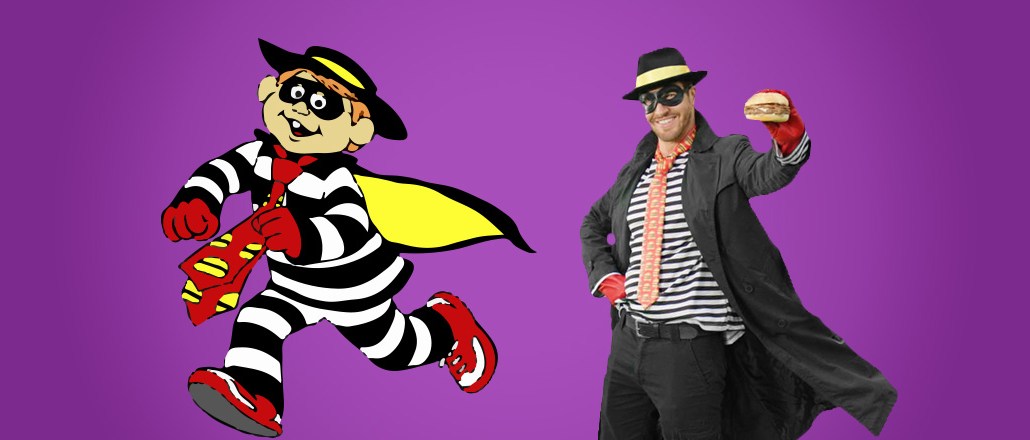
Yesterday, McDonald’s launched its latest attempt to salvage its relevance among millennials by revamping its classic character, the Hamburglar, transforming him from the rosy-cheeked cartoon ’90s kids knew into a real, live man.
McDonald’s has had a rough start to 2015. CEO Don Thompson announced his resignation in late January. Domestic same-store sales are down 4 percent. Multiple reshuffles and layoffs across marketing and other departments have left a company with a significant image problem struggling to communicate their value to a generation that regards their burgers as unhealthy.
So, a few hours in, has McDonald’s relaunch been all sizzle, no steak?
Opinion is divided — not everyone is lovin’ it — but at least the jokes are coming on strong:
What idiot called this guy The Hamburglar and not Mumford and Buns pic.twitter.com/51sNKyHbRl
— Eliza Bayne (@ElizaBayne) May 6, 2015
The new #Hamburglar: The return of a beloved children’s fast food icon or worst stripper costume ever? pic.twitter.com/MuWVxLq6OU — Bethany Miller (@bethanynmiller) May 6, 2015
This new hamburglar looks like he only steals from whole foods. #Hamburglar #McDonalds
— ¯\_(ツ)_/¯ (@OmahaHostage) May 6, 2015
for a second i thought that the new hamburglar was rocking the yeezy red octobers pic.twitter.com/3D17u8PeXl
— Gary He (@garyhe) May 6, 2015
THE NEW HAMBURGLAR SHOULD NOT LOOK LIKE HE IRONICALLY ENJOYS HAMBURGERS pic.twitter.com/okkLbvHBZy
— Brian Gaar (@briangaar) May 6, 2015
All in all, it’s not an egregious backfire — if you believe there’s no such thing as a bad tweet.
However, the clash of tones — is Hamburglar 2.0 a hot dad or playground creeper? — leaves the brand message unclear: In the TV spot, the Hamburglar is a suburb-dwelling father with a wife, tween son and secret identity. In the promotional images, the Hamburglar wears stylish kicks, slouchy pants and sports facial scruff — more urban-living single dude than burger-grilling dad.
If the social impact is anything to go by, this could be a win for the company in spite of itself. In the longterm though, it could have been an excellent opportunity to resurrect the Hamburglar as millennials actually knew him: one-toothed, cheeky, fun, and above all, an ageless cartoon.


More in Marketing
‘The processes are continuing forward’: Advertising’s dealmakers press on with M&A despite Iran uncertainty
War in the Middle East is a problem for advertising’s dealmakers. Just not yet.

In graphic detail: The numbers making the case for what holdcos could be
What the data says about the CMO-agency relationship — and none of it is comfortable.

TikTok rebrands its advertiser pitch around full-funnel ambition
The company’s latest business campaign aims to make the point that the app sees itself as a top tier platform for advertisers, where the full funnel can happen within one experience.