In Graphic Detail: Where brands stand when AI agents do the shopping

AI agents are becoming a new gatekeeper between brands and buyers, picking products by rules marketers don’t yet understand. Here’s what they need to know when navigating that shift.
Amazon keeps the toy aisle to itself
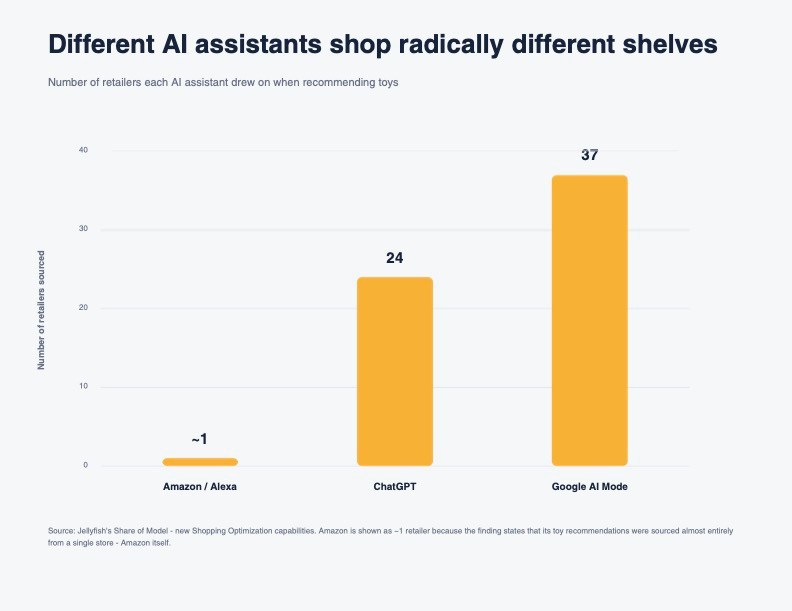
Alexa for Shopping showed toys from 177 brands when asked for recommendations and nearly every one of them came from Amazon’s own store. When the same request was asked of ChatGPT, the AI assistant recommended 24 retailers. Google’s AI Mode went to 37. AI visibility hinges on a brand being stocked in the stores each assistant is willing to look at, and which retailer lands the sale depends largely on which assistant the shopper happened to open. That’s the main takeaway from the analysis conducted by new shopping optimization capabilities within Jellyfish’s Share of Model tool, which tracked product recommendations from the three aforementioned assistants across eight categories in the U.S., U.K., Australia and Singapore.
Retailers get the biggest shelf space on Copilot
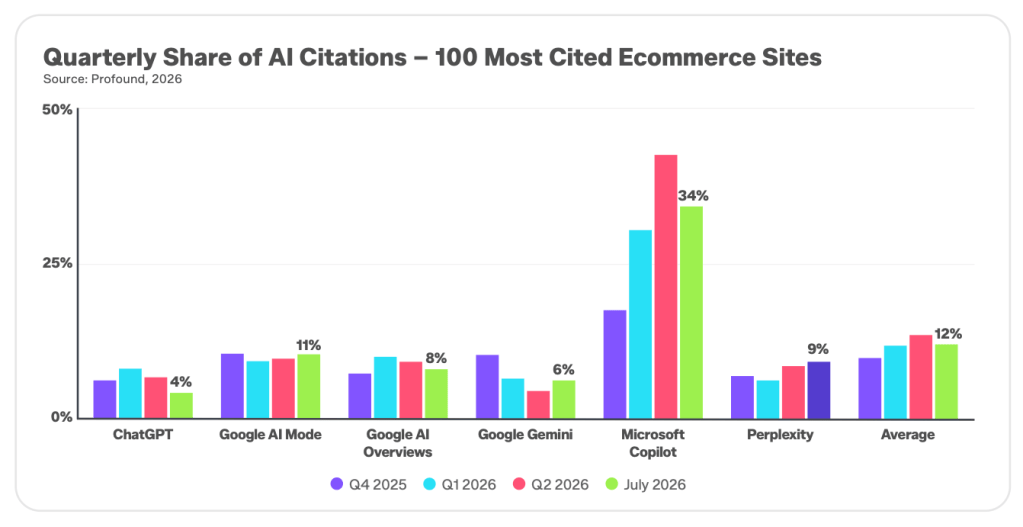
Of all the assistants, Microsoft’s Copilot cites retailers the most, according to Tinuiti. The agency tracked which e-commerce sites the assistants cited most often in answers to its prompts. In July, the top 100 made up 34% of Copilot’s citations. That’s more than triple their share on Google’s AI Mode and more than eight times their share on ChatGPT. Tinuti partly blames Reddit, which blocks Copilot’s crawlers and leaves more room for stores. Across all six assistants it tracked, retailers’ share slipped to 14% in July from $14 in Q2.
The scramble to get picked by the bots
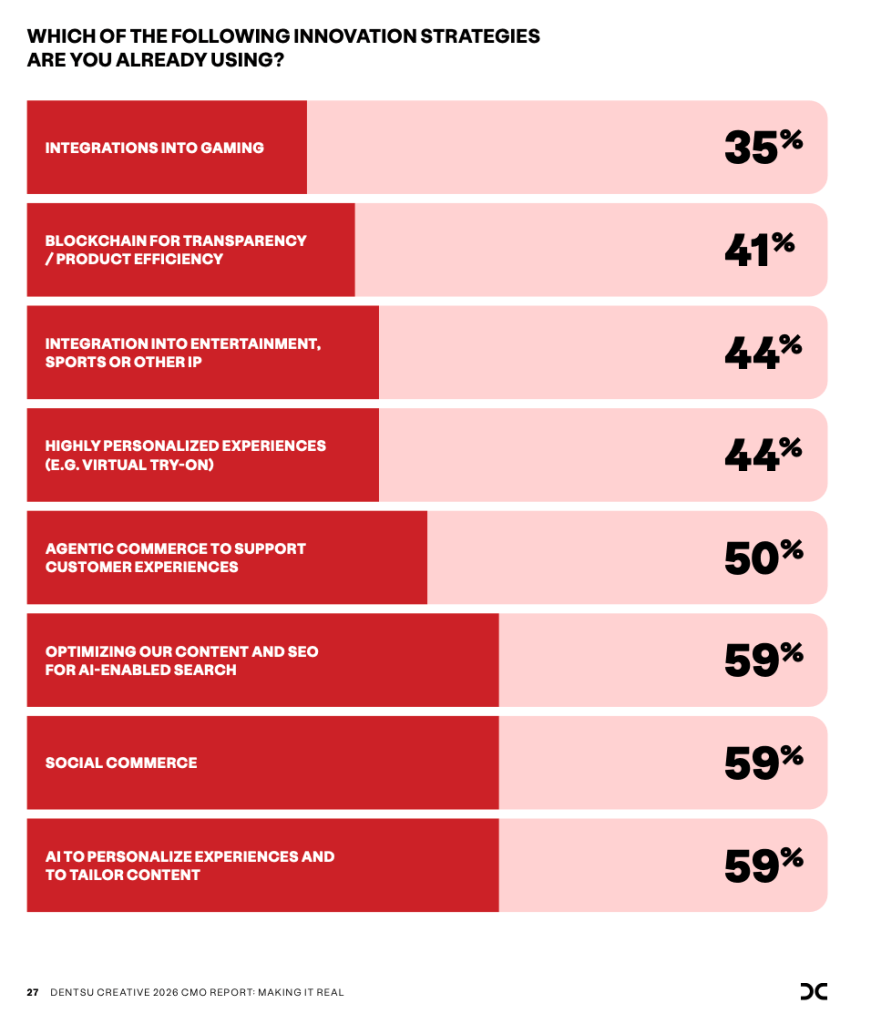
Plenty of marketers have already started trying to get their products in front of those assistants. Dentsu Creative’s latest CMO survey, which polled 1,950 senior marketers across 14 markets in April, found 59% are optimizing their content and SEO for AI-enabled search, while half are investing in agentic commerce to support the customer experience. AI search optimization ties for the top spot among the innovation strategies CMOs say they already use, level with social commerce and AI-driven personalization at 59% apiece.
AI shoppers are worth more, visit for visit
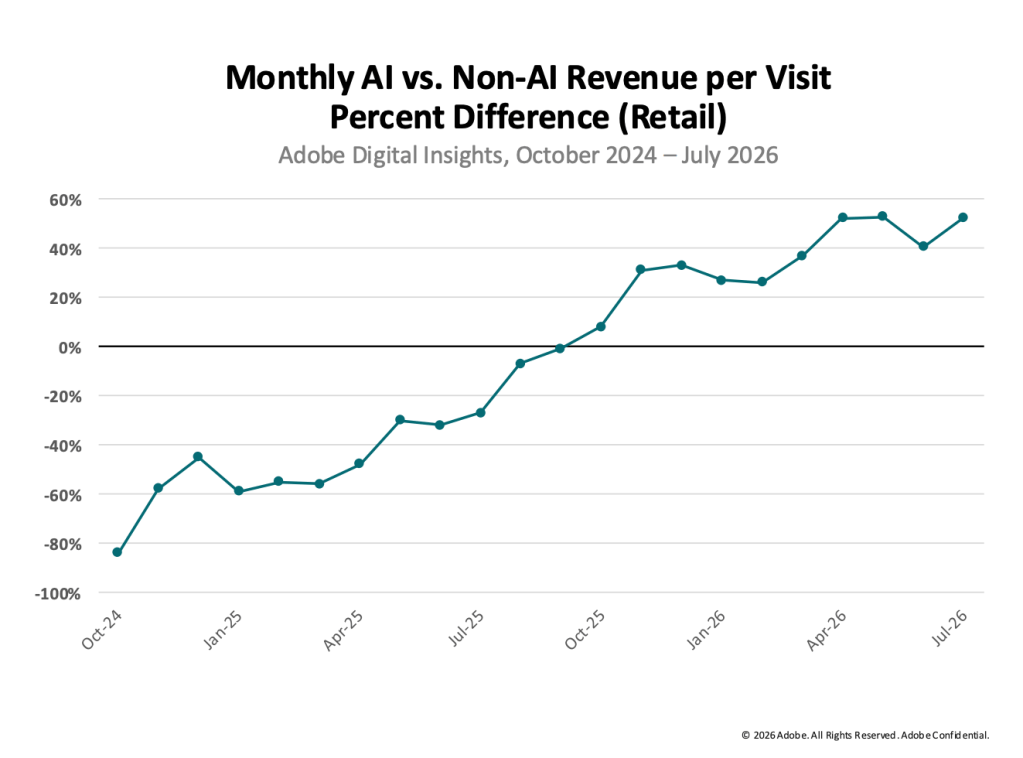
The shoppers those assistants send have become more valuable, at least on a per visit basis. Adobe, which analyzed more than one trillion visits to U.S. retail sites, found AI-referred shoppers generated 53% more revenue per visit than other traffic in July. A year earlier, non-AI visits were worth 128% more. Adobe credits assistants getting better at surfacing relevant products to higher-intent shoppers. It could also reflect who’s using them. People asking a chatbot for a product may already be further along in their decision, and a per visit figure said nothing about how much revenue AI sends overall.
Meta’s agent heads for the checkout
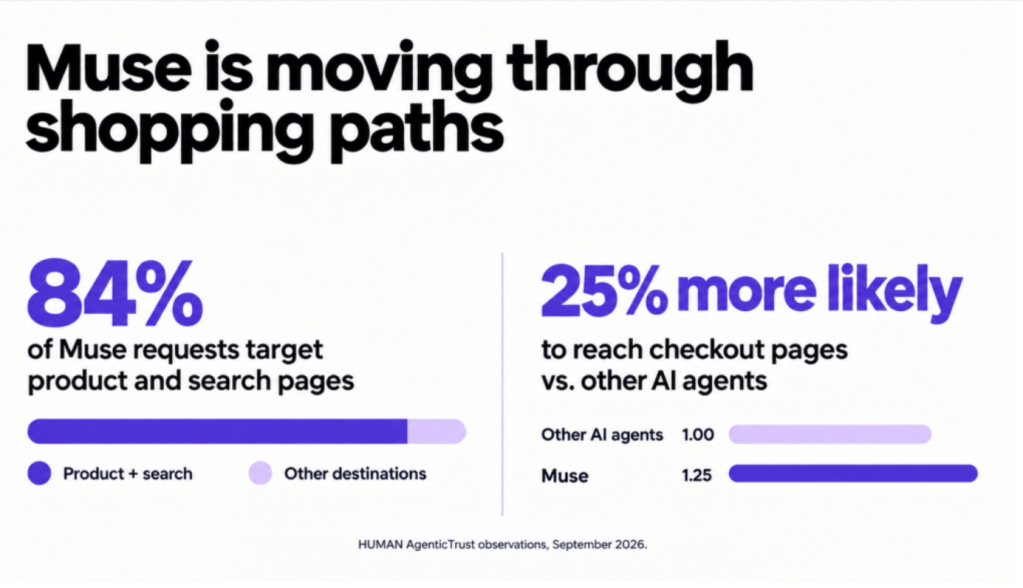
HUMAN Security, which sells tools that help sites spot and manage bots and AI agents, reckons Meta’s Muse could be the first mass-market AI agent. The company began tracking Muse on Sept. 22 and logged 5.6 million requests from it in under two days, a target that took ChatGPT 11 months to reach. Moreover, Muse now accounts for an average of 72% of the daily AI-agent requests HUMAN sees. Most of that is shopping. In fact, HUMAN found 84% of Muse requests target product and search pages, and in a recent sample Muse was 25% more likely than other agents to reach the checkout. Distribution probably helps. Muse has a generous free tier and can lean on Facebook, Instagram, Messenger and WhatsApp to scale.


More in Marketing

Indie agencies want The Trade Desk and Amazon DSP to acknowledge their buying power with negotiating leverage
Indie agencies say DSP giants block direct seats and fee relief despite spend commitments.
Nearly 30% of holiday budgets expected to be spent by the end of October
Per a new report from Deloitte, 28% of shoppers’ budgets are expected to be exhausted by the end of October.

Apple finally explains its Safari block, and identity companies are in its sights
As Apple spells out its case for blocking identity companies in Safari, its job board shows an ads business with big plans.