Join us Dec. 1-3 in Nashville for the Digiday Programmatic Marketing Summit
In Graphic Detail: How AI search has impacted the web traffic of over 50 advertisers

Since AI Overviews were first rolled out by Google in 2024, they’ve only begun to appear against an ever-larger proportion of search results. According to Ahrefs, that’s had the effect of cutting web traffic to some websites by as much as 58% as users opt to remain within Google’s real estate, rather than clicking through.
Understanding how that is impacting advertisers is difficult, because this change has not been felt equally by every business. Companies that heavily rely on direct-to-consumer sales like jeweler Kendra Scott, or that sell products that customers tend to spend a long time considering, like automakers or white goods, are finding themselves on the sharp end of new search behaviors, for example.
If we zoom out a little, however, clear patterns begin to emerge. At marketing services group Brainlabs, organic web traffic declined on average by over 10% following the introduction of Google’s Overview feature, across a sample of the company’s own Google Analytics data covering 54 clients. The dataset includes 24 U.S. firms, 24 British brands, plus six clients operating in other markets (29 were larger advertisers employing at least 1,000 staff).
One agency, one client roster, one clear picture.
Web traffic fell over 10% once Overviews became common
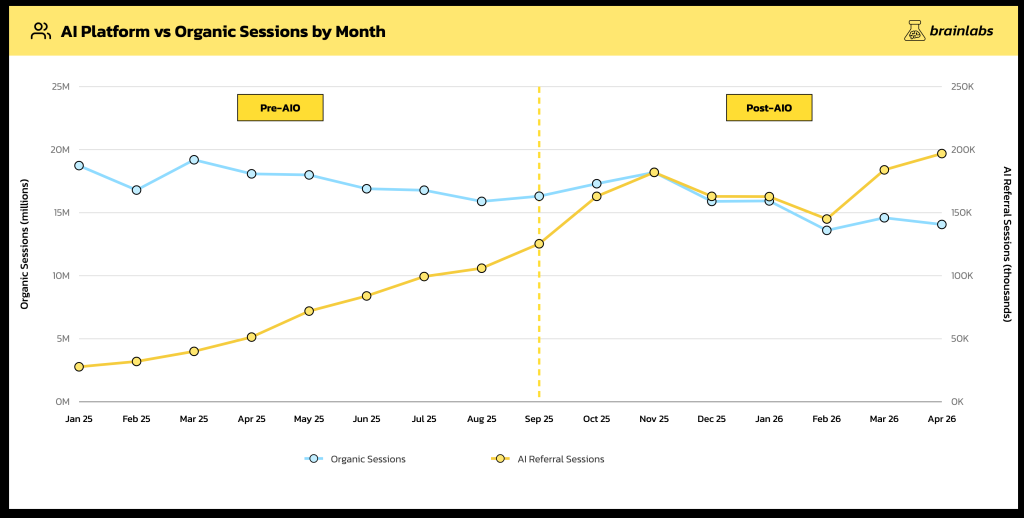
Brainlabs’ data spans a period of 14 months, from January 2025 to April of this year. In September of last year, Overviews began appearing on at least 30% of Google search results pages in the U.S., a moment that provided an “inflection point” for the agency’s clients, according to Sam Paez, senior manager of SEO at the company.
Once that threshold had passed, AI traffic referral traffic from AI sources like ChatGPT or Gemini increased to roughly 200,000 a month, on average, while organic traffic sessions fell from around 20 million a month to less than 15 million.
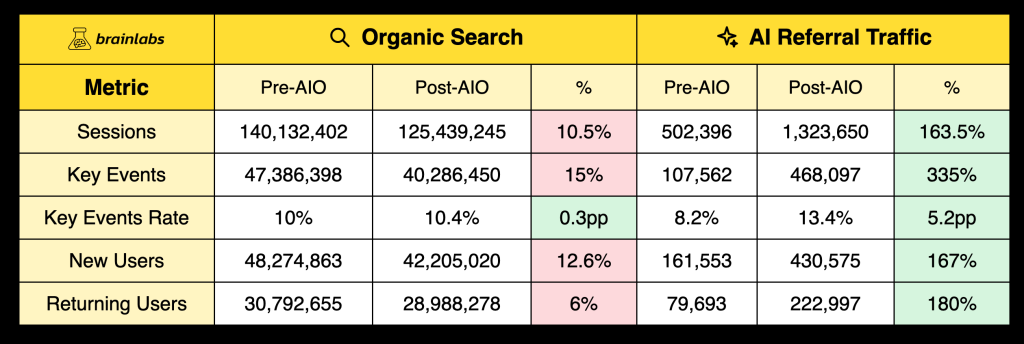
Overall, 46 of the 54 of the company’s clients saw a dip, with numbers across the set falling 10.5% from 140.1 million to 125.4 million sessions. During the same timeframe, sessions from AI platforms ramped up 163%.
Falling traffic hasn’t led to adverse commercial effects
“Overwhelmingly, [Overviews] are being triggered by educational, informative discovery keywords. It is starting to trickle down to transactional, commercial [searches],” said Paez.
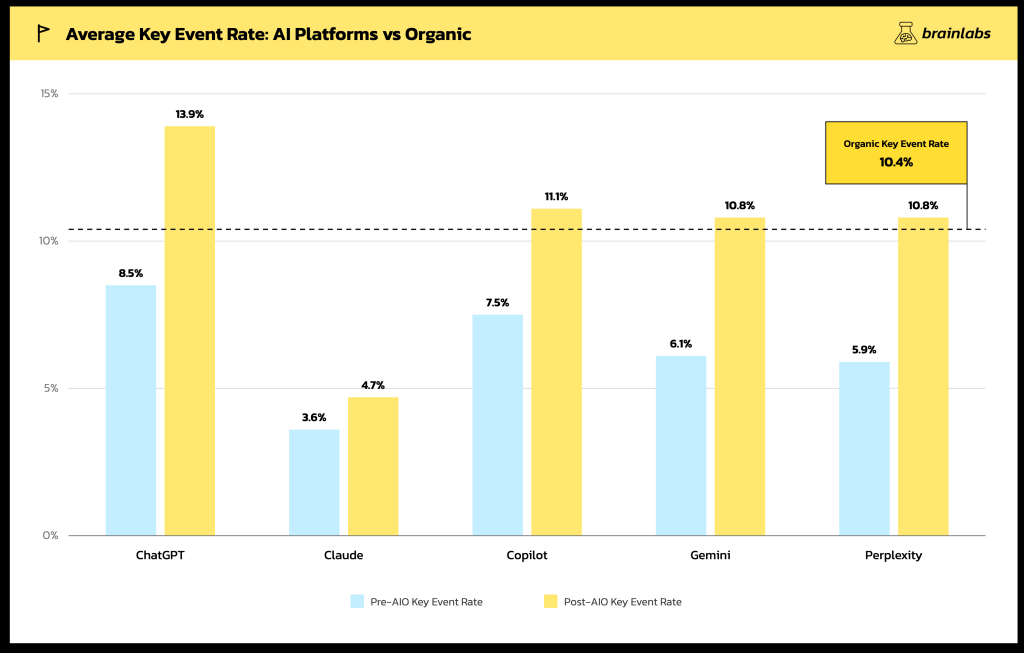
Brainlabs tracked sessions, as well as “key events”, a measure of how many visitors took an action relevant to the advertiser like making a purchase, signing up to a newsletter, or just scrolling to the bottom of a web page. AI-driven key events rose 335% in the timeframe measured, and crucially, the rate at which key events occurred was 1.5 times higher for ChatGPT, Copilot, Gemini and Perplexity referrals than it was for organic search traffic.
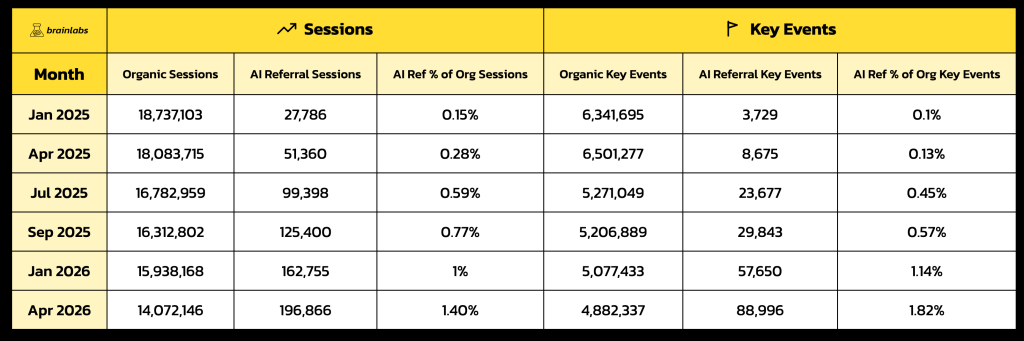
The key events data provides a broad view of a finding businesses have reported anecdotally for the last year. Even when traffic begins to slip, the users that do come through are more likely to buy something or engage with a brand because they’re farther into the product discovery process. In contrast, the search traffic that’s been lost likely represents casual users.
There’s key differences between categories
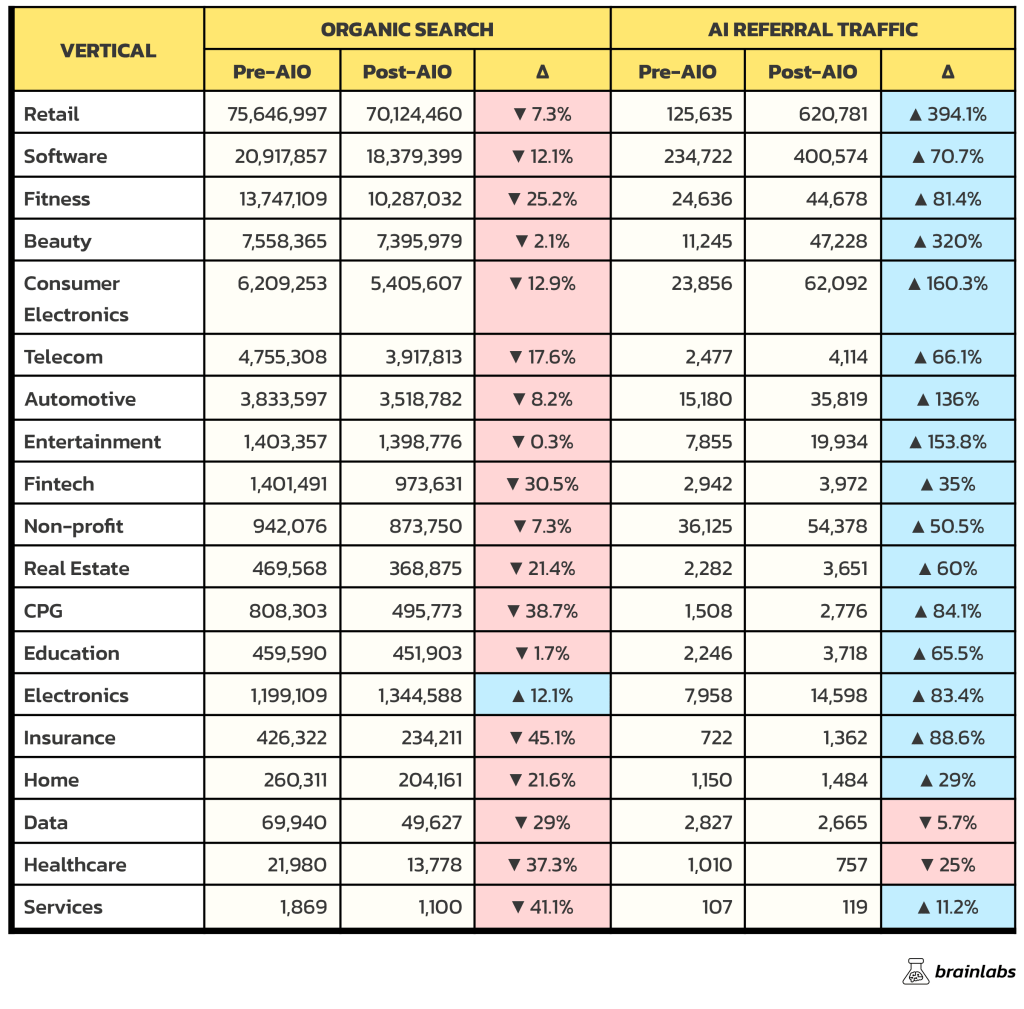
Brainlabs’ dataset spans 19 sectors and included 16 retailers. There’s some interesting variances within the group. Fitness brands, fintech, insurance and CPG brands saw the largest dips in traffic — likely a consequence of them selling products that consumers are keen to compare before investing in. Meanwhile retail, beauty, entertainment clients saw some of the smallest drops in organic search traffic, and some of the highest lifts from AI referrals.
“Retail was one of the least affected by AI overviews, which makes sense with the AI overviews not triggering as much [against] transactional searches,” said Paez.
ChatGPT is dominating AI search app usage
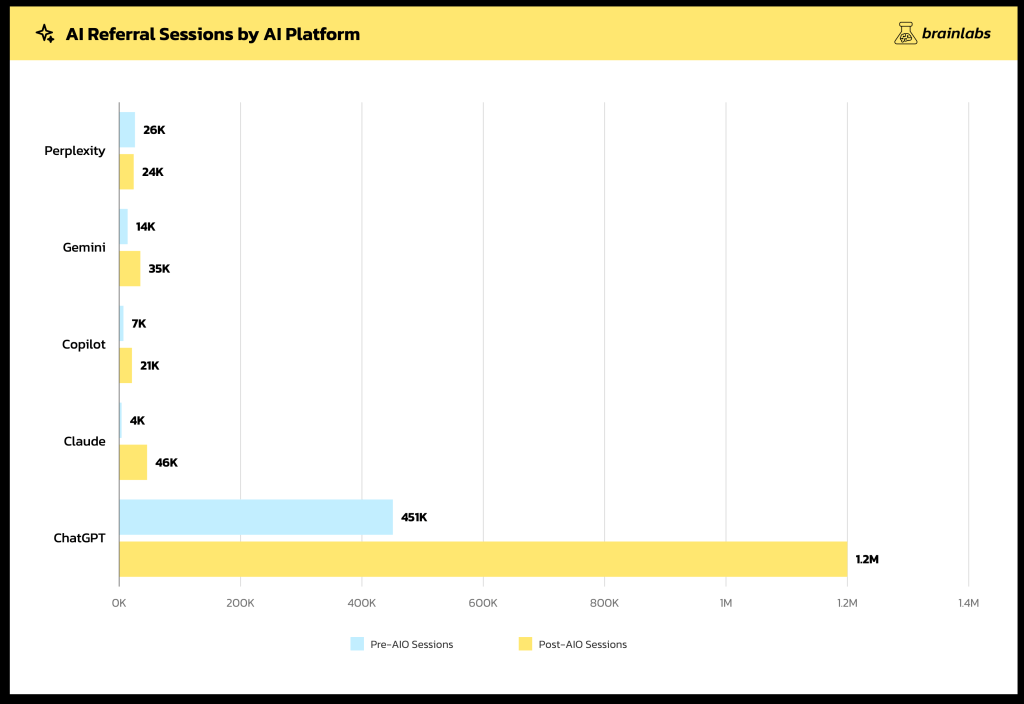
Claude may be the tool agencies turn to when developing AI agents and advanced tools, but it’s used a lot less by general consumers. ChatGPT reached 1 billion monthly active users in May, while Claude notched up 56 million MAUs, per Sensor Tower. Brainlabs’ data shows how that affects web traffic, with ChatGPT accounting for the lion’s share of referrals before and after the September 2025 hinge.
Paez noted that estimates of AI referral traffic may be conservative, because some AI referral visits are recorded as direct traffic — the result of users choosing to open via another browser window to visit a site following a search, rather than clicking through directly from within the AI dashboard.
It’s an unknown that brand teams monitoring their performance need to be aware of, she argued, adding that brands should take into account not just referrals and traffic, but conversion events, for paid media planning.
“We need to start taking this channel seriously,” she said. “It’s definitely a channel you should be including in your everyday measurement KPIs.”


More in Marketing

AI boosts discovery but reviews still seal the deal, new research shows
ChatGPT is where 16% of shoppers start looking for products. However, only 9% go there to actually buy something.

Future of Marketing Briefing: Advertisers have more ways than ever to choose a holdco, and free holdcos to choose from
Fewer holdcos, more ways to pick one: inside the changing agency pitch.

Walmart Connect pitches brands directly as it pushes lift studies ahead of holiday ad deals
Walmart Connect is using lift studies to prove ad performance directly to brands ahead of the holidays, signaling a tighter race with Amazon.