Join us Dec. 1-3 in Nashville for the Digiday Programmatic Marketing Summit
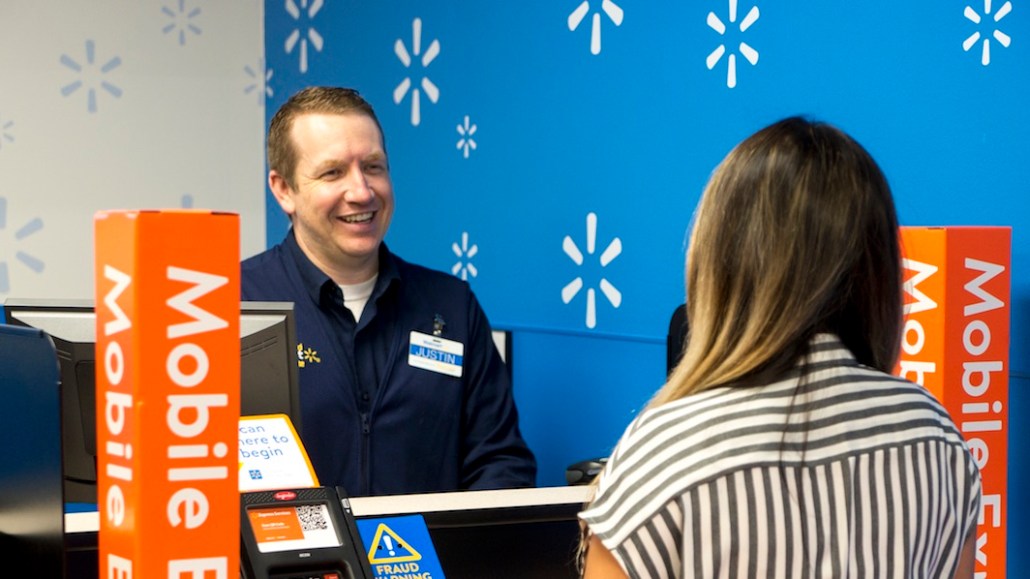
As Amazon grows the Bank of Amazon, Walmart is becoming the PayPal of retailers.
Walmart is expanding the reach of its U.S. money-transfer service Walmart2Walmart to recipients in 200 countries for a flat fee. The service, called Walmart2World, will be offered at all of the retailer’s 4,700 U.S. locations starting this month through a partnership with MoneyGram.
Like any retailer, Walmart isn’t exactly taking on the banking industry — although it has its history of that — but instead, it’s making financial services more accessible to its existing customers in order to keep them and maybe increase their shopping activity.
Like PayPal before it, Walmart already emphasizes the physical channel for underbanked customers who can top up their account balances using cash or card at the point of sale. While it has more recently courted higher-income customers, it’s now reaching out to its original customer segment by encouraging consumers to make in-store transactions.
“[Money transfer services] are like bread at the restaurant for Walmart; it’s negligible revenue for them,” said Daniel Ives, chief strategy officer at GBH Insights. “The broader strategy is to build up that product arsenal on the consumer side — every Walmart customer globally is an Amazon customer that could be taken away.”


More in Marketing

Salesforce’s $5.7 billion Braze deal puts marketers at an ecosystem crossroads
The deal promises faster, more connected marketing, while raising questions about vendor lock-in and how brands stand out as AI automates campaign execution.
AI boosts discovery but reviews still seal the deal, new research shows
ChatGPT is where 16% of shoppers start looking for products. However, only 9% go there to actually buy something.

Future of Marketing Briefing: Advertisers have more ways than ever to choose a holdco, and free holdcos to choose from
Fewer holdcos, more ways to pick one: inside the changing agency pitch.