Join us Dec. 1-3 in Nashville for the Digiday Programmatic Marketing Summit

If as a client you decide it’s a good idea to not pay your agency, you might want to ensure they don’t have control of your domain or hosting account first.
Gym chain Fitness SF learned that lesson the hard way today when its site was hijacked by Frank Jonen, the small European firm it hired to build it. In place of the regular site content a message from the agency currently reads, “Dear Fitness SF customer, Fitness SF preferred to ignore our invoices instead of paying them. As a result this website is no longer operational.”
It adds, “Normally there is no question of paying one’s dues. It is simply a matter of morals. Having morals and acting upon them or not having any and just betraying the people that got you started. Sadly we’ve come to know what Fitness SF stands for, or you wouldn’t be reading this,” and then goes on to encourage customers of the fitness chain to leave negative comments on the Facebook pages of its various locations in the Bay area.
“Shame on you crooks,” wrote one Facebook user. “Pay your bills and treat others right,” added another.
Jonen goes on to call his fellow freelancers and designers to arms, and encourages them to take a stand against clients that take advantage of the small businesses they trade with. He’s relishing the opportunity, it seems, to do what so many in his position would love to: publicly name and shame slow-paying clients.
Hell hath no fury like a designer scorned, it seems. The moral of the story: pay your agencies and freelancers what they’re owed. Or at the very least ensure they don’t have access to your assets.
UPDATE: When asked by Digiday by phone for comment on the matter, a Fitness SF representative named Don simply hung up.
San Francisco Egoist, apparently, was the first to post on the brouhaha.
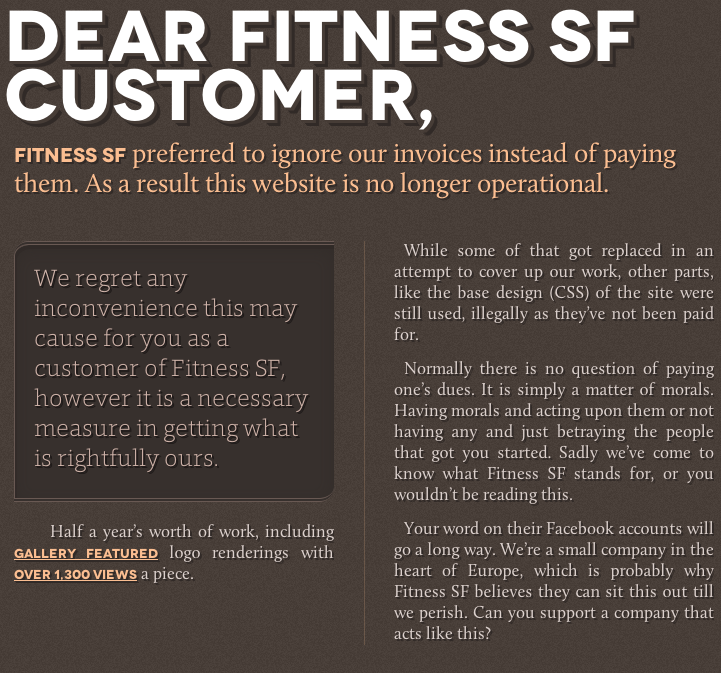
Image via Shutterstock


More in Marketing

AI boosts discovery but reviews still seal the deal, new research shows
ChatGPT is where 16% of shoppers start looking for products. However, only 9% go there to actually buy something.

Future of Marketing Briefing: Advertisers have more ways than ever to choose a holdco, and free holdcos to choose from
Fewer holdcos, more ways to pick one: inside the changing agency pitch.
Walmart Connect pitches brands directly as it pushes lift studies ahead of holiday ad deals
Walmart Connect is using lift studies to prove ad performance directly to brands ahead of the holidays, signaling a tighter race with Amazon.