Join us Dec. 1-3 in Nashville for the Digiday Programmatic Marketing Summit
‘Brands need to have more dimensions’: Unilever CMO Keith Weed on marketing in transition
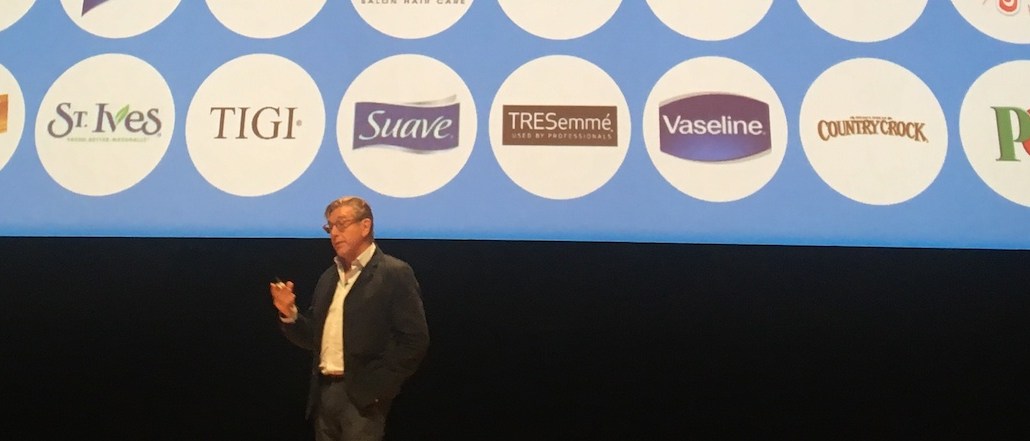
Unilever has been in the news for its recent innovation shopping spree, snapping up Dollar Shave Club earlier this summer and Seventh Generation just this week. But that wasn’t the focus of CMO Keith Weed’s keynote session today at the Transition conference, a two-day event by marketing platform Percolate.
Instead, Weed chose to focus on how the global consumer goods giant and its brands are keeping up with the seismic shifts in the world of marketing today. Below are some excerpts from his keynote, some lightly edited:
By moving south and east
“By 2020, Asia will account for 42 percent of the world’s GDP and by 2030, it’ll be 54 percent. Our head office in Mumbai is larger than our head office in London, as is our head office in Shanghai. So we’re making big changes there.”
By engaging with individuals
“Our marketing machine has moved from marketing at people to marketing with people, and in the future we will move to marketing for people. I think in the ‘80s and ‘90s marketing lost its way, we need to bring it back to serving individuals. The goal is to have 1 billion individual relationships.”
Axe’s “Romeo Reboot” campaign in Brazil and Dove’s “Curly Hair Emoji” campaign are two recent examples of how Unilever has been making its marketing more individual-focused, said Weed. Here’s a look at the Axe campaign:
By collaborating with influencers
“Influencers are the biggest thing being unleashed right now. Understanding how to do that at scale is another big part of transition. Brands need to have more dimensions than before, and influencers are a good way to do that.”
Unilever brand Persil and agency MullenLowe London partnered with Sir Ken Robinson, world leading expert in education, creativity and human development to create this touching film for their “Dirt is Good” campaign. They interviewed inmates at the Wabash Valley Correctional Facility, a maximum security prison in Indiana, about the the importance of the outdoors.
By being socially responsible
“You can’t have a healthy business in an unhealthy society. As a lawful business, you have to build a healthy society. As a lawful business, you have to take responsibility for footprints and drive a path forward. Sustainability is a huge part of our business model.”


More in Marketing

AI boosts discovery but reviews still seal the deal, new research shows
ChatGPT is where 16% of shoppers start looking for products. However, only 9% go there to actually buy something.

Future of Marketing Briefing: Advertisers have more ways than ever to choose a holdco, and free holdcos to choose from
Fewer holdcos, more ways to pick one: inside the changing agency pitch.

Walmart Connect pitches brands directly as it pushes lift studies ahead of holiday ad deals
Walmart Connect is using lift studies to prove ad performance directly to brands ahead of the holidays, signaling a tighter race with Amazon.