Last chance to save on Digiday Publishing Summit passes is February 9

Twitter co-founder Biz Stone launched a new social query app called Jelly just two weeks ago and early adopters are already using it to ask questions based on photos they’ve taken or screengrabbed. Want to crowdsource the genus of a particular backyard rodent or identify a B-list celeb you may have seen on the street? Jelly’s for you. Just snap a photo, and ask your extended social network whatever might be puzzling you.
But increasingly, it’s for brands too. Big companies are already trying their hand at Jelly, with varying success. Here’s some we’ve noticed posting questions there in the past couple of days, including Whole Foods, Lowes and Ben & Jerry’s. They range from intriguing, to boring, to just plain strange:
Whole Foods
The supermarket chain opted to pose a confusing dual question, asking how users get back into their work routines and how they feed their families. Presumably not by spending time on Jelly.

Lowes
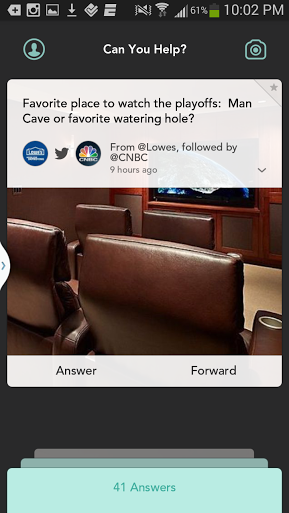
The home improvement store asked Jelly users if they’d rather watch the football playoffs in a man cave or a bar. What about those of us with cable TV in our bathrooms, Lowes? Maybe it’s YOUR home that needs improving.
General Electric
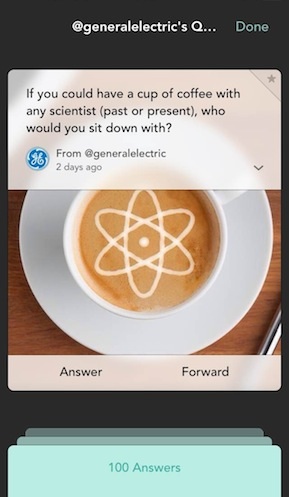
GE kept things simple and on-brand, and asked users which scientist they’d sit down with for a coffee if they had the chance. Presumably you also get the opportunity to talk to the scientists. We’d love to know who they’d choose.
Ben & Jerry’s
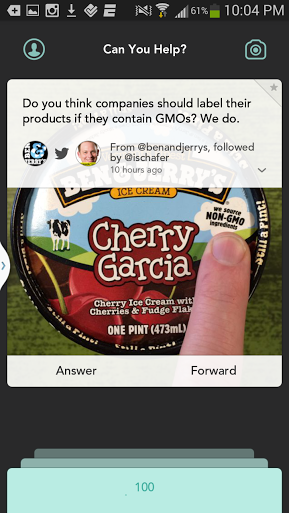
Ice cream brand Ben & Jerry’s took the opportunity to highlight its own no-genetically-modified-organism policy with an unimaginative question about GMOs.
Shutterstock
It’s more of a business brand than a consumer company, but the stock photo service is arguably making better use of Jelly than the companies above — and actually asking a vaguely interesting question. The problem, though, is we have no way to find out the answer. Is it a flower? Or a bunch of pencils with no lead?



More in Marketing

GLP-1 draws pharma advertisers to double down on the Super Bowl
Could this be the last year Novo Nordisk, Boehringer Ingelheim, Hims & Hers, Novartis, Ro, and Lilly all run spots during the Big Game?

How food and beverage giants like Ritz and Diageo are showing up for the Super Bowl this year
Food and beverage executives say a Super Bowl campaign sets the tone for the year.

Programmatic is drawing more brands to this year’s Winter Olympics
Widening programmatic access to streaming coverage of the Milan-Cortina Games is enabling smaller advertisers to get their feet in the door.