As brands should well understand by now, launching a branded hashtag campaign can be a bit like leaving teenagers home alone for a weekend. They invite a few friends over and before you know it a whole village of hooligans has invaded your space and is trashing your stuff. You end up coming home to a big mess to clean up. And yet, brands still insist on using those hashtags.
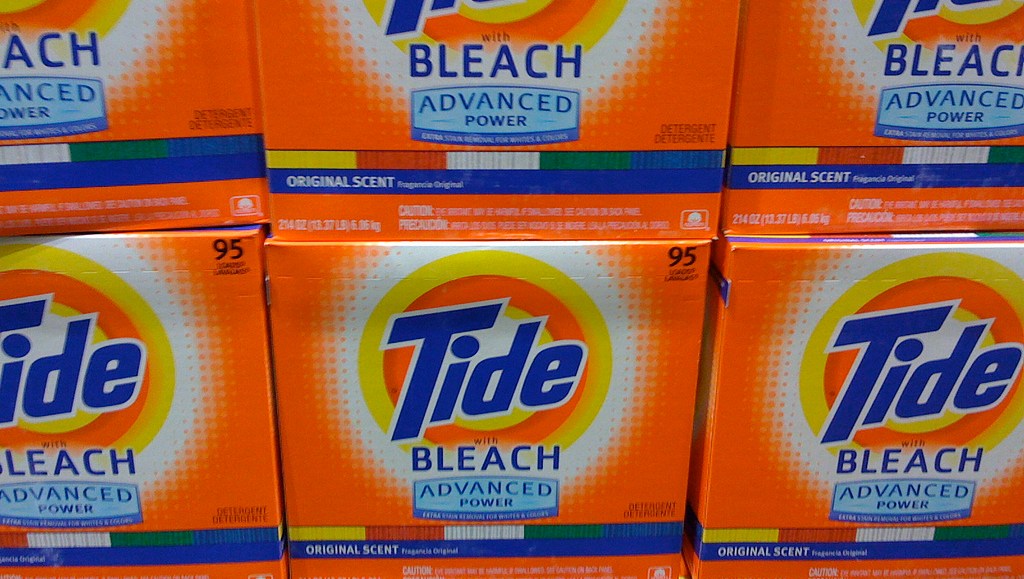
The latest brand to take the hashtag gamble is Tide. The detergent maker started using the promoted tweets for its #cleanwins campaign just this morning. But a quick Twitter search for the #cleanwins hashtag shows that people aren’t exactly using it the way the brand intended. Here is a breakdown of how Tide’s #cleanwins hashtag campaign evolved, or rather devolved, once it launched. Watch how it can all go so wrong, so quickly for branded hashtags.
First, the brand initiates the hashtag as part of a tie-in to football season and pushes it out through Twitter promoted tweets:
When your wife washes your Super Bowl Miracle Stain, you don't get mad. You get even. #cleanwins https://t.co/veW1gK5y8T
— Tide (@tide) September 5, 2013
Enter other tweets that make sense for the hashstag #cleanwins, but don’t have to do with Tide’s version:
Baking soda, vinegar, peroxide & lemon are great ingredients to use instead of conventional cleaning products. #cleanwins
— The Team at TheSFile (@TheSFile) September 5, 2013
The one who has clean hands and a pure heart, who does not trust in an idol or swear by a false god. Ps 24:4 #cleanwins
— His Way (@Godinthewhisper) September 5, 2013
Now, for some criticism about Tide’s sexist messaging and confusion regarding the hashtag:
“@tide: When your wife washes your Super Bowl Miracle Stain, you don’t get mad. You get even. #cleanwins https://t.co/JqcpklTq7r”
I refuse to believe that most men lack opposable thumbs and the capacity to understand how a washer works. #cleanwins @Tide
— Molly Cantrell-Kraig (@mckra1g) September 5, 2013
Is #CleanWins supposed to be about religion, the Super Bowl, or doing your laundry? I’m confused.
— Abby Nielsen (@absterpoo) September 5, 2013
And then, of course, there’s drugs. Of course there’s drugs:
Wake n bake time #cleanwins pic.twitter.com/LO32M1e1mN
— kyle randall (@purplesyurp) September 5, 2013
And also racist stuff:
https://t.co/0YHeQYV63Y Funny Asian Guy in Slow Motion! LMAO! #cleanwins
— Jeff Mauder (@Maudernized) September 5, 2013
And, bizarrely, a smattering of anti-Syrian war protest, with zombies:
https://t.co/o6B14QPnfT #cleanwins and no #war in #stria. A MESSAGE FOR US ALL PLZ RT!!!!!!!!!!!!!
— Brandon Copeland (@granalbanil) September 5, 2013
Of course, this is just from today, so there will no doubt be plenty more to come. Good luck cleaning up this mess, Tide. #cleanwins.
Image via Flickr


More in Marketing
‘Mission and capital can coexist’: Golden State Valkyries’ Jess Smith on pitch to sponsors
The WNBA’s newest team must navigate measurement demands and marketers wanting to share in the ‘mission’ if it’s to establish a commercial foothold.

Future of Marketing Briefing: Why top creators are taking fewer brand deals
The biggest creators are cutting their brand rosters and asking more of the partners they keep.

‘There’s nothing wrong with being a heritage brand’: How Revlon is updating its image by looking to the past
Revlon named musician and actress Teyana Taylor and country music star Megan Moroney as the faces of its “Revlon Be Unforgettable” campaign.