Join us Dec. 1-3 in Nashville for the Digiday Programmatic Marketing Summit
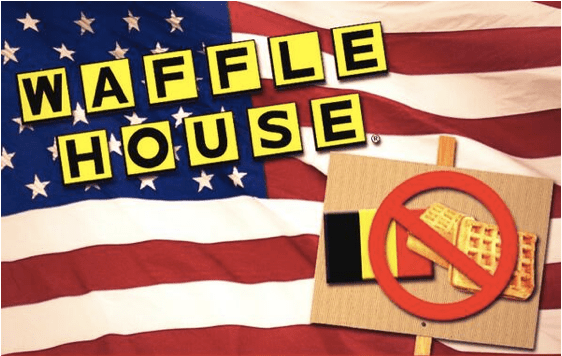
Ah, Belgium. The tiny sliver of land in Europe’s Low Countries region is home to just about the only nationality that it’s acceptable — encouraged, even! — to openly mock.
As such, Twitter was abuzz with cheeky anti-Belgian sentiment today in the run up to the country’s World Cup match against the U.S. team. An easy target for its historic affiliation with the Belgian waffle, the country was targeted by brands eager to cash in on some cheap pro-American fútbol sentiment.
National icon Waffle House, perhaps walking the hardest line of any brand out there today, was sure to make clear where its loyalties lie — while still shilling its baked goods.
We ready #USA #WEBELIEVETHATWEWILLWIN pic.twitter.com/Sfdg0zXyNJ
— Waffle House (@WaffleHouse) July 1, 2014
Southeastern (America!) chicken and biscuit chain Bojangles, meanwhile, doubled down on the patriotic imagery with an image that, frankly, has us craving a nice light salad.
Today is the day. Eat a biscuit. Support @ussoccer. #BeatBelgiumWithBiscuits #USAvsBEL pic.twitter.com/A8A5SnVepp — Bojangles’ (@Bojangles1977) July 1, 2014
USA watery beer stalwart Coors Light, meanwhile, did its own share of all-American waffle-bashing.
Hey Belgium, how do you like them waffles? #GoUSA #IBelieveThatWeWillWin pic.twitter.com/ywmYFKnvUR
— Coors Light (@CoorsLight) July 1, 2014
And true-blue Chobani didn’t mince its words either.
We’re gonna smother you. #GoUSA #USAvsBEL #IBelieveThatWeWillWin pic.twitter.com/2RemBk3bqa — Chobani (@Chobani) July 1, 2014
Republican Texas Sen. Ted Cruz poured on the jingoism like so much maple syrup with this winking reference to the bad old days of Congressional Freedom Fries.
Freedom Waffles for lunch anyone? #USA #1N1T #IBelieve pic.twitter.com/RlgSmPq0py
— Senator Ted Cruz (@SenTedCruz) July 1, 2014
Finally IHOP, which despite its internationalist trappings is as American as you get, shoots and scores with its sly and sublte tweet.
Pancakes for the win.
— IHOP (@IHOP) July 1, 2014


More in Marketing
Salesforce’s $5.7 billion Braze deal puts marketers at an ecosystem crossroads
The deal promises faster, more connected marketing, while raising questions about vendor lock-in and how brands stand out as AI automates campaign execution.
AI boosts discovery but reviews still seal the deal, new research shows
ChatGPT is where 16% of shoppers start looking for products. However, only 9% go there to actually buy something.
Future of Marketing Briefing: Advertisers have more ways than ever to choose a holdco, and free holdcos to choose from
Fewer holdcos, more ways to pick one: inside the changing agency pitch.