Join us Sept. 14-16 in Miami to connect with top publishing leaders
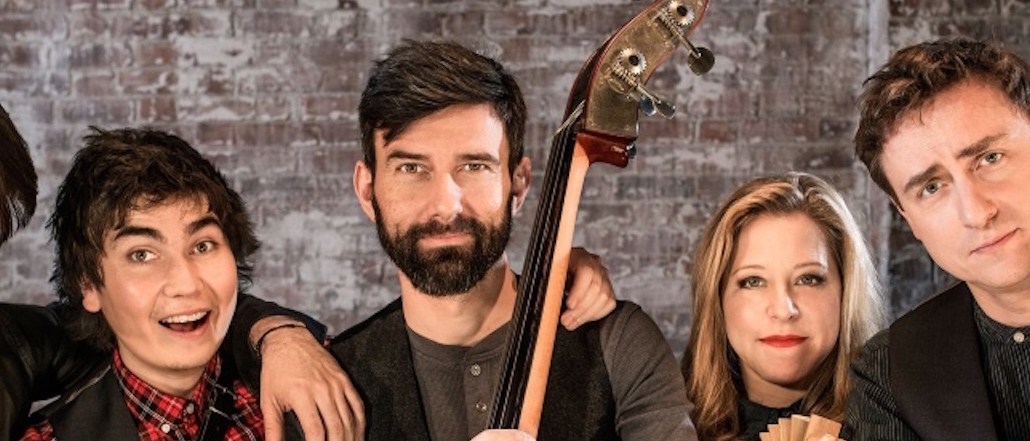
It’s a rainy day in London, and your packed commuter train is steaming up. After complaining on Twitter, a video ad pops up — complete with a singing quintet — telling you to stay strong.
These are the kind of moments yogurt brand Actimel wants to own. It is taking targeting to new narrows by pinpointing specific groups of people at specific moments in their days. In April, it rolled out its first real-time marketing campaign, #StayStrong, which targeted people at their most miserable — during their commute, for example, or when they were suffering exam stress — and sent them uplifting messages.
The brand created over 100 different music videos with its fictional band the Stay Strong Brothers in languages including English, German and French. Once a certain data target was hit, like when, for example, a keyword started trending, messages were deployed programmatically across social media, TV and outdoor ad units with the help of agencies MEC and TVTY.
The aim was to add an “emotional connection” to Actimel’s messages, explained Marjorie Borreda-Martinez, who runs Actimel’s global digital activity.
“We were wondering how we can come to life,” she said. “Rather than something that doesn’t bring anything to the consumer, we want to deliver messages when they need them most.”
According to Borreda-Martinez, results have been promising. Prior to April, the brand had a small social presence. But by July, Actimel had garnered 1 million social interactions. Having sent out 13,400 messages, its mentions also rose 203 percent to 52,000.
Its ratio of negative to positive comments also improved, with six positive mentions for every one negative mention. Prior to its moments activation, it had been an even split. Following this success, the brand’s 15 international content teams are now part of a yearly, moments-focused calendar where 80 percent of moments are planned in advance, while 20 percent happen in real time.
The brand’s digital spend (around 25 to 30 percent of its total) is split between awareness and engagement. And the latter is now almost entirely taken up by these “moments.”
With social media war rooms on the wane, real-time marketing teams are now shifting focus from tentpole events to everyday activities, or “micro moments,” such as these across the board. A recent TVTY survey of 200 digital marketers found that 34 percent of brands are using these so-called micro moments to trigger campaigns.
One of Actimel’s ads on the maps app Waze targeted drivers who had been stationary for more than three seconds and were, therefore, likely to be disgruntled about traffic.
“We’ve never had such a complex media plan; it’s a big excel sheet full of signals,” said Borreda-Martinez. “Implementation is very complex.”


More in Marketing
Ad Tech Briefing: Regulatory storm clouds gather and scatter over Big Tech, and indies count the cost
The FTC’s Amazon charges presage Google’s second antitrust let-off in a year, while The Trade Desk sheds hundreds.
Anthropologie is launching Nike as sneaker shoppers increase nearly 30%
The retailer is planning a full digital campaign to accompany the launch. The first of nine styles launched on Monday, with the rest rolling out by September 21.
Future of Marketing: Brands want creators who can win over humans and machines at once
Why creator briefs are starting to look like a map of AI search queries.