Last chance to save on Digiday Publishing Summit passes is February 9
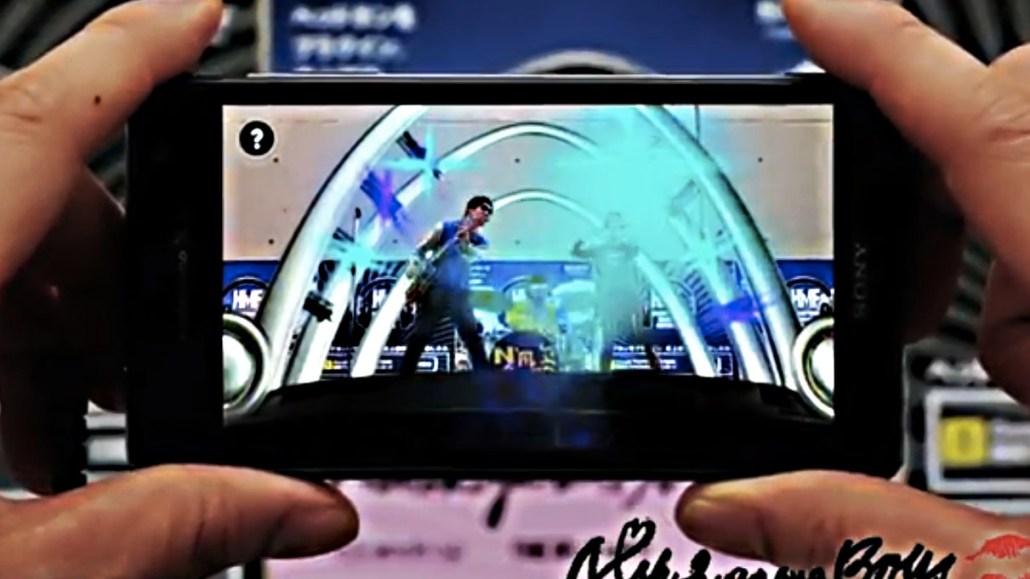
Augmented reality is the new tech everyone loves to hate. Sure, there have been some disastrous and gratuitous uses of the tech, but that doesn’t mean all hope is lost.
Sony put on a rock show in Japan — where else? — that didn’t involve a stage or a crowded venue. It just took some smartphones, an app, headphones and some augmented reality magic.
With the help of agency Naked Communications, Sony put on a “Headphone Music Festival” to promote its headphones, which are specifically designed for smartphones. To bring the concert to life, Sony created an app using its SmartAR technology. To watch the concert, all people had to do was download the app, put on their headphones and then scan a “Headphone Music Festival” poster to see virtual performances on their smartphones by four popular local bands.
This was the first augmented reality concert. This is definitely a cool way to showcase new technology and give people a cool experience. There have been some others. Last year, Maybelline created an augmented reality app that let people see what different nail polishes would like like on their nails before purchasing the color. To save shelf space, U.K. supermarket chain Tesco experimented with AR to showcase certain products without having to have them physically on store shelves. There are definitely useful and interesting ways that brands can use augmented reality.


More in Marketing
GLP-1 draws pharma advertisers to double down on the Super Bowl
Could this be the last year Novo Nordisk, Boehringer Ingelheim, Hims & Hers, Novartis, Ro, and Lilly all run spots during the Big Game?
How food and beverage giants like Ritz and Diageo are showing up for the Super Bowl this year
Food and beverage executives say a Super Bowl campaign sets the tone for the year.
Programmatic is drawing more brands to this year’s Winter Olympics
Widening programmatic access to streaming coverage of the Milan-Cortina Games is enabling smaller advertisers to get their feet in the door.