Join us Oct. 26-28 in Newport Beach for the Digiday Media Buying Summit
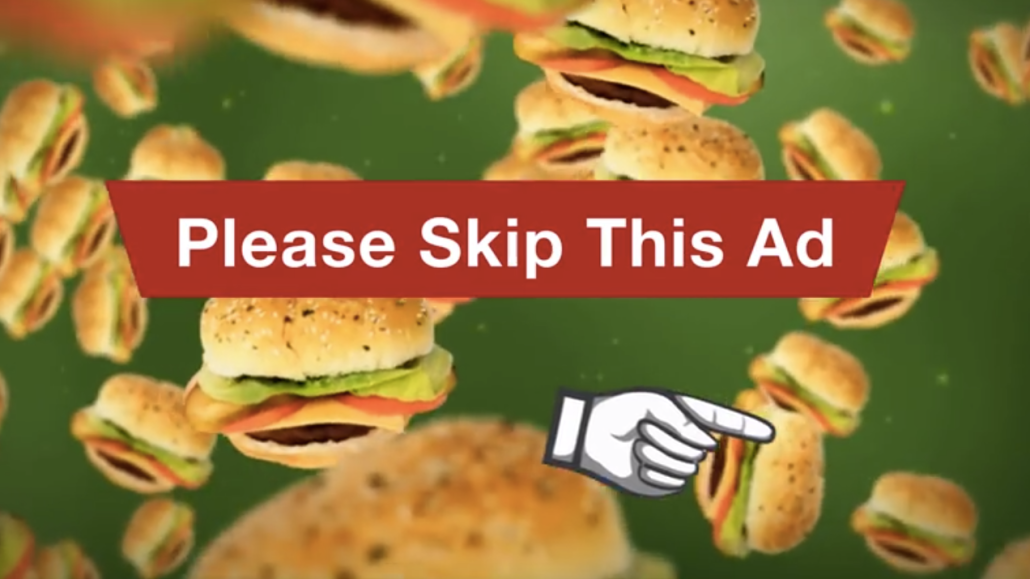
Eat24, the food delivery app, has figured out how to get people to watch YouTube pre-roll ads. The secret? Tell them not to. In a recent campaign, the app literally told viewers to “Skip This Ad,” — and Jedi mind tricked them into watching. Here’s Eat24’s rationalization:
“In all likelihood, most viewers would pre-position their cursor over the ‘Skip Ad’ button, ready to blast away our commercial ASAP. And who could blame them?”
But the reverse psychology approach seems to have struck a nerve, as they explained in a blog post about the experiment.
The video has more than 581,000 views on YouTube …
… and saw a 75 percent increase in app downloads the weeks the campaign was running. More than 90 percent of viewers actually completed watching the ad, which had a staggeringly high click-through rate of 7.1 percent.
It’s not the first time a brand was clever about their preroll placement. Last year Volkswagen had a similar gimmick in its Beetle campaign. The car, the ad said, “automatically shifts gears and skips ads for you.”
Nor is it the first time Eat24, which has been known to place display ads on porn sites, has itself dabbled in unorthodox advertising. But the cutesy approach appears to have had a real impact. While Eat24 had to pay for each of those “Skip This Ad” views, it claims it resulted in “thousands more orders from new customers.”


More in Marketing

Ikea’s CMO sees LLMs as the newest place a brand has to hold its line
LLMs have widened the brand. Ikea’s CMO thinks the basics still hold.

How many people does it take to run an agency? According to Bad Mktg, just two if you’re using AI
BaD Mktg is just two employees and a lot of AI to run the business and ideate. The secret to its success? The experience of the people leading the ideation.

‘Mission and capital can coexist’: Golden State Valkyries’ Jess Smith on pitch to sponsors
The WNBA’s newest team must navigate measurement demands and marketers wanting to share in the ‘mission’ if it’s to establish a commercial foothold.