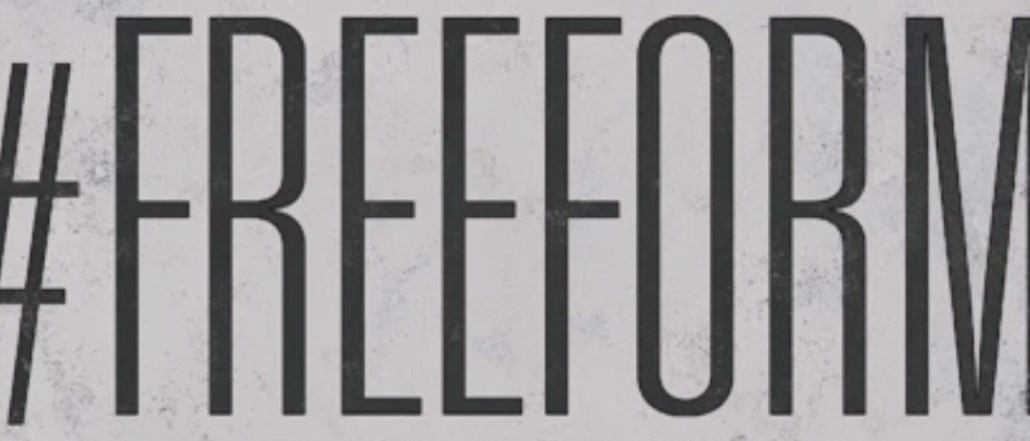
Freeform. That’s not a rejected platform name, it’s ABC Family’s new name.
In a move that rivals Gannett’s changing its name to Tegna as the most ambiguous media re-brand this year, the Disney-owned cable channel announced today it will be dropping “family” from its name for the first time in nearly 30 years. The pivot is an effort to rid itself from the stodgy perception that its programming is for families (gross!).
The network reportedly considered 3,000 names, including “XYZ” or the simpler “ABCF,” yet it settled on Freeform. According to its president Tom Ascheim, the new name “evokes the spirit and adventure of our audience,” which is apparently a new demographic it has dubbed becomers.
Becomers — try typing it without rolling your eyes — is a term for a group of people that are between 14 and 34, squashed squarely between the millennial and Generation Z perimeters.
“The most important question that young people ask themselves as they’re going from high school to their thirties is, ‘Who am I becoming?’ So we call the life stage ‘becoming’ and the people going through it Becomers,” he explained in April.
One thing we know this target demo has already “become?” Jokesters. Shortly after ABC Family shed its dusty old title, people quickly mocked the stupid new name.
Here are some of the best:
Leaked alternate ABC Family rebrand options: Kinda #NSFW #SquadGoals It’ll Be On Netflix In 6 Months
— Cory Barker (@corybarker) October 6, 2015
I’m surprised ABC Family renamed itself Freeform instead of pandering more to millennials by just naming the network #AllDayBreakfast. — Andy Dehnart (@realityblurred) October 6, 2015
Can’t wait for MTV to one-up ABC Family’s #Freeform with its new network name: ¯\_(ツ)_/¯
— Tim Baysinger (@tim_bays) October 6, 2015
‘oh just watching my favorite shows on freeform’ ‘on what?’ ‘freeform’ ‘what’ ‘freeform’ ‘what’ ‘freeform’ etc. etc pic.twitter.com/QKEFZ4uDGT — doctor pilot (@pilotbacon) October 6, 2015
Here you go, @ABCFamily. I decided to #Freeform with you as requested. pic.twitter.com/jPrJxxjdVD
— Myles McNutt (@Memles) October 6, 2015
ABC Family officially morphs into Freeform (FreeForm? #Freeform?) on Jan. 1, 2016.
Images via YouTube/Screenshot.


More in Marketing

‘There’s nothing wrong with being a heritage brand’: How Revlon is updating its image by looking to the past
Revlon named musician and actress Teyana Taylor and country music star Megan Moroney as the faces of its “Revlon Be Unforgettable” campaign.

Inside agency OK Future’s AI ‘pressure cooker’ experiment with Goodwipes
OK Future cut Goodwipes’ AI spoof from six weeks to four days, exposing big savings and burnout risks.
From influencers to AI, here’s what Gen Alpha thinks about your brand
The Gen Alpha cohort now influences nearly half of total U.S. household spending in families with children ages 8-14.