Join us Oct. 26-28 in Newport Beach for the Digiday Media Buying Summit
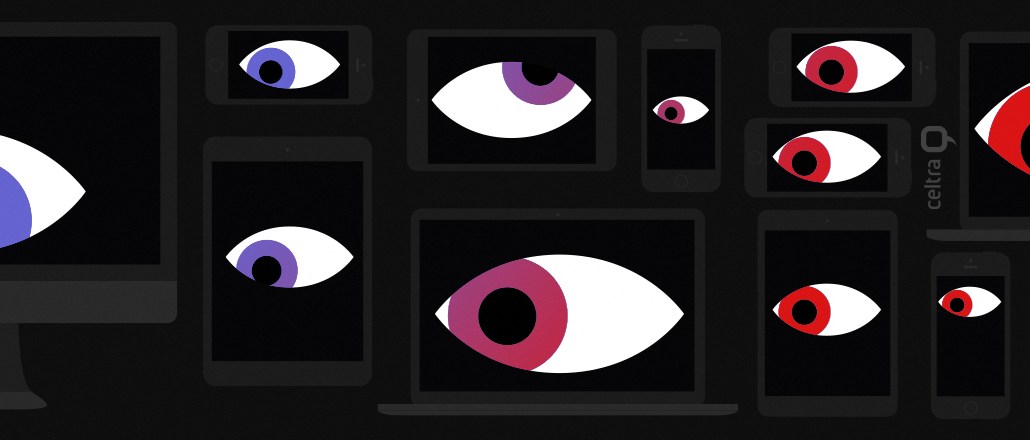
Agencies are pushing for transparency from publishers on all fronts, but viewability has by far become their most pressing priority. Industry chatter says that around 50 percent of ads aren’t viewable — though a recent study found that it’s closer to 40 percent. Agencies, quite reasonably, want to know their ads are being seen.
At least one major player is setting new rules. This spring, GroupM, the biggest digital media buyer in the U.S., announced it would shift its buying from open exchanges to private ones, in a push for greater transparency. With major players like this setting the new rules, the industry will have to start adapting, and soon.
How will this affect the media trade? Here are a few predictions.
Taking out the trash
Demand for greater transparency, with an emphasis on viewability, will affect networks who trade in not-so-great inventory. Agencies will buy less now that they know ads aren’t being seen. It will also, to a certain extent, change the pricing. We’re already seeing different pricing models pop up; Google’s been experimenting with this since December 2013.
Premium pricing for viewable impressions
There will now be a price range. On one end of the scale, there will be a price for requested impressions, or the normal impression. On the other end will be a price for viewable impressions. We guess these will probably be at least 25- to 50 percent higher than requested impressions. Agencies will love this. They can still buy the requested impressions, which won’t necessarily be viewable, but at a cheaper rate. Or, they can buy viewable impressions, which will be guaranteed, and paid more.
Guaranteed viewable impressions, programmatically
We’ll see programmatic exchanges offer guaranteed viewable impressions. But note that viewability with programmatic is a bit tricky, as you’re bidding for an impression before you know if the impression will be viewable or not. Eventually, all DSPs will offer guaranteed viewable impressions and adjust the pricing at a certain percentage of views. Only time will tell which provider will come up with the most elegant solution.
Online media is all about metrics. Ads that aren’t seen don’t get clicked, and that brings down the performance metrics of every campaign. Viewability standards will help the industry do a better job of understanding what works, improving creative and pricing inventory. And that’s good for everyone.


More from Digiday
Ad industry tallies early losses from Apple’s Safari tracking block
A week after Apple’s Safari block, the ad industry is still waiting for the other shoe to drop.

Welcome to Creator University: Inside the colleges building creator economy programs
As more young folks seek to enter the creator economy, universities are offering classes covering every layer of the still-growing ecosystem.

‘An important capability for us’: PepsiCo CEO on Publicis switch
Pepsico’s Ramon Laguarta used a recent appearance in front of investors to champion the company’s decision to hand its global media account to Publicis Groupe.