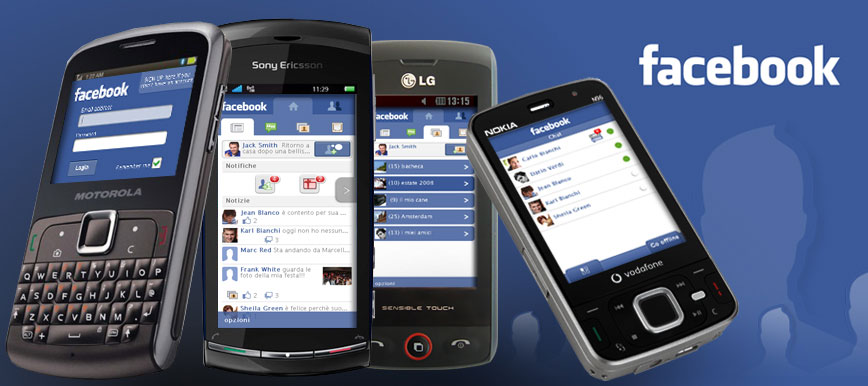
In the lead-up to its much-hyped IPO, Facebook has been vocal about its growing and engaged mobile audience. Data released by ComScore not only validates those claims but also demonstrates just how dominant the network actually is in the mobile social arena.
Much has been made of Facebook’s lack of ability – or inclination – to monetize its mobile audiences, which it recently began to do with the extension of its sponsored stories ad product to mobile. But ultimately the fact remains that Facebook is in a powerful position in mobile at a time when it’s widely acknowledged that the world is moving from a desktop-computing era to a mobile one.
According to ComScore’s numbers, 80 percent of smartphone users accessed Facebook via their devices during the month of March, placing it second only to Google in terms of U.S. smartphone audience reach, which attracted 97 percent of users thanks largely to its popular search, mail and mapping products.
But perhaps a more significant data point is the sheer amount of time smartphone users are spending on Facebook. It’s mobile Web and app audiences spent a whopping 441 minutes per user, on average, engaging with the network over the course of the month. That’s an average of over seven hours per user.
For every user spending one or two hours a month interacting with Facebook through a smartphone, another is spending upwards of 13 hours, the data suggests. The numbers do not include iPads or other tablets, which may have driven up that average up even further.
Facebook’s closest competitor in terms of time spent was Foursquare, with an average of 145 minutes per user, followed by Twitter with 114 minutes, and LinkedIn, Pinterest, and Tumblr behind them. Ultimately, Facebook accounted for more attention than it’s five largest competitors combined.
Those competitors are trailing equally significantly in terms of audience size. Facebook reached 80.4 percent of US smartphone users over the course of the month, compared to 26.4 percent penetration for Twitter. Meanwhile, LinkedIn, Pinterest, Foursquare and Tumblr each reached under 8 percent.


More in Media

SPUR publishes AI content tracking standard, pitches OpenAI and Google to join advisory board
Publishers are pushing for AI transparency with a new SPUR standard to track how AI tools use content, and inviting frontier AI labs to help.

Media Briefing: Publishers are turning GEO from an experiment into a business
Publishers are turning GEO into a new revenue stream as clients increasingly look to boost their brands’ visibility in AI-generated answers.

The creator economy’s stance on AI is shifting — again
Creators are integrating AI tools into their workflows, but at what point does it overtake the creative process and result in sameness?