Digiday+ Research: Non-Amazon retail media still not commanding significant ad budgets

This research is based on unique data collected from our proprietary audience of publisher, agency, brand and tech insiders. It’s available to Digiday+ members. More from the series →
Looking past, or around, the proverbial 800-lb. gorilla in the retail media room that is Amazon, other massive retail players in the big box and digital space — including Walmart, Target, Kroger, Best Buy and even eBay — have yet to see large spikes in brand marketing investment in their respective media channels.
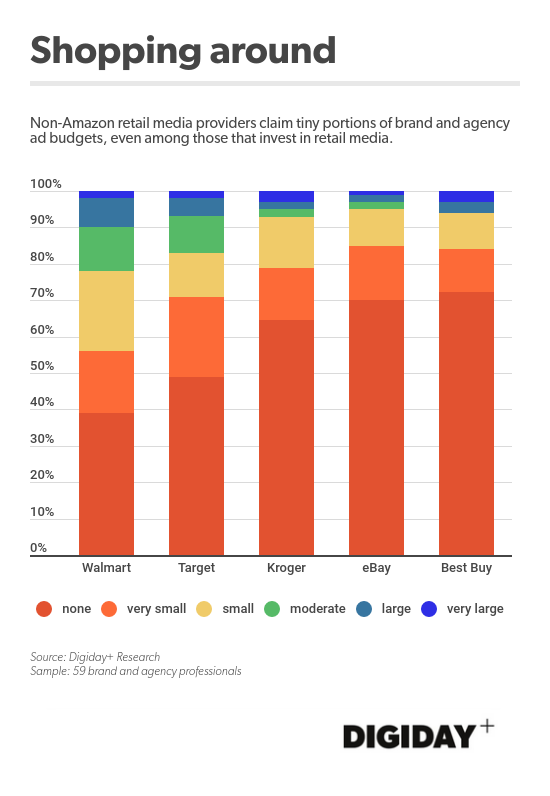
A February survey of 59 agency and brand executives found only a thin sliver of marketing spend goes to these retailers, with well over half saying they spend very small amounts or nothing at all on retail media. More than 70% said they spend nothing on either Best Buy or eBay.
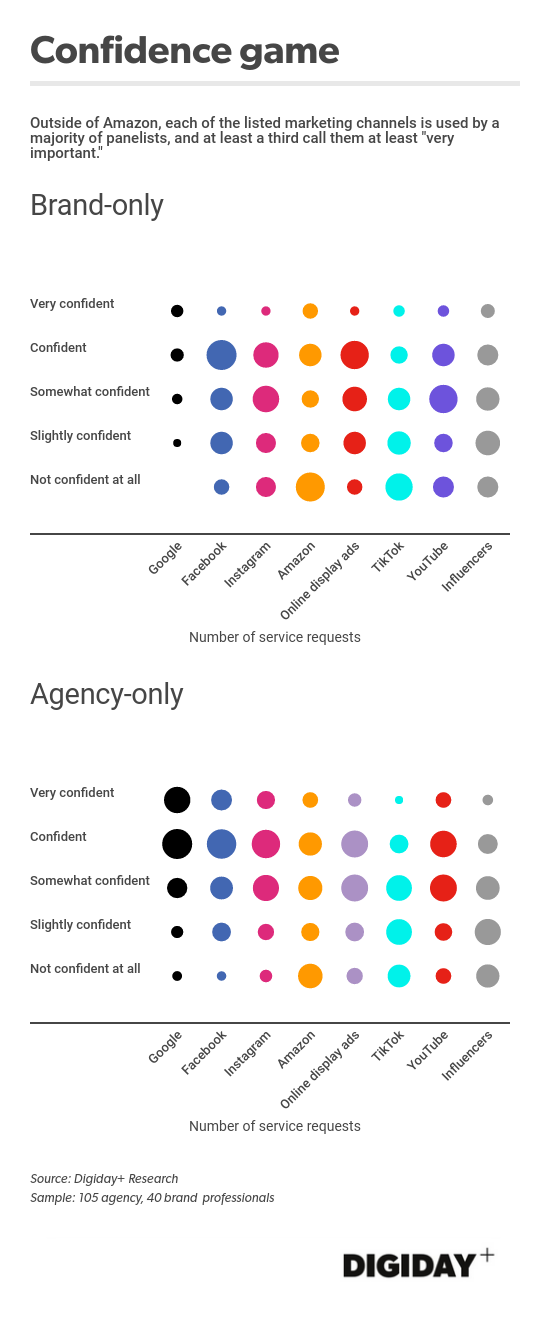
And of the 105 agency execs and 40 brand professional respondents surveyed in February who were asked to express levels of confidence in marketing channels, the majority of brand professionals placed their bets on Facebook, Instagram and online display ads. TikTok and Amazon were the two platforms in which brands displayed the least confidence.
As for agency execs, they said they were confident about Google, Facebook and Instagram as marketing channels — and like their brand colleagues, not confident at all in Amazon and TikTok.
Among both sets of respondents, influencers generated little to no confidence.


More in Media

Creator mentors Colin and Samir want to turn their followers’ ideas into productions
Creator mentors Colin and Samir teamed up with Adobe to fund a creator’s project; the first step towards the duo’s new production era.

How a fashion creator turned audience demand into a 500+ client styling business
A creator with a fashion merchandising degree speaks on her quest to diversify revenue fast, from styling to sweat equity investment.
Forbes looks to Google AI pilot for insights as publishers seek value beyond the click
Forbes has joined Google’s paid News AI pilot that gives Google expanded rights to its content to test new ways of providing readers with context about stories before they click through.