Join us Dec. 1-3 in Nashville for the Digiday Programmatic Marketing Summit
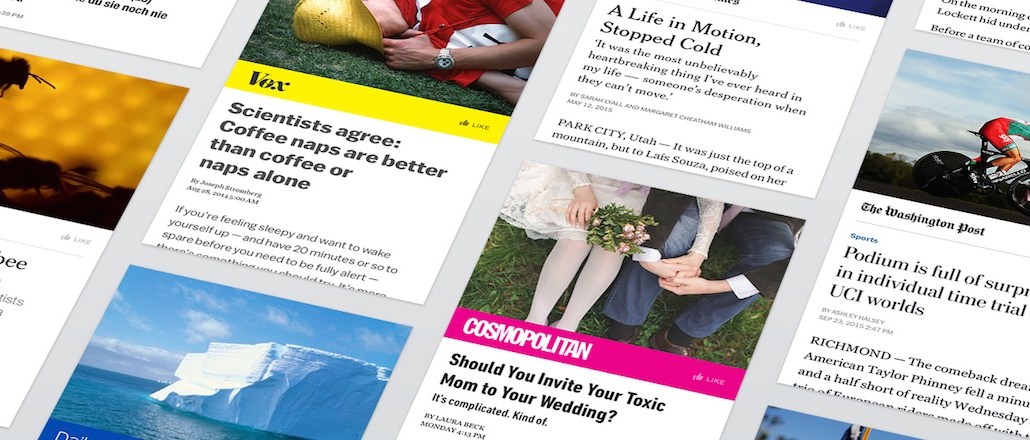
It’s no Instant Articles, but Facebook’s Notes feature is giving The Boston Globe another way to post directly to the Facebook platform.
On Tuesday the newspaper started to use Notes with Ground Game, its newsletter covering the presidential elections, which the Globe posted to the newsletter’s Facebook page. The Globe followed that up a day later by using Notes to create a post listing the top stores on Boston.com. It plans to continue experimenting with the feature on its other properties.
Unlike The New York Times and The Washington Post, The Boston Globe hasn’t signed on as an Instant Articles partner, but it’s still eager to “get really good at” any new publishing feature that Facebook rolls out, said Boston Globe social media director Matt Karolian. “This is clearly a chance to reach more people and engage with them better, especially with longer form content,” he said.
Notes, an early Facebook staple, stagnated for years until last September, when Facebook updated the feature with a cleaner, more customizable design and editing tool reminiscent of Medium. Facebook’s taking its time building Notes, but the feature is clearly the first steps of an inevitable, more fleshed-out Facebook CMS.

Unlike video posted directly to Facebook, there’s no hint that Notes posts get special treatment by Facebook’s algorithm, or even more interest from readers (The Boston Globe’s Ground Game posts have been shared fewer then 10 times so far). But the Note’s user experience is compelling enough for the Globe to keep pushing the format, despite the low interest from readers. Like publishers’ Instant Articles, Notes posts load quickly directly within Facebook, something that’s particularly attractive on mobile devices, where users are far more sensitive to slow load times. Notes offers its own set of metrics, which let publishers know how many of their readers and page followers have read the posts.
Still, Facebook does have a lot of work to do to put notes on the same level with WordPress or Medium. The feature doesn’t yet support YouTube video embeds, for example, or Instagram posts, more surprisingly. It’s also unlikely that Facebook will let publishers monetize their notes posts anytime soon.
“That stuff is kind of disappointing,” Karolian said. “But this feels very much a minimum viable product for them.”


More in Media

Creators say it’s difficult to make money from news — with platform rules and brand guidelines
With more people getting news from creators than traditional media, those creators are still trying to build sustainable businesses.

Why CNN International is building for agentic ad market that barely exists yet
CNN International is still chasing its first agent-sold dollar by Q1.

Media Briefing: The transatlantic push to rein in stealth bots is gathering pace
U.S. and U.K. publishers are pushing for laws to crack down on stealth AI crawlers as bot scraping surges and demands for transparency grow.