Join us Dec. 1-3 in Nashville for the Digiday Programmatic Marketing Summit
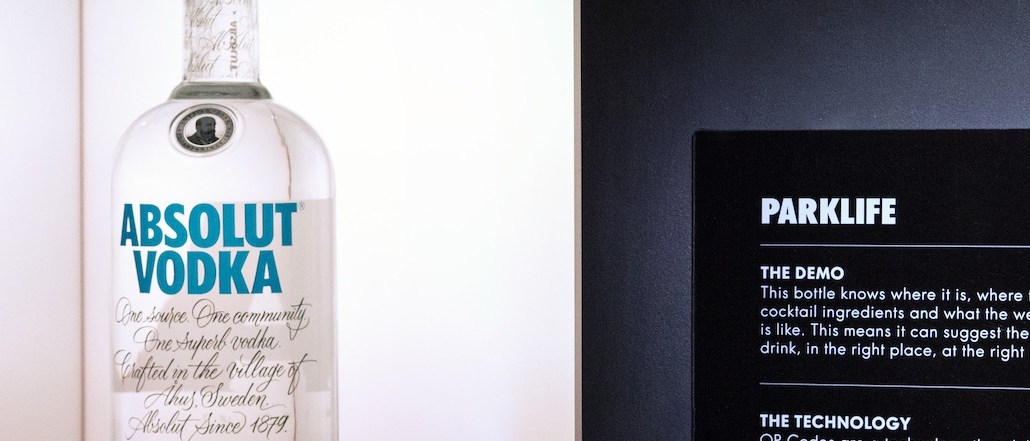
The “Internet of things” may evoke inventions like the tweeting toilet or the texting fridge. But a light-dimming bottle of vodka? Absolut has opened the doors to its inaugural Internet of things lab in Stockholm. The lab is meant to seek out opportunities for product development, internal education for staff at Absolut as well as other Pernod Ricard brands like Malibu and Kahlua, and for more hands-on focus groups and customer feedback.
A connected bottle might some day, for example, link with third-party products to change the lighting or music in the home. It might automatically order a new bottle once it starts running low.
Markus Wulff, digital growth manager for the brand, sees 2016 as being a year where the idea will evolve beyond mere gimmickry. Wulff especially sees money-making opportunities through partnerships with other brands, such as recipe apps that know what ingredients you already have at home.
“There’s definitely has been a gimmicky side to it,” Wulff admitted, “But now we’re working out how to create a consumer valued-service. We know it’s not about selling things, and consumers will be turned off if we go too far down that route.”
Absolut hired SharpEnd, an agency that specializes in the Internet of things for clients that include Unilever, among others. Agency founder Cameron Worth said that brands have started taking IoT more seriously.
“Someone like Unilever produces 2 billion products every day,” said Worth. “If these products were connected, then there are implications further up in the supply chain, as well as the data that they can get from the consumer. We try and highlight the missed opportunities around that.”
Absolut itself produces 100 million of its iconic vodka bottles a year. One of the lab experiments is turning consumer products into touchpoints to drive loyalty and product sampling, according to Worth. Using image recognition and scanning tech, for example, users can unlock limited editions and coupons.
Wulff said the plan is to take some of these product pilots out into markets next year, focusing on the U.K., Spain and Canada. It is also exploring the connected home idea through partnerships with other brands, like Sonos.
The hype around IoT has mellowed in recent months, but research companies are still quick to point out the large numbers that surround it. Gartner predicts that next year there will be 6.4 billions “things” connected to the Internet; by 2020, this will increase to 21 billion. “It’s important for brands to now think about what their roles are within it,” Wulff added.
“The Internet of the Things has been full of shit-use cases,” conceded Worth, “If everyone thought that the opportunities lived and died with tweeting fridges and milk, then we’d be out of business. But because there have been so many bad cases, it has worked positively for us when something is delivered that answers real business problems.”


More in Marketing
In Graphic Detail: What Apple’s identity block means for the ad money
How Apple’s identity block hits publishers’ wallets, and why Apple can afford it.
Anthropic’s ad bill is soaring, according to IPO filing
Anthropic’s IPO filing shows an ad-free AI company with a fast-growing ad bill.

Salesforce’s $5.7 billion Braze deal puts marketers at an ecosystem crossroads
The deal promises faster, more connected marketing, while raising questions about vendor lock-in and how brands stand out as AI automates campaign execution.