‘Exactly what we need:’ People mostly love the middle finger emoji in iOS 9.1
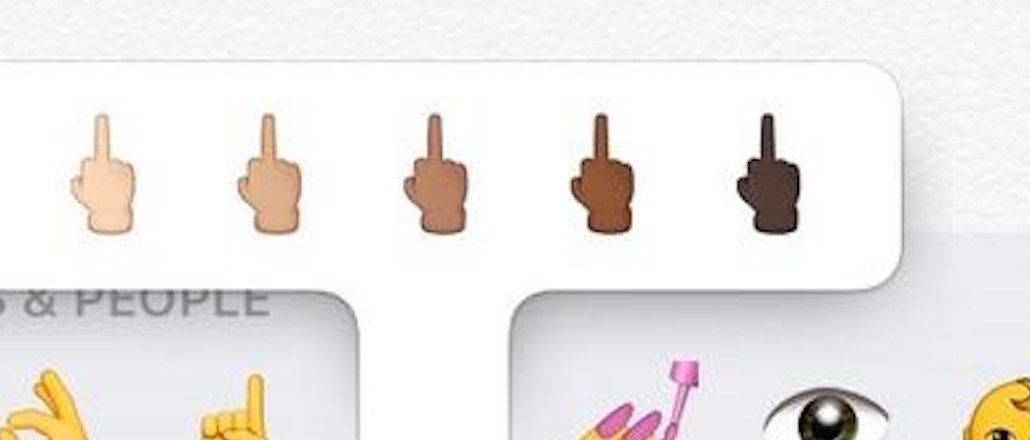
The rudest emoji of them all finally arrived.
Apple released its latest update iOS 9.1, which includes 150 new emojis adding to its already sizable collection, including the eagerly anticipated middle finger emoji sparking an excited reaction online.
There were roughly 13,000 mentions of the middle finger emoji yesterday, according to data from Brandwatch, with 70 percent of the tweets being positive.
“There are a significant number of tweets that express the anticipation for the middle-finger emoji,” says Brandwatch analyst Kellan Terry. “People using the exclamation ‘Finally!’ find themselves in the majority. It’s more than fair to say that people have wanted this particular emoji for a long time.”
Here’s a sample of that type of reaction:
FINALLY WE HAVE THE MIDDLE FINGER EMOJI
— Pari (@PariCalvia) October 22, 2015
this middle finger emoji is exactly what i needed. — Ace Alemania (@AceAlemania) October 22, 2015
our prayers have been answered, the middle finger emoji has finally emerged
— Kayden Stephenson (@kingkayden) October 22, 2015
the middle finger emoji is already my most used emoji. — DMs Sponsor (@DmSponsor) October 22, 2015
There’s also a wave of concern from parents annoyed at the crude gesture being included:
As cool as it is, I don’t think the middle finger emoji is appropriate. Children have iPads, iPods, etc.
— ☮ (@leckeys) October 22, 2015
Not a fan of the new middle finger emoji! Children have iPhones too! — Lindsay Marie (@lmholder) October 22, 2015
Does Apple know that young children either have or use their parents’ iPads and iPhones and shouldn’t have access to a middle finger emoji
— OG nikkka 웃 (@niksif) October 22, 2015
“The middle finger is going to be popular, but I hope it’s primarily in jest amongst friends, and not used for harassment online,” Jeremy Burge, the founder of the Internet’s emoji almanac Emojipedia, told Digiday. “We’ve got enough of that already!”
Perhaps the new anti-bullying emoji, an “eye in speech bubble” that Apple included could alleviate those concerns. Burge says the middle finger emoji is the most searched for icon on his website, but he’s seeing an increase of searches for the hugging face emoji, which he says is “very comforting.”
Few brands were quick to notice the new emojis, except for Taco Bell. The taco emoji has been a year in the making for the fast food chain, which launched a Change.org demanding one last year. Not a shock, but it was very excited:
— Taco Bell (@tacobell) October 21, 2015
The next collection of emojis, including a strip of bacon and the Chipotle-pleasing avocado, is expected to be on iOS devices mid-next year.
Images via Twitter.


More in Marketing
DMexco ’26 Briefing: From scaling AI operations to teaching the next generation of ‘bold’ CMOs
DMexco 2026 media partner Digiday hosted two panels that outlined the challenge of AI at scale and the CMO of the future.
Marketers bemoan the culture of ‘good enough’ as standards fall amid the AI bubble
‘Drowning in measurement,’ marketers mull priorities in an internet where ‘two audiences’ exist.

Future of Marketing Briefing: Imagining the ad business hiding inside Meta’s Muse
Meta’s Muse is ad-free for now. Don’t expect that to last.