Prices rise for the Digiday Programmatic Marketing Summit after Mar. 24
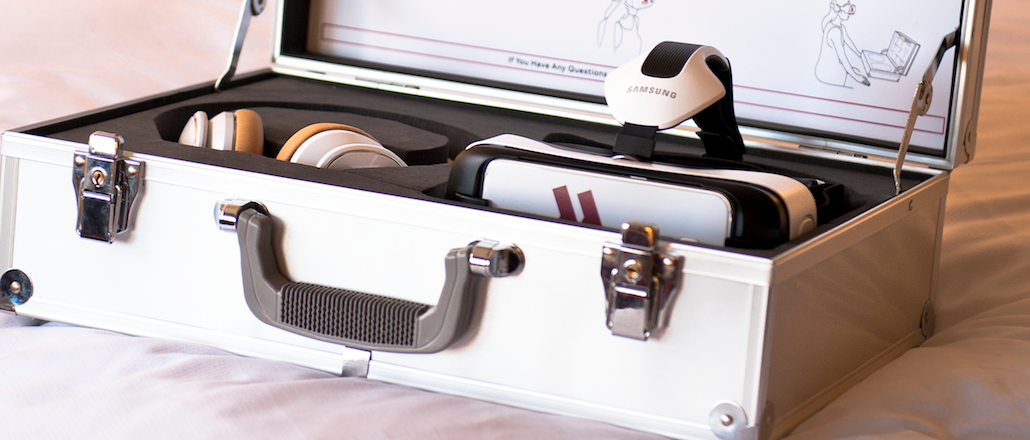
Marriott has the fix for a problem you probably never knew existed: Now you can tour three cities without even leaving the comfort of your hotel room.
No stranger to virtual reality technology, Marriott Hotels is offering guests tours of Chile, China and Rwanda — right from their suites: All they have to do is request a Samsung Gear VR headset to their rooms. “VRoom Service” (get it?), created in partnership with Samsung, is the brand’s most recent foray into virtual reality; last year, it offered visitors virtual tours of London and Hawaii with an assist from the Oculus Rift DK2 headset.
Using the VR headset and headphones, guests can now access “VR Postcards,” a series of three immersive travel stories that accompany three real travelers in three different parts of the world. Users can choose between joining marketing professional Erica Bryndza as she treks through the Andes Mountains in Chile, artist Camillo Alvarez as he samples Chinese cuisine in a bustling Beijing street, or business owner Alexis Miesen as she sets up a new ice cream shop in Rwanda. The experiences were created in partnership with Framestore’s Virtual Reality Studio.
“Last year was more sensory and more destination-centric, but this is about the story of travel and inspiring people to travel,” Michael Dail, vp of global marketing at Marriott Hotels, told Digiday. “We might be minimizing a little bit of the experience, but it is portable and using Samsung Gear headsets allows us to really democratize the virtual reality experience.”
The program is currently being tested for two weeks at the New York Marriott Marquis and London Marriott Park Lane properties, after which the brand hopes to scale it. The locations have 300 and 100 sets each, which are available for guests to use for up to 24 hours. The VR Postcards will not only be available to guests at these select properties, but also to the general public. Those technology aficionados who own a Samsung Gear VR headset can access the postcards through the Samsung Milk VR app.
In recent years, Marriott Hotels has been experimenting with technology to appeal to the millennial traveler. In addition to last year’s virtual reality foray, it recently rolled the two-way chat feature on its app globally, which lets guests chat with their hotel and request for any services or amenities with the tap of a button. It also partnered with Netflix this summer to offer guests the subscription services in their hotel rooms. The brand also launched the Marriott Content Studio, its in-house creative division, last year.
“We believe that travel is a lifestyle, and we want to be a brand that is relevant to millennials today,” Dail said. “VR has so far been used in gaming, but maybe some day millennials will also be capturing their lives using VR like they are using Snapchat today.”


More in Marketing

TikTok courts CMOs with first-ever Collective, as it targets bigger budgets
In its first CMO-focused event in the U.K. TikTok showcased how easy it is for brands to create content. The event is only part of the platform’s sharper 2026 commercial strategy: targeting larger, long-term ad budgets, courting independent agencies, and positioning itself as a serious competitor to Meta in 2026.

Amid competition for sponsors, top sports clubs are investing in social media operations
Sponsors used to want hospitality access and pitch-side banners. Now they want access to a club’s social following.

Rising gas prices could be the straw that breaks consumer spending
The rising fuel costs have experts predicting a rapid ripple effect on the U.S. retail industry.