Join us Dec. 1-3 in Nashville for the Digiday Programmatic Marketing Summit
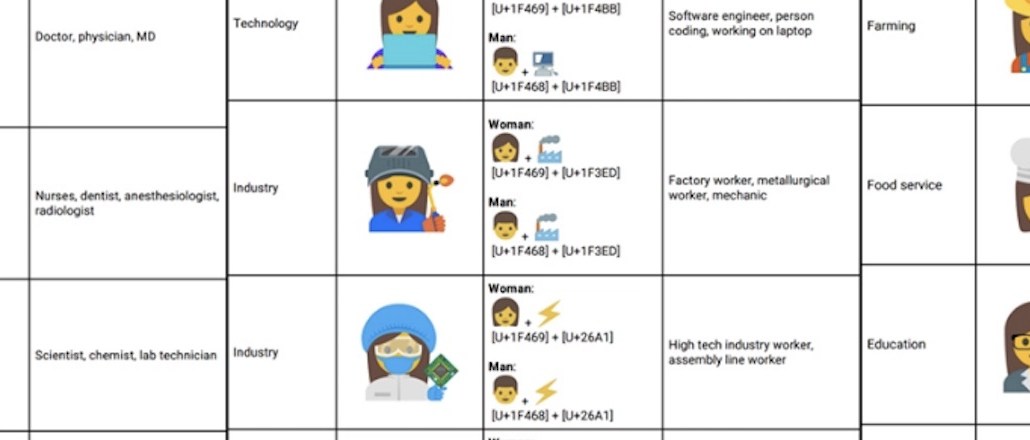
Emojis are replacing Barbies as the battleground where the fight over the portrayal of women is being waged.
A group of Google employees is pushing for 13 new emojis to be approved with a “goal of highlighting the diversity of women’s careers and empower girls everywhere,” according to their proposal submitted to the Unicode Consortium this week.
“No matter where you look, women are gaining visibility and recognition as never before,” the developers said in a its proposal. “Isn’t it time that emoji also reflect the reality that women play a key role in every walk of life and in every profession?”
As of now, emojis depicting women are overwhelmingly stereotypical: There’s nail painting and hair grooming; there’s flamenco dancing and twin burlesque bunnies. Men, meanwhile, are cops and doctors and athletes, as Always pointed out as part of their “Like a Girl” campaign. Google’s proposal includes doctors, farmers, graduates and professors for both sexes. There’s even a David Bowie tribute emoji.
Making unicode emoji less basic with 13 true-to-life representations of professional women: https://t.co/aSOBFkKMGa pic.twitter.com/BfKMSSXgpg
— Google Design (@GoogleDesign) May 11, 2016
Unicode Consortium is currently mulling which emojis will be allowed in its next batch, due to arrive on people’s phones in mid-2017. However, the Googlers might have an advantage since the Consortium’s president, Mark Davis, is also a Google employee.


More in Marketing
AI boosts discovery but reviews still seal the deal, new research shows
ChatGPT is where 16% of shoppers start looking for products. However, only 9% go there to actually buy something.
Future of Marketing Briefing: Advertisers have more ways than ever to choose a holdco, and free holdcos to choose from
Fewer holdcos, more ways to pick one: inside the changing agency pitch.
Walmart Connect pitches brands directly as it pushes lift studies ahead of holiday ad deals
Walmart Connect is using lift studies to prove ad performance directly to brands ahead of the holidays, signaling a tighter race with Amazon.