Join us Dec. 1-3 in Nashville for the Digiday Programmatic Marketing Summit

Brands aren’t always the funniest or most entertaining when it comes to their social media output.
But it seems there is a reason that brands keep posting nonsensical, meaningless stuff on Facebook and Twitter rather than take extra time and effort to post only relevant and interesting content: It works! People still like and engage with the random, crappy stuff that brands post.
I know. It doesn’t make sense. But here is the depressing evidence to prove it. Check out these five examples of brands posting incredibly mindless, cheesy things to their Facebook pages that resulted in thousands of likes and interactions.
1. Domino’s: This post about the sound of bacon and feta in the morning (what sound does feta make?) got 15,731 likes, 336 shares and 256 comments.
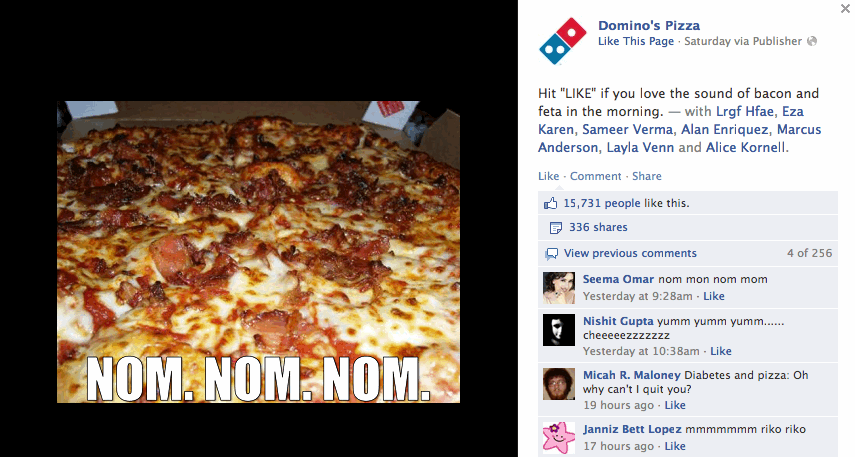
2. Snapple: This simple little post that doesn’t even involve an image got 1,372 likes and 25 comments.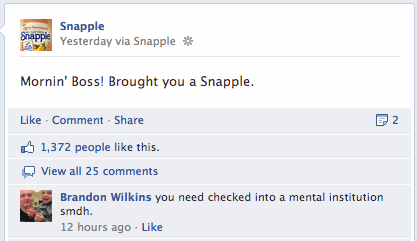
3. Hershey’s: This cheesy true-or-false question post got 7,195 likes, 366 shares and 182 comments.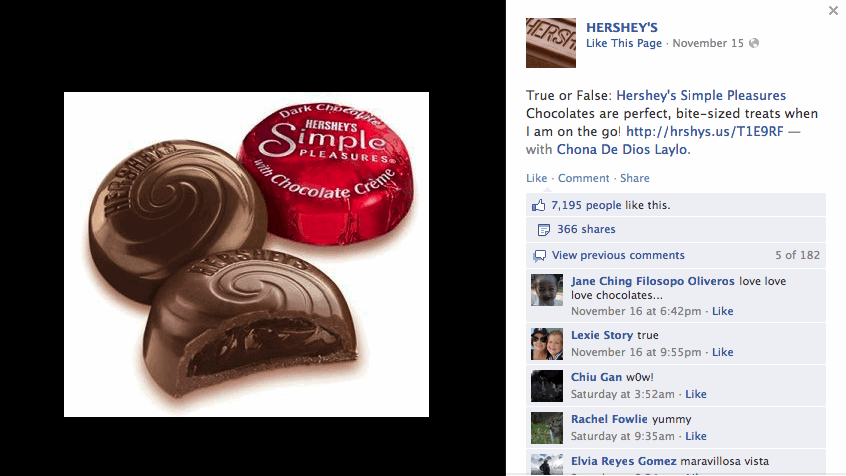
4. Pringles: This corny post letting you know not to worry, that Pringles’ Facebook page will still be here after you go run out to grab more Pringles got 2,798 likes, 68 shares and 71 comments. 
5. Swiffer: This unrealistic Swiffer post (who would ever use a duster as a karaoke mic?) got 3,053 likes, 170 shares and 698 comments. 
Main story image via Shutterstock


More in Marketing

Ruggable’s new ad spend strategy shifts focus to ShopMy creators
Ruggable is shaking up its marketing stack, pulling dollars our of Meta and into ShopMy creators ahead of a potential IPO.

Future of Marketing Briefing: The holdcos long, awkward courtship of the C-suite
What holdcos risk when they go over the CMO’s head.

Brands turn to content series and Jimi Hendrix to improve AI search performance
Guitar brand Fender and amp-maker Marshall both recently launched content series aimed, in part, at improving their visibility in AI search answers. It’s part of a greater pattern.