Join us Dec. 1-3 in Nashville for the Digiday Programmatic Marketing Summit
Under Alphabet, Google ditches ‘don’t be evil’ motto for ‘do the right thing’
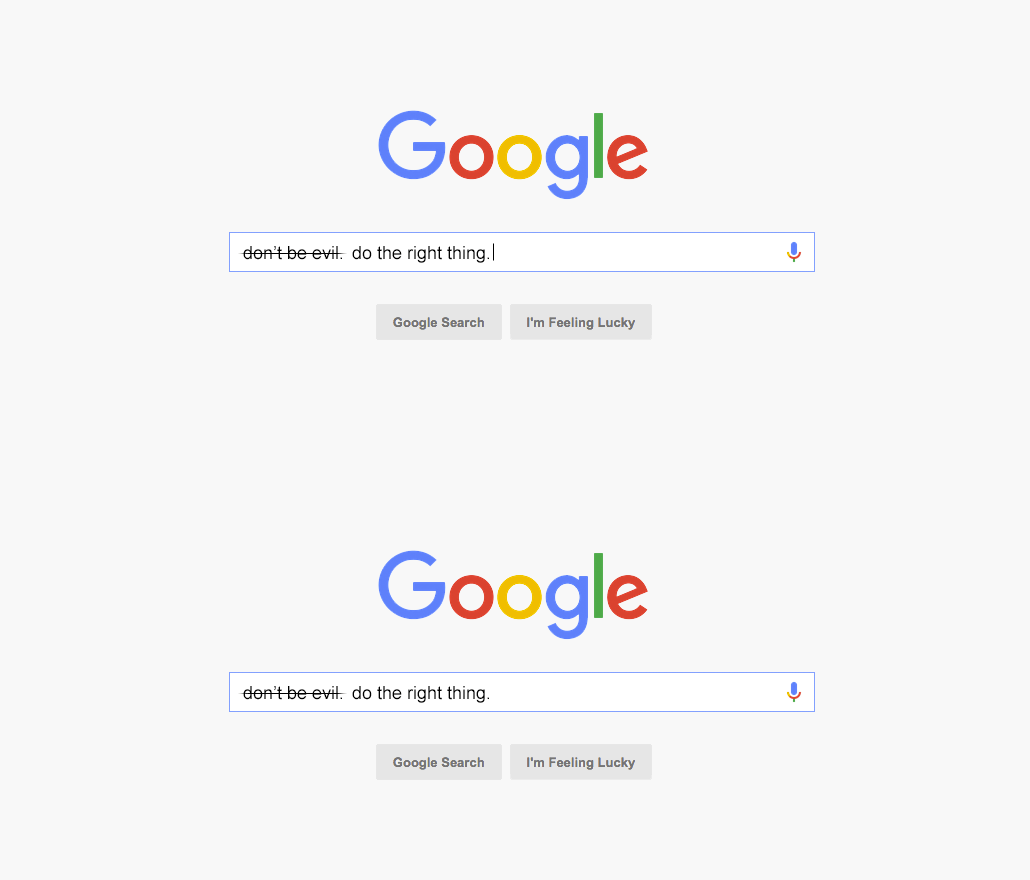
Google’s signature slogan “Don’t be evil” has been laid to rest.
The publicly traded company behind the search giant morphed into Alphabet on Friday to better encompass its every-growing list of brands. Along with it came a new code of conduct for its employees, which doesn’t include its signature “Don’t be evil” motto.
Now, Alphabet expects its employees to “do the right thing,” like “follow the law, act honorably, and treat each other with respect.” That includes avoiding conflicts of interest, obeying the law and ensuring that money is “appropriately spent,” like on endless perks.
Although the phrase in that form has been retired, a version of it is still in use on Google’s (the company within Alphabet) philosophy section, with a bullet point declaring that it’s possible to “make money without being evil.”
While it’s an end of an era of one of Silicon Valley’s most iconic phrases, the motto will be forever remembered. The tale goes that an engineer thought of a version of the slogan in 2001 after Eric Schmidt, then Google’s freshly installed CEO, proposed a change to the company’s advertising policies.
The motto was threaded throughout the company, most prominently in Google’s IPO letter to the SEC in 2004 with a section bearing the phrase. “We believe strongly that in the long term, we will be better served—as shareholders and in all other ways—by a company that does good things for the world even if we forgo some short term gains,” it said.
“Don’t be evil” wasn’t without its critics. Google’s invasive privacy policies, tax breaks and advertising practices have been blasted as being ambiguous since what constitutes as “evil” has never been clearly defined by Google. Even CEO Larry Page admitted last November that the company has “outgrown” the statement.
That day has apparently come.


More in Marketing

AI boosts discovery but reviews still seal the deal, new research shows
ChatGPT is where 16% of shoppers start looking for products. However, only 9% go there to actually buy something.

Future of Marketing Briefing: Advertisers have more ways than ever to choose a holdco, and free holdcos to choose from
Fewer holdcos, more ways to pick one: inside the changing agency pitch.
Walmart Connect pitches brands directly as it pushes lift studies ahead of holiday ad deals
Walmart Connect is using lift studies to prove ad performance directly to brands ahead of the holidays, signaling a tighter race with Amazon.