Join us Oct. 26-28 in Newport Beach for the Digiday Media Buying Summit

U.K. publishers are looking beyond their saturated home market and toward the U.S.
For the likes of The Daily Mail, The Guardian and the Independent, the U.S. represents new possibilities for bigger audiences, and, in turn, new advertisers and bigger ad dollars. This is particularly pressing for The Guardian, for example, which expects to post an annual of loss of $45.2 million this summer. Likewise, expanding to the U.S with a bigger digital footprint, is key to offsetting sagging print businesses at home.
Here’s a look at how far British publishers have gotten in the U.S. to date.
The Daily Mail wins when it comes to pure reach.
 The Daily Mail’s gossip and celebrity news formula is, if nothing else, unwaveringly universal. The site got 51 million unique visitors in the U.S. last month, twice its numbers from the same time two years ago. Both the BBC and the Guardian have also seen traffic increases over the last two years, with the BBC’s U.S. reach edging a bit higher. The Guardian’s own U.S. readership climbed steadily in late 2013 following its coverage of whistleblower Edward Snowden’s NSA leaks.
While these British publishers see around a quarter of their traffic coming from the U.S., The Guardian and Mail Online are at the higher end, with U.S. readership representing 30 and 35 percent of their overall traffic, respectively.
The Daily Mail also reaches the most American millennials.
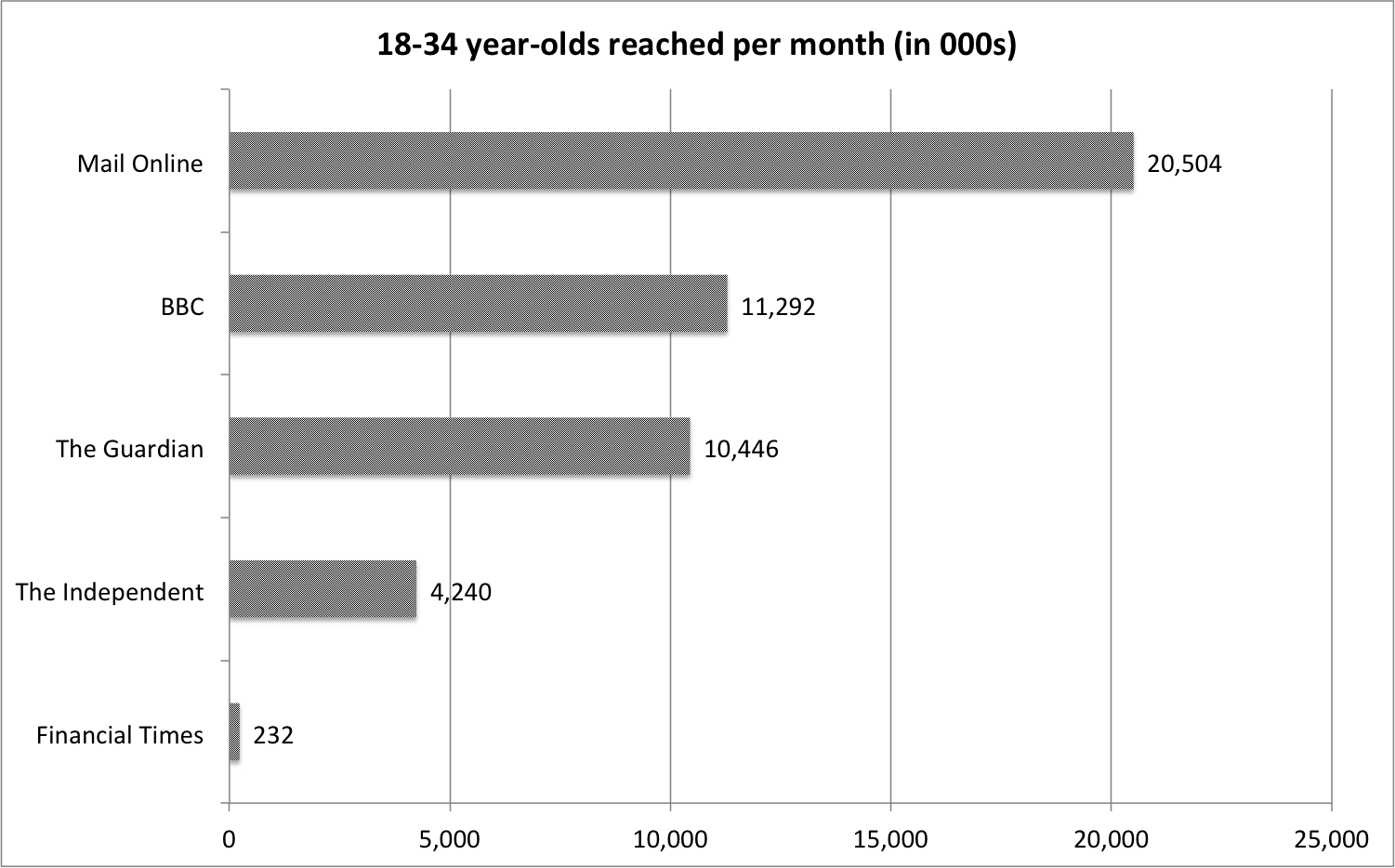
A larger overall readership also means that Mail Online reaches far more millennials than other British publishers. Over 20 million 18-34 year-olds in the U.S. visited Mail Online in January, comprising 40 percent of the site’s audience in the country. The Guardian and BBC are neck-and-neck, with around 10.5 million American millennial readers. Perhaps not surprisingly, the paywalled business paper Financial Times hasn’t gotten very far among the younger age group.
BBC’s is a hit with older readers.
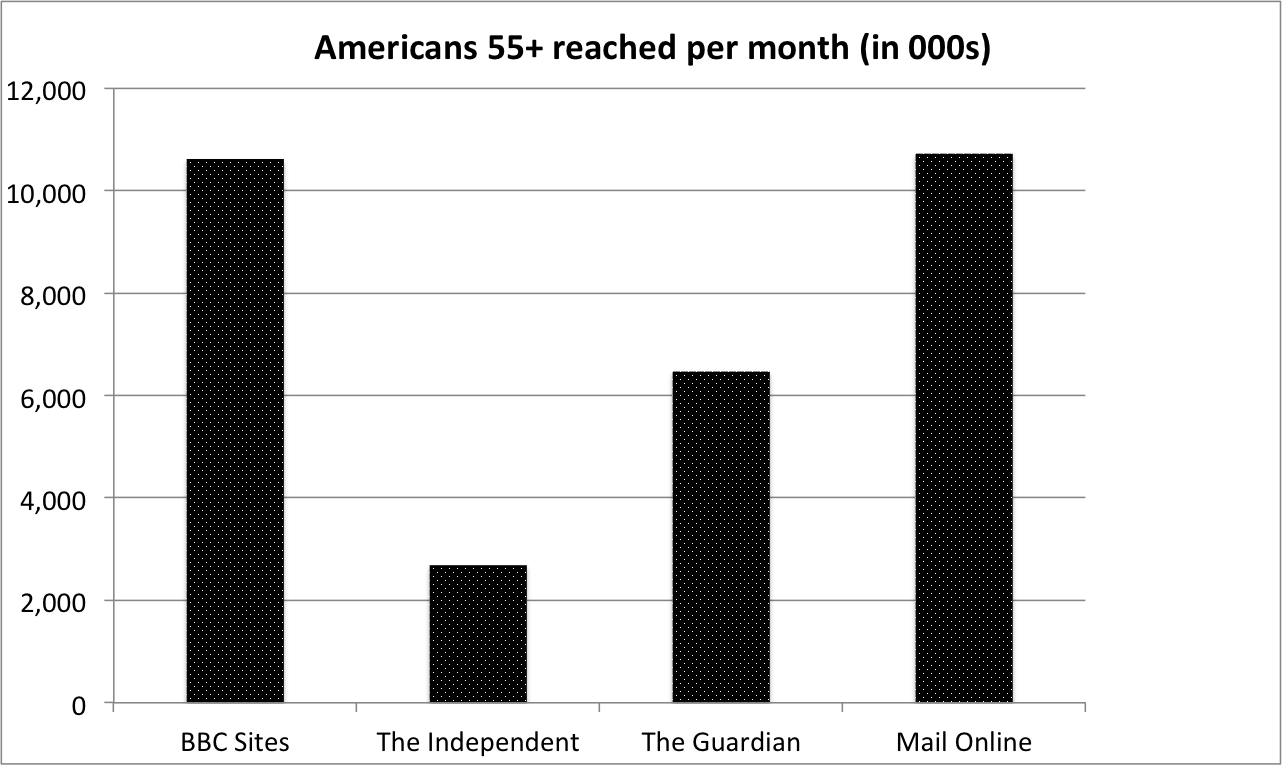
BBC online gets a lot of older readers. Over 10 million older Americans — a third of the site’s overall U.S. readers — visited BBC’s sites last month, more than The Independent and The Guardian, but around the same number that hit MailOnline.com.
Wealthy Americans love The Financial Times.

Scale, however, isn’t everything. The Financial Times may have a small audience in the U.S. compared to its more populist counterparts, but that audience is pretty wealthy. Over half of the site’s U.S. visitors make more than $100,000 a year. That number is closer to 39 percent for Mail Online and The Guardian.


More in Media

CNN takes All Access abroad to turn global reach into paying subscribers
CNN is bringing its All Access subscription service to the U.K. and Canada as part of a broader push to turn its international audience into paying subscribers.

Ad industry tallies early losses from Apple’s Safari tracking block
A week after Apple’s Safari block, the ad industry is still waiting for the other shoe to drop.

Welcome to Creator University: Inside the colleges building creator economy programs
As more young folks seek to enter the creator economy, universities are offering classes covering every layer of the still-growing ecosystem.