The distributed content model has helped Bleacher Report collect a lot of views on Facebook. Now, it’s helping the publisher see growth on Instagram.
In December 2015, Bleacher Report generated 28.6 million views on Instagram, up from almost 8.8 million in October, according to Tubular Labs. It was also the 10th-biggest Instagram video account in December, edged out by ESPN’s account for “SportsCenter,” which did 30 million views during the month.
“It’s not enough anymore to have a single video-distribution strategy,” said Rory Brown, president of Bleacher Report. “We’ve started to nail down specific strategies for different platforms.”
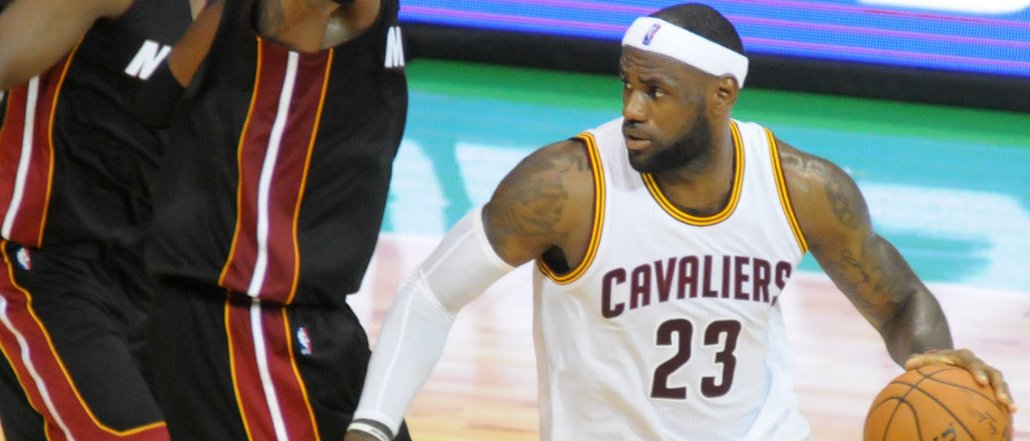
One thing Bleacher Report discovered about Instagram was that its users are willing to watch sports highlights. With parent company Turner Broadcasting a media partner of the NBA, lately this has meant a lot of game clips.
That said, the amount of game clips Bleacher Report uploads to Instagram varies “drastically,” said Brown. “Post-Christmas, the NBA becomes the sport of choice for many people,” he said. “Similarly, during the playoffs we’ll post [highlights] more aggressively.”
Other times, Bleacher Report places a greater focus on its original content. For instance, the publisher has an ongoing video series where it produces “mini-movies” to help top high-school athletes choose a college. On Facebook, Bleacher Report will publish the full version of the video, whereas on Instagram, it will push out a 15-second featurette.
“Because of the time constraints for Instagram and Vine, we often use both of them to promote our best content,” said Brown.
The approach has helped Bleacher Report grow from 100,000 Instagram followers in January 2015 to 1.6 million today. Instagram now accounts for 10 percent of Bleacher Report’s social video views, per Tubular.
On Vine, Bleacher Report did nearly 23 million “loops” in December, up from 5.4 million in October. But with Vine’s six-second videos on endless repeat, it’s hard to give the number equal weight to viewership on other platforms.
While Bleacher Report’s video and social teams are separate, they are both equally responsible for its social video strategy. The video team leads on creating the original content, but has the social team looped in from the very beginning to provide feedback. “At the end, they decide together where to publish different versions of the content, which they had already in mind to do before the crew had even gone out and filmed anything,” said Brown.
Often, the social team will also have an idea based on something that’s happening in the sports world and will bring in the video team to help make the video, while serving as creative leads for that piece of content.
Right now, the social team employs 15 people (the video team has close to 80 staffers). It’s a group that Bleacher Report expects to grow in the coming year. “We originally wanted the team to be familiar with and work on all of the different platforms,” said Brown. “But given the size of some of our social accounts already, soon we will need to establish dedicated programmers and creative leads for the different platforms.”
Image via A.RICARDO / Shutterstock.com


More in Media

Inside The Daily Mail’s creator-led content playbook
Inside the structure, strategy, and metrics of the Daily Mail’s creator-led content push.

Media Briefing: Overheard at the Digiday Publishing Summit, March 2026 edition
With no sign of search traffic returning, publishers are doubling down on subscriptions to build direct reader revenue — but it’s not easy.

People Inc.’s Jon Roberts on the AI licensing boom – and the revenue lag
People Inc’s Jon Roberts discusses the boom in AI content licensing marketplaces — and the revenue that could materialize for publishers.