Join us Dec. 1-3 in Nashville for the Digiday Programmatic Marketing Summit

Trolls have always been a nuisance for Twitter. But in recent weeks, they became particularly problematic for the platform when Disney and Salesforce each pulled their sale bids due to concerns over bullying.
Although trolls are an obvious problem for Twitter, it’s difficult to quantify their pervasiveness. Tweeted epithets might be ironic, pop culture references or even terms of endearment in some cases, which makes tracking trollish behavior very difficult. While assessing the prevalence of trolls has its challenges, researchers have shown that misogynistic language is quite common, some Jewish journalists have received an overwhelming amount of verbal abuse and current events can trigger xenophobia on the platform.
Here are six charts that add some numerical context to Twitter trolling.
Misogyny
For multiple categories of hate speech, Brandwatch tracked how frequently a handful of common slurs were tweeted this past month. Misogynistic language was used in about 15,000 tweets per day, which was much more common than other epithets.
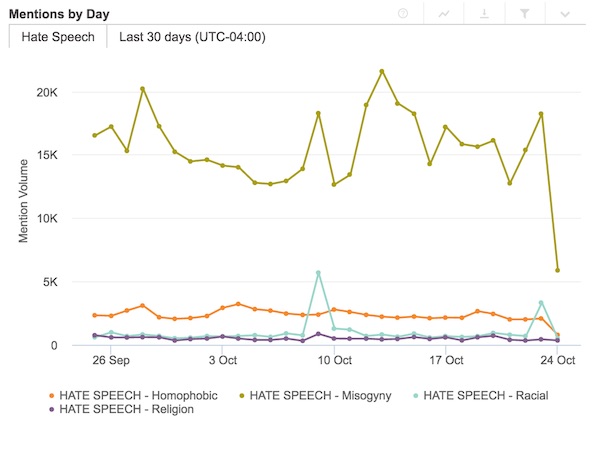
While many of these tweets probably did not involve overt trolling (and some tweets were likely sent by bots), the data at least show how prevalent feminine pejoratives are on Twitter. Brandwatch research manager Edward Crook said that misogynic language “is more normalized” in the English language, so it shows up more often in tweets than do other slurs.
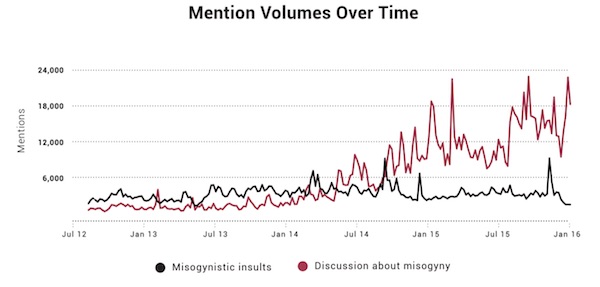
On a more encouraging note, a four-year Brandwatch analysis found that in recent years, discussions about misogyny have become more prevalent than misogynistic insults. Interestingly, the misogynistic insults came from a pretty equal split of men and women.
Anti-Semitism
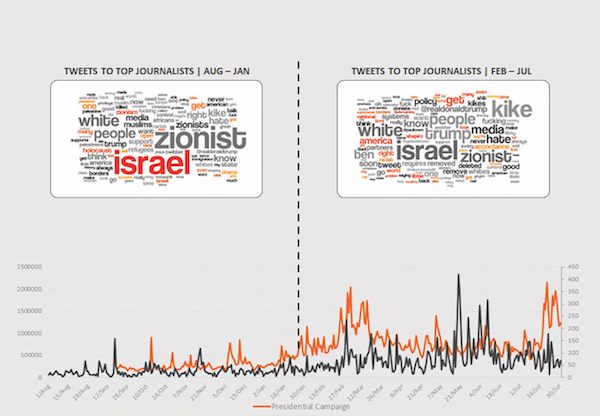
Last week, the Anti-Defamation League (ADL) released a report that examined anti-Semitic tweets. The ADL found that from Aug. 1, 2015 through July 31, 2016, there were about 2.6 million tweets containing anti-Semitic language. The ADL also mined 19,253 “overly anti-Semitic tweets” that were aimed at 800 journalists. They found that a whopping 83 percent of these tweets were aimed at just 10 journalists, all of whom are Jewish.
As seen in the chart below, many of the anti-Semitic tweets aimed at these journalists were related to the presidential election. The word clouds show which words were used most frequently in a derogatory way.
Islamophobia
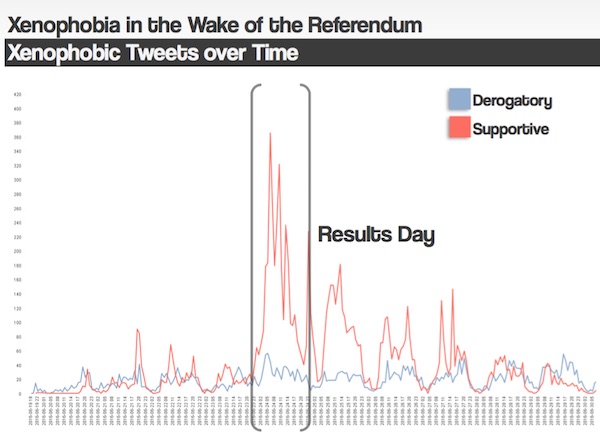
Think tank Demos found that world events such as the bombings in Brussels and Brexit led to spikes in discussions about Islamophobia in the U.K.
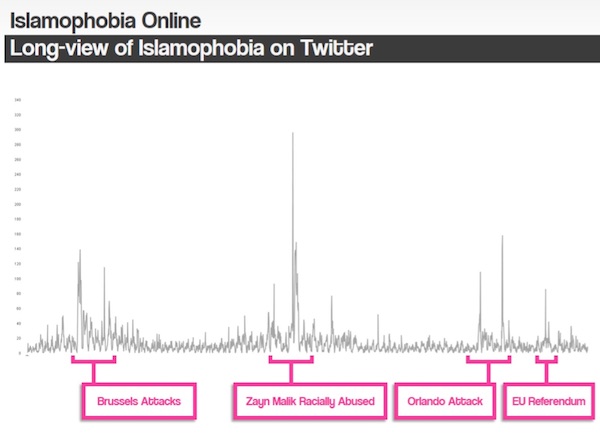
Fortunately, the majority of the tweets were supportive and not derogatory. However, in July 2016, there were still 289 Islamophobic tweets sent per hour in the U.K.
Correlations
Brandwatch also examined discriminatory language across states. It found that states with high levels of misogyny also have high levels of racism, and that states with more self-identified Republicans tend to have high levels of transphobia. Keep in mind that any correlation above 0.5 is generally considered to be a strong relationship.


More in Media

The Verge switches up its audience team to prepare for Google Zero
The Verge has restructured its audience development team to prioritize loyal readers over traffic and page views.
Reach CEO touts Google AI deal as a template, steps up pressure on OpenAI over scraping
Digiday spoke with Reach CEO Piers North about his plans to make its Google AI content deal a blueprint framework for other LLM deals, and its recent cease-and-desist letter to OpenAI.

Social commerce edges past SEO at The Independent for the first time
The Independent’s social-commerce revenue edged past its SEO-based commerce revenue for the first time in September, CEO Christian Broughton said at Digiday’s Media Strategies event in London this week.