Join us Dec. 1-3 in Nashville for the Digiday Programmatic Marketing Summit
The Jeff Bezos-owned Washington Post made an inadvertent move into commerce with a “buy it now” button appearing in an Aug. 15 article about a Charlie and the Chocolate Factory controversy.
Readers quickly concluded that since the Amazon founder bought the ailing paper a year ago, he has started using the paper to drive sales of products on the online retail juggernaut. The link was subsequently removed. Here’s what it looked like:
WashPo (owned by Bezos) inserting AMZN “Buy It Now” buttons into articles. Via @tealtan https://t.co/1SLZtMLlsp pic.twitter.com/ZUqGLgPwEJ
— Hunter Walk (@hunterwalk) August 17, 2014
A spokeswoman for the Post, however, said the paper has been embedding buy-it now links in articles “for many years” and that they haven’t been used more widely under Bezos. She said the buttons are added by the copy desk, so the writers and editors who worked on the story are not involved.
As for why the button no longer appeared in the Aug. 15 article, she explained that the in-article button functionality was a mistake. The button was dropped when the Post recently introduced a new article format, then unintentionally added back in a way that put the links into the text instead of on the side.
“It was not intentional,” she said. “And yes, the button is being fixed and will go back on the side where it has always been.”
Buy it now links remain in other reviews and even news articles and comments, as Pando pointed out, like in this Aug. 15 music book review and back to this January 2013 letter to the editor.
Other publishers, including Gawker and Hearst Magazines, have been inserting such buy-now links on their sites for years. The use of the tactic in the Charlie and the Chocolate Factory article was particularly creepy, though, because the article dealt with the controversy about the book’s new cover that featured a sexualized young girl, presumably one of the book’s characters.
In-line advertising has been around for years, too, with providers like Vibrant Media turning keyword links in articles into ads.
Newspaper publishers are pressured to find new sources of revenue, even if it’s just a tiny portion of affiliate revenue from sales, but the risk is in compromising editorial independence (or appearing to do so) and turning off readers in the process, as comments on this article showed.
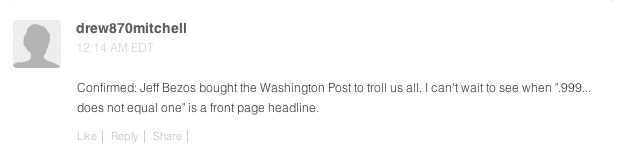
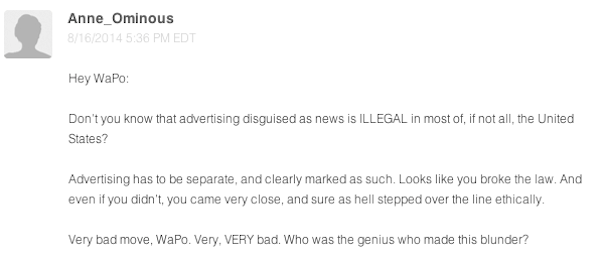
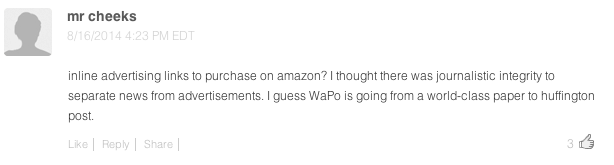
If the buy-it now button is gone, the Post is still serving Amazon ads in the right rail for packaged goods with the tagline, “shop now.” (And, of course, those ubiquitous Google AdSense units.)


More in Media
Creators say it’s difficult to make money from news — with platform rules and brand guidelines
With more people getting news from creators than traditional media, those creators are still trying to build sustainable businesses.

Why CNN International is building for agentic ad market that barely exists yet
CNN International is still chasing its first agent-sold dollar by Q1.

Media Briefing: The transatlantic push to rein in stealth bots is gathering pace
U.S. and U.K. publishers are pushing for laws to crack down on stealth AI crawlers as bot scraping surges and demands for transparency grow.