Join us Dec. 1-3 in Nashville for the Digiday Programmatic Marketing Summit
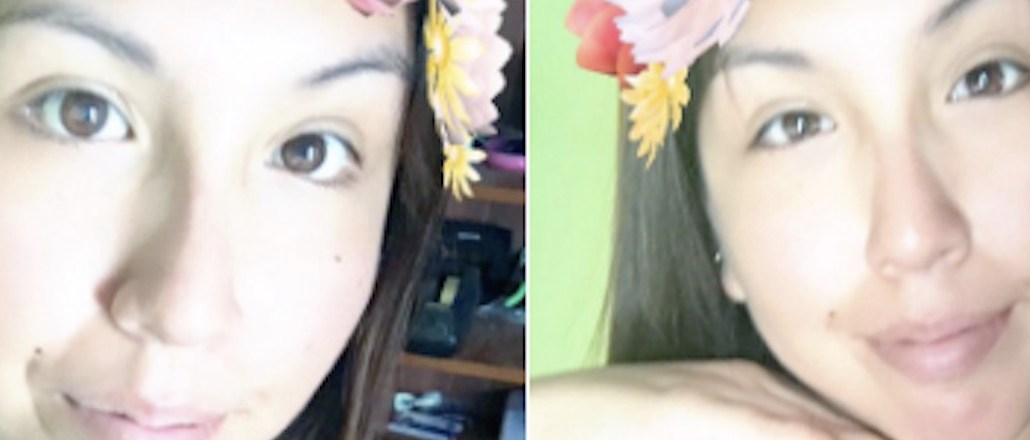
Snapchat is once again being blasted for a skin tone face lens.
Last month it released a Bob Marley lens that many critics likened to digital blackface. This time around, the controversy is over a filter that “whitewashes” the user’s face, smoothing over the skin with a light complexion, bigger eyes and a thinner jaw. Snapchat users have dubbed it the “pretty” filter because it wipes out blemishes, however it has sparked criticism that it’s promoting Eurocentric beauty standards.
Many users were upset, including one who said they’re “very disturbed by the fact that your ‘beautification’ filters make my skin lighter, and my nose and jaw smaller. Just saying.”
Criticisms from others online also echo that sentiment:
why does every snapchat filter try to make me look white?
— tyra banksy (@meganamen) May 15, 2016
Ahhhhh snapchat made my namesake a filter, yasssssssss (but that skin-whitening and face-narrowing ) pic.twitter.com/Lhw8l8vzmy
— TMM (@mangiferin) January 25, 2016
this snapchat filter is the epitome of whitewashing pic.twitter.com/FBpADPtHfa
— shez (@TEENVOCALS) May 8, 2016
On the flip side, others are find this “controversy” to be overstated:
Good lord… Snapchat darkens faces with filters? “BLACKFACE, BURN THEM!” Snapchat lightens faces with filters? “WHITEWASHING, BURN THEM!”
— OMIOTEK (@omiotaco) May 17, 2016
Snapchat defended its Bob Marley lens and declined to pull it, despite pleas from users. The company didn’t immediately respond for comment for this latest controversy.


More in Media
The Daily Mail tests GEO with brands ahead of AI visibility product
The Daily Mail is running around a dozen GEO tests to work out what works before turning its AI visibility offering into an official product early next year.

Meta delays rollout of updated commercial terms amid publishers’ collective pushback
Meta’s updated commercial terms have galvanized publishers into a coordinated pushback over the company’s use of their content.
Creators say it’s difficult to make money from news — with platform rules and brand guidelines
With more people getting news from creators than traditional media, those creators are still trying to build sustainable businesses.