Join us Dec. 1-3 in Nashville for the Digiday Programmatic Marketing Summit
Innovation comes at a price, it turns out. The New York Times’ investment in new digital products ate into its first-quarter earnings.
The company has been busy developing new digital products to capture readers who fall on either the low or high ends of the engagement spectrum. The NYT Now free mobile app on one end and, at the other, Times Premier, a premium service aimed at diehard fans, rolled out after the end of the first quarter, and more vertical apps are on the way.
In the company’s first-quarter earnings call, it disclosed that operating costs rose 3.8 percent to $365.8 million, mainly due to expenses associated with new products. Operating profit was $22.1 million in the quarter, down from $28.1 million in the same period of 2013.
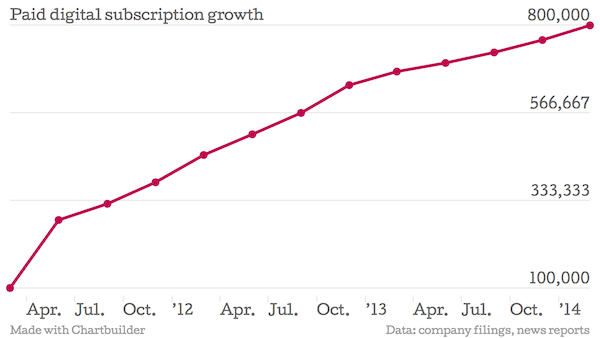
On the bright side, the Times’ print and digital revenue is up for the first time in several years. The paper also continues to add digital subscribers, contributing to a 13.6 percent increase in overall digital circulation revenue over the year-ago quarter.


More in Media

The Verge switches up its audience team to prepare for Google Zero
The Verge has restructured its audience development team to prioritize loyal readers over traffic and page views.

Reach CEO touts Google AI deal as a template, steps up pressure on OpenAI over scraping
Digiday spoke with Reach CEO Piers North about his plans to make its Google AI content deal a blueprint framework for other LLM deals, and its recent cease-and-desist letter to OpenAI.

Social commerce edges past SEO at The Independent for the first time
The Independent’s social-commerce revenue edged past its SEO-based commerce revenue for the first time in September, CEO Christian Broughton said at Digiday’s Media Strategies event in London this week.