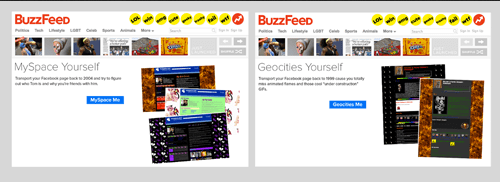
BuzzFeed is a modern publisher, but that doesn’t mean it’s without an appreciation for the past.
With its newest section, Rewind, BuzzFeed takes users back to the decade of their choice by serving up archived content of classic images. Posts include subjects like an infographic giving the history of the Legend of Zelda; unappreciated fashion trends throughout history; and photos of 1980s Olympians rocking feathered bangs and other unfortunate hairstyles of those times.
“The images are in public domain and often interesting archives that live obscurely on the Internet,” Buzzfeed’s managing editor Scott Lamb said. “The originality will come in what things we’re plucking out and in that sense, what archives and access to old material we can get that doesn’t exist already online.”
For the launch, a BuzzFeed app will turn back your Facebook pages to the halcyon days of Geocities and MySpace.
The new area is more Old BuzzFeed (animals, memes) than New BuzzFeed (politics, original reporting). The BuzzFeed bet is that these very different types of content can have a single home.
“We’re trying to balance with things inherently BuzzFeedy, relying on core strengths of the site,” Lamb said. “So many of our biggest posts, what people love to share, recall memories or have something to do with a TV show from the ’90s. It makes sense to have an original vertical around that notion.”
GE is a launch sponsor, but there’s plenty of opportunity for brands. Since the company’s ad model is sponsored content and content marketing, brands, especially those with long histories, can bring readers back to a different era. Think Coca-Cola ads from the 1940s or a Sears & Roebuck catalog from the 1890s.
“It’s smart for brands to capitalize on their back catalog in an interesting form of content that connects people to the brand,” Lamb said.


More in Media
Creator mentors Colin and Samir want to turn their followers’ ideas into productions
Creator mentors Colin and Samir teamed up with Adobe to fund a creator’s project; the first step towards the duo’s new production era.
How a fashion creator turned audience demand into a 500+ client styling business
A creator with a fashion merchandising degree speaks on her quest to diversify revenue fast, from styling to sweat equity investment.
Forbes looks to Google AI pilot for insights as publishers seek value beyond the click
Forbes has joined Google’s paid News AI pilot that gives Google expanded rights to its content to test new ways of providing readers with context about stories before they click through.