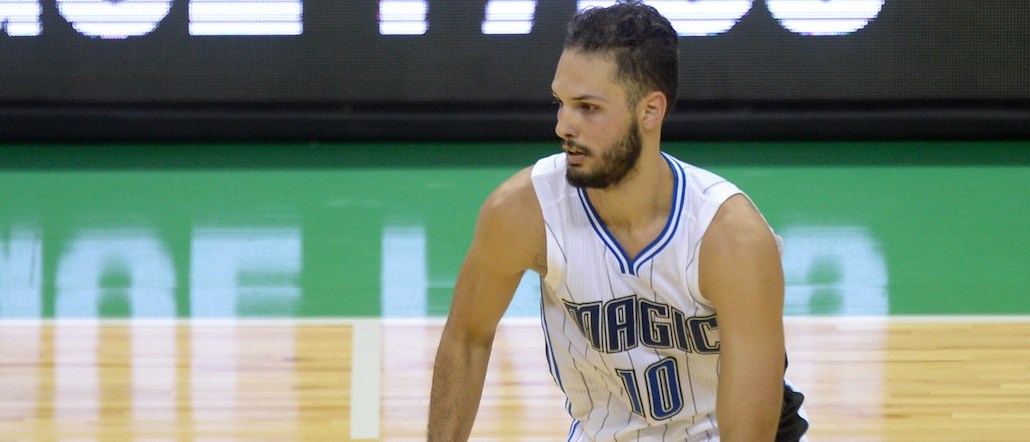
Perhaps the “B” in NBA should stand for brands, not basketball.
The league approved today a three-year test program that lets team sell advertisements on basketball jerseys. Starting in 2017, NBA teams can sell brands a tiny 2.5-by-2.5 inch space under the player’s left shoulder.
While it’s a small space, it has the potential to bring in big revenue for the NBA. Bloomberg reports that ads from the league’s 30 teams could reel in $150 million in yearly revenue. Under the guidelines, the teams will keep half of it and the other half will be dispersed to players in a revenue-sharing pool.
“Jersey sponsorships provide deeper engagement with partners looking to build a unique association with our teams,” NBA Commissioner Adam Silver said in a statement. “The additional investment will help grow the game in exciting new ways.”
The ad’s introduction begins next year when Nike’s $1 billion contract of producing the NBA’s jerseys begins its eight year run, taking over Adidas’ agreement. The NBA follows European soccer leagues, which have ads on its kits for several years, along with NASCAR, Major League Soccer and the WNBA.
Some fans are already creatively reimagining the new jerseys:
lakers jerseys next year , after the NBA approved ads on jerseys pic.twitter.com/AM3qd0Mcy4
— cake (@CaleJackson17) April 15, 2016
I thought the ads on jerseys were going to be kind of gross, but they’re actually pretty subtle. pic.twitter.com/6h4RsMzqWg
— Steve McPherson (@steventurous) April 15, 2016
This Ads on NBA jerseys thing could end up being quite funny@KySportsRadio @ryanlemond pic.twitter.com/EeACs35u50
— John Robic's Hair (@JohnRobicsHair) April 15, 2016
Images via Shutterstock.


More in Marketing

Indie agencies want The Trade Desk and Amazon DSP to acknowledge their buying power with negotiating leverage
Indie agencies say DSP giants block direct seats and fee relief despite spend commitments.
Nearly 30% of holiday budgets expected to be spent by the end of October
Per a new report from Deloitte, 28% of shoppers’ budgets are expected to be exhausted by the end of October.
Apple finally explains its Safari block, and identity companies are in its sights
As Apple spells out its case for blocking identity companies in Safari, its job board shows an ads business with big plans.