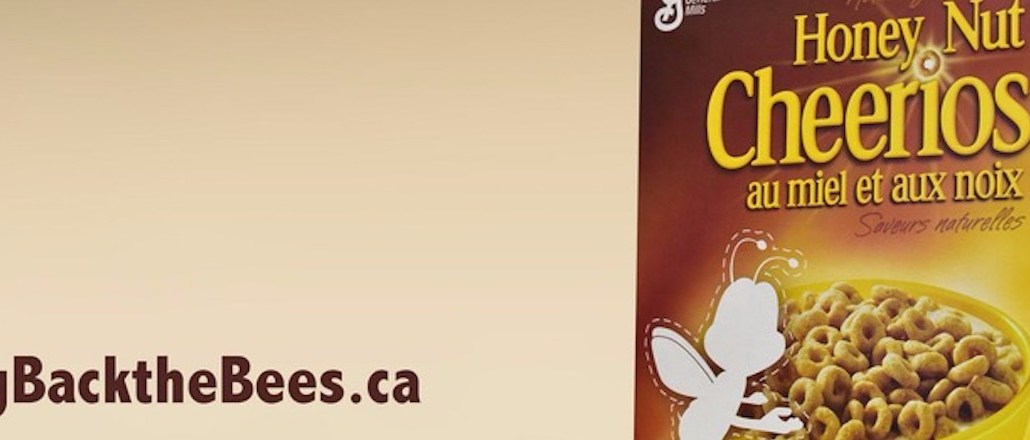
Buzz the Bee is disappearing.
Honey Nut Cheerios is stripping the boxes of its bee mascot to raise awareness for the steep decline in the world’s bee population. To coincide with the five month campaign, which is only in Canada, General Mills has launched the hashtag #BringBackTheBees and a website to inform people about the plight.
“With ongoing losses in bee populations being reported across Canada, we wanted to leverage our packaging to draw attention to this important cause and issue a call to action to Canadians to help plant 35 million wildflowers — one for every person in Canada,” General Mills said in a statement.
For the past decade, the bee population has been on the decline in several countries, with an alarming recent report from the United Nations saying that 40 percent of invertebrate pollinators (i.e. bees and butterflies), are heading toward extinction because of global warming and pesticide use.
In a similar but an unrelated move, Burt’s Bees also launched a campaign months ago using the #BringBacktheBees hashtag in an effort to plant 1 billion wildflowers and even dropping the “b” from its branding. However, the company isn’t too mad about the hijacked hashtag judging from this response:
ig fist ump to #cheerios for the work you’re doing to help #BringBackTheBees, too. #greatmindsthinkalike pic.twitter.com/v5tkqdlj3O
— urt’s ees (@BurtsBees) March 15, 2016
“While we are not working directly with Cheerios Canada, we support the work they are doing to drive awareness and help sustain vital bee populations,” Burt’s bees said in a statement for Digiday. “The bees need all of us!”


More in Marketing

The Rundown: Average CMO tenure has shrunk by over a third in 16 years
Client-side turnover is increasing, according to a survey of 13,000 U.S. marketing professionals, and marketers are spending less time in post.
Behind Hoka’s bid to own the NYC marathon’s run-up period
Hoka’s been targeting runners training for the New York City marathon with the aim of creating more shoe evangelists.

Ad Tech Briefing: AI is changing programmatic buying faster than who controls it
As more decisions become automated, the value of a control depends on whether publishers can see its effects.