Digiday Research: Content marketing’s appeal rooted in engagement and cost efficiencies

This research is based on unique data collected from our proprietary audience of publisher, agency, brand and tech insiders. It’s available to Digiday+ members. More from the series →
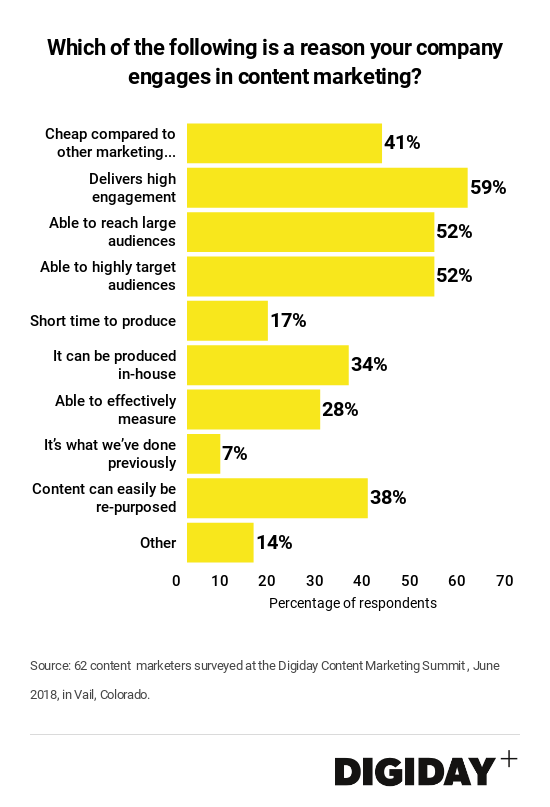
Content marketing adoption is being driven by its ability to deliver cost-efficient consumer engagement, according to a recent Digiday survey.
Fifty-nine percent of marketers polled at the Digiday Content Marketing Summit said they believe content marketing provides high engagement, while 41 percent say it’s a low cost alternative to other marketing tactics.
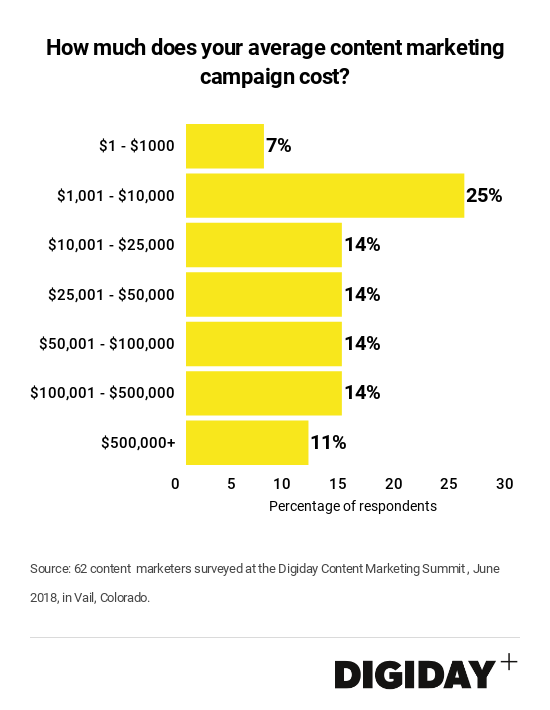
Sixty-one percent of marketers asked by Digiday say their average of content marketing campaigns cost $50,000 or less.
In terms of engagement, traditional digital advertising sets a low bar. Compared to the click-through-rate of search and display ads that hover around one percent and often below, content marketing campaigns are clicked on at a much higher rate.
Marketers are also increasing their focus on engagement metrics despite some confusion about what KPIs to monitor. Annie Granatstein, head of WP BrandStudio at The Washington Post, noted in a conversation with Digiday+ members last week, that clients are paying more attention to engagement metrics that contribute to bottom of the funnel conversions.
While content marketing also gets high marks for its reach, no doubt helped by paid distribution, many marketers also value it for its cost effectiveness. Only 25 percent of marketers say that their average content marketing campaigns cost north of $100,000. Deals of that size are still on the larger end of those done by premium publishers like The Guardian.
For marketers that have to decide between an engagement driving content marketing campaign and paying six-figures a day for Snapchat lenses that don’t provide value, the choice can be simple.


More in Marketing

‘There’s nothing wrong with being a heritage brand’: How Revlon is updating its image by looking to the past
Revlon named musician and actress Teyana Taylor and country music star Megan Moroney as the faces of its “Revlon Be Unforgettable” campaign.

Inside agency OK Future’s AI ‘pressure cooker’ experiment with Goodwipes
OK Future cut Goodwipes’ AI spoof from six weeks to four days, exposing big savings and burnout risks.

From influencers to AI, here’s what Gen Alpha thinks about your brand
The Gen Alpha cohort now influences nearly half of total U.S. household spending in families with children ages 8-14.