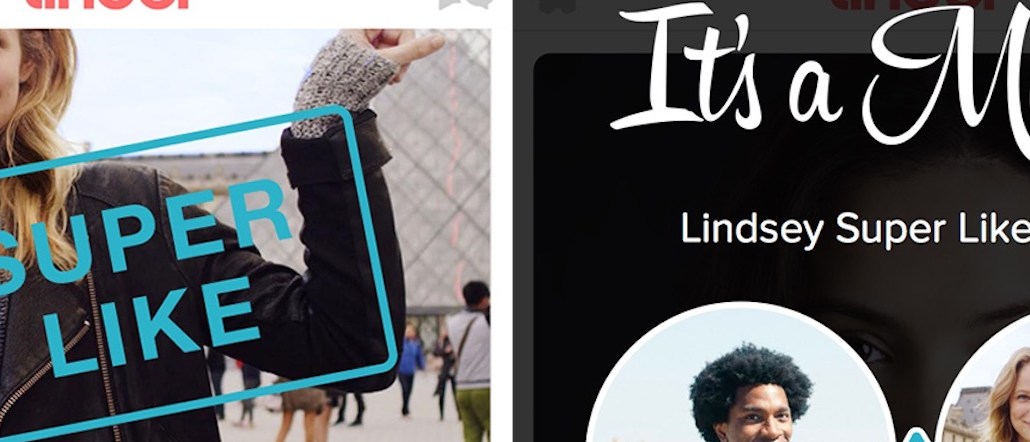
Tinder is increasing the thirst factor with a new swipe called the “Super Like.”
The option, rolled out to all of the dating app’s users today, is essentially a right swipe on steroids.
Instead of swiping right to signal that they like the person, they swipe up activating the “Super Like” function, which then alerts the selected user with a badge indicating they’ve received an enhanced like.
The intent is to give the user an extra incentive to strike up a conversation since the suitor really, really, really, really likes them, or at least their profile pictures, as seen here:

Users get one free Super Like a day, which can’t be banked. Tinder Plus users, who pay $9.99 a month for extra features like unlimited right swipes, receive five Super Likes a day.
According to Tinder’s test of a small group of Australian users last month, the tool actually sparks longer conversations (70 percent longer, in fact) and matches were three times more likelier to occur.
On top of generating revenue from advertisements, Tinder CEO Sean Rad told TechCrunch that the new option is converting more people to subscribe to Tinder Plus because of the increased number of matches.
“We’ve seen Super Like have a meaningful impact on Tinder Plus conversion,” Rad said. “And that stems out of the value that people are getting from the Super Like.”
Images via Tinder.


More in Marketing
Future of Marketing Briefing: Media measurement is becoming an asset in boardroom theater
Major advertisers spent their quarterly earnings calls talking up media effectiveness efforts to analysts and shareholders this week. It suggests a shift in the way C-suites consider ad spend.

Nike, Lululemon hit with lawsuits alleging deceptive ‘phantom discounts’
In recent weeks, major global brands have been the subject of lawsuits alleging deceptive pricing strategies.

Inside Unilever’s 300,000 creator network: the logistics behind the headline number
Unilever says it works with 300,000 creators, but not all of them play the same role. Agency executives explain what that number means.