Join us Dec. 1-3 in Nashville for the Digiday Programmatic Marketing Summit
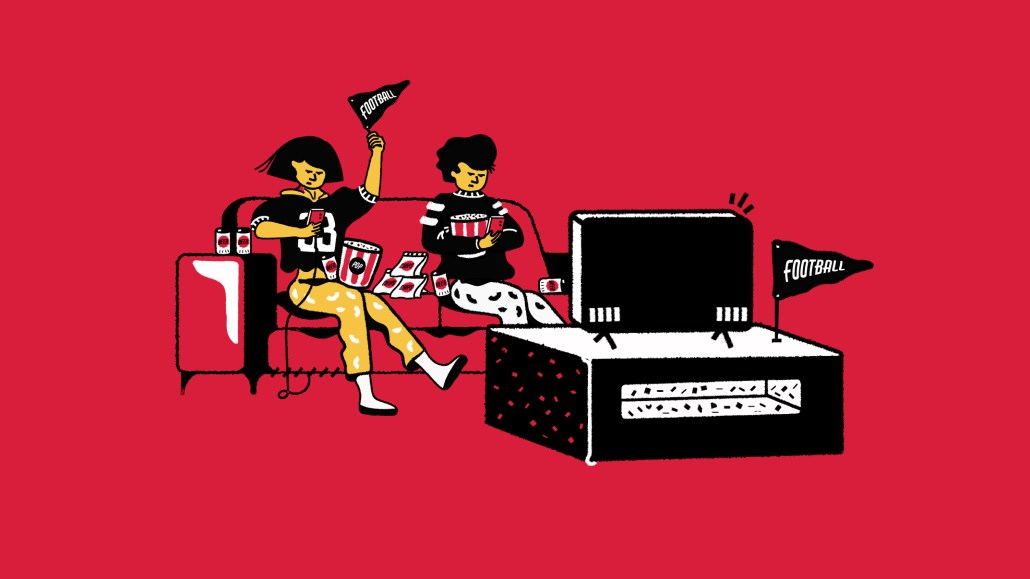
Marketers want their brands to be part of culture, rather than advertising around it — and see fandoms as the way in.
Marketing execs have long since rallied around industry buzzwords like authenticity or community. From RFPs to campaign planning, high level marketing execs have entered “fandom” into the current buzzword du jour.
For this word — unlike so many other parts of the industry — marketers have a consistent and clear definition.
“It’s where attention turns into identity. That’s why there’s such a strong pull there with the brands trying to get into these communities. Because it’s not just buying awareness of affinity,” said Alice Woo, chief creative officer at New Engen.
Brands like Stanley or Crocs that went viral last year.
They’re among a slew of brands hoping some of that loyalty rubs off into brand awareness and earns them a sale — or at least cheaper advertising costs. That by associating with a fandom authentically, the brand banks some good will with shoppers that pays off later on with a sale.
How has fragmentation impacted relationships with consumers?
Fandoms today are challenged by the messy and fragmented landscape, which make relationships with shoppers more difficult to manufacture.
“Fandom is so much more broader than it has ever been, and also where people are finding things to be fans of is no longer geographically based. It’s no longer legacy-based,” said Tamon George co-founder and CEO at Creative Theory Agency, a full-service creative agency.
Fandoms were previously “basically a demographic stand-in” found in places easy to measure, such as sports stadiums or in box office number, Heather Salkin, CEO of Artists and Robots, a creative intelligence studio, said in an emailed statement to Digiday.
Now, brands are tracking fans across those physical — and digital spaces. If a brand can embed itself in those communities authentically, they’ve got a better chance at getting some of that halo effect in today’s increasingly crowded and fragmented digital marketplace, agency execs say.
“Brands aren’t just finding fandoms anymore, they’re mapping them: who’s a casual fan, who’s a superfan, who’s successfully influencing the other 500+ people in their feed,” Salkin added.
How has the creator economy affected fandoms?
The current sports boom is the manifestation of marketers’ fandom chase. The dollars prove as much. Linear and streaming sports TV ad spend combined is expected to grow by $5.3 billion between this year and 2030, according to eMarketer.
Sports aside, shows like Peacock’s “Love Island USA” have become advertising juggernauts. Brands are also inking more creator-deals to chase fandoms, said Woo.
“You’re starting creator-first, you’re starting persona-first because they’re the trusted voice in that community or in that fandom,” she said.
How do you measure the impact of fandom?
Marketers have managed to optimize and square consumers into data points. Now, they’re trying to determine how to operationalize and monetize fandom — and that starts with measurement.
At CeraVe, fandom is measured by engagement, appetite for more content, awareness among new audiences and ultimately, sales lift, said Jasteena Gill, svp of marketing at CeraVe. CarMax CMO Sarah Lane measures fandom in terms of awareness AT&T looks at fandom as a brand awareness play, measuring brand perception and consideration, Sabina Ahmed, avp of sponsorships and experiential, told Digiday. Over time, AT&T looks for other ripple effects like purchase intent or customer acquisition.
Or as Oura CMO Doug Sweeny puts it: “Within the marketing model, your cost of acquisition declines the more people who are aware.”
Fandom mostly lives as a brand awareness play, per the brand marketing execs. They’re not meant to replace traditional media buys, but live beside them. That’s because fandoms offer something a paid media placement cannot: brand affinity.
“It’s the depth of the identity that comes via fandom that I think is more important at this particular time,” George said.


More in Marketing

OpenAI’s new business agents give brands a free way into the conversation it’s also selling as an ad
OpenAI is giving brands a free route into ChatGPT conversations through business agents, but keeping control of the data and recommendations.
The case for and against AI token capping
Apple is placing strict limits on its staffers’ AI token consumption. Should the marketing sector take a similar path?
Reddit dangles seasonal ad credits but advertisers still want better proof it works all year round
Q4 credits may bring advertisers to Reddit, but concerns about measurement and its ad capabilities make it harder to secure year-round spend.